| | Australia and the US mourn following mass shootings, Ukraine’s president prepares to meet with top U͏ ͏ ͏ ͏ ͏ ͏ |
| |  Phnom Penh Phnom Penh | Hong Kong | Guangzhou |
 | Flagship |  |
| |
|
The World Today | 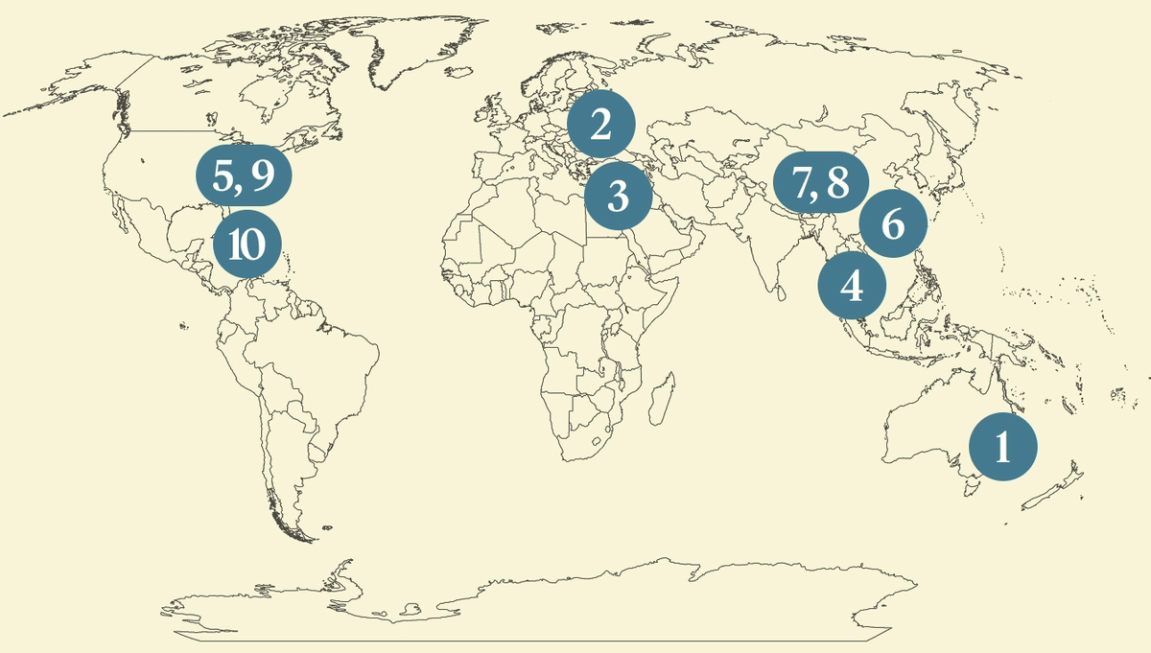 - Mass shootings shatter peace
- Kyiv makes concessions
- Israel kills Hamas leader
- Cambodia-Thailand tensions
- Wall St. goes old-school
- HK opposition party dissolves
- Luxury car sales dim in China
- China surrogacy scandals
- Manhattan air pollution dips
- Better weather forecasting
 A “museumbrary” opens in Taiwan. |
|
Mass shootings in US, Australia |
|
Kyiv offers to drop NATO demand |
 Ukrainian Presidential Press Service/Handout via Reuters Ukrainian Presidential Press Service/Handout via ReutersUkraine signaled it could offer a slate of concessions to Russia in an effort to advance peace talks. Before meeting with top US negotiators in Berlin on Monday, Ukrainian President Volodymyr Zelenskyy said Kyiv is willing to drop its demand for NATO membership in exchange for US and European security guarantees. Washington is also reportedly encouraged by Zelenskyy’s suggestion that Ukraine could hold a referendum and let voters decide whether to cede territory to Moscow. Zelenskyy has effectively “rewritten” a US-backed peace plan, The Wall Street Journal wrote, to “make it acceptable to Ukraine without rejecting it in a way that would alienate” US President Donald Trump. |
|
Hamas says Israel strike threatens truce |
 Dawoud Abu Alkas/Reuters Dawoud Abu Alkas/ReutersIsrael said it killed a top Hamas commander in Gaza, challenging a fragile truce that took effect in October. Saturday’s strike was the latest reminder that the ceasefire has not stopped fighting in the territory and highlighted the hurdles the US-brokered peace plan still faces. Israel is trying to set new “rules of the game” in Gaza, giving it freedom to attack Hamas when it sees fit, one analyst said. But the militant group remains the dominant force in the enclave, and moving to the second phase of the peace agreement will “be far more difficult” than negotiating the initial truce, an Atlantic Council expert wrote. Much will hinge on Hamas’ potential disarmament, a move the group has rejected. |
|
Thailand-Cambodia conflict expands |
 Thai Prime Minister Anutin Charnvirakul. Chalinee Thirasupa/Reuters Thai Prime Minister Anutin Charnvirakul. Chalinee Thirasupa/ReutersThe conflict between Thailand and Cambodia intensified over the weekend despite efforts from US President Donald Trump to resume a peace deal. The fighting, which stems from a border dispute, led to a curfew in parts of Thailand on Sunday. Trump said on Friday that both sides agreed to a new ceasefire, but the Southeast Asian neighbors didn’t halt their clashes — testing Trump’s efforts to end conflicts worldwide. Bangkok, which is considering blocking fuel exports to Cambodia, also struck several casinos and hotels it said were used as hubs for transnational cyberscams, entangling the conflict with another regional crisis: Cambodia has become a nexus of industrial-scale online scamming and human-trafficking operations. |
|
Wall Street could go old-school in 2026 |
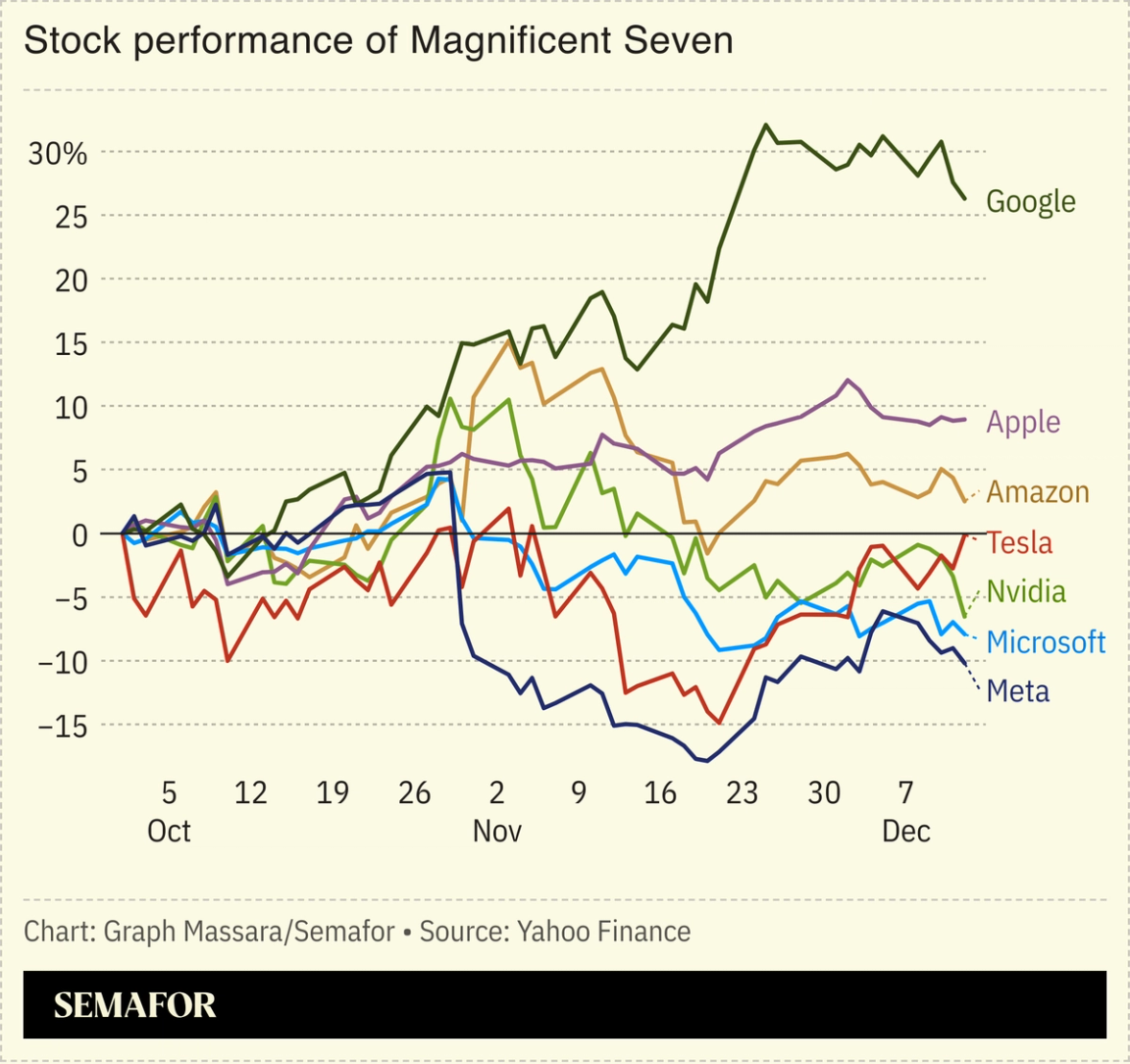 Wall Street analysts are signaling the days of no-brainer investments in Big Tech stocks may be coming to an end. Strategists are advising clients to buy more shares in old-school, less popular sectors like health care and manufacturing in 2026, Bloomberg reported. It’s a sign of the heightened skepticism around ballooning Big Tech valuations driven by AI. Traders are “not just going to be chasing the Microsofts and Amazons anymore,” one researcher said. Some retail investors are also hedging against an AI bubble, The Wall Street Journal noted. Even tech companies reporting strong earnings are seeing their stocks fall because of “AI angst,” a Bernstein analyst said. |
|
HK opposition party dissolves |
 Joyce Zhou/Reuters Joyce Zhou/ReutersHong Kong’s last major opposition party disbanded on Sunday after three decades, a reflection of Beijing’s security crackdown and pressure on the city’s dissenting voices. The Democratic Party had been marginalized and removed from mainstream politics after China’s 2021 overhaul of Hong Kong’s electoral system, under which only candidates vetted as “patriots” are allowed to run for office. The vote to dissolve the party came a day before judges are set to deliver a ruling in the national security trial of Hong Kong media tycoon and pro-democracy activist Jimmy Lai. A guilty verdict could trigger outrage abroad. “He is very likely to become a martyr for freedom,” his daughter wrote last week. |
|
Luxury cars out of vogue in China |
 Alessia Maccioni/Reuters Alessia Maccioni/ReutersChina’s economic downturn is hitting the luxury car sector, dealing a blow to European brands. Chinese consumers are leaning toward more affordable homegrown models, in part because of a government trade-in subsidy meant to stimulate domestic consumption, The Associated Press wrote. Many wealthy drivers are also increasingly shy about public displays of wealth amid the slowdown. The trend is bad news for European giants like Porsche, Mercedes-Benz, and BMW, which are already struggling in China. Other corners of the luxury market, though, are growing more optimistic: Executives at Prada, Coach, and EssilorLuxottica said they’re seeing demand stabilize, CNBC wrote, while Dior just opened a new flagship building in Beijing. |
|
Chinese elites look to US for surrogacy |
Some Chinese billionaires are quietly using surrogacy to help them build massive families consisting of US-born babies. Inspired by Elon Musk’s 14 known children, Chinese elites are paying millions in fees to hire women outside the country, where domestic surrogacy is illegal, testing US citizenship laws, The Wall Street Journal reported. One executive has fathered more than 100 children born in the US, according to his company. The largely unregulated US surrogacy industry targets foreign parents interested in what one expert calls “regulatory arbitrage,” which allows access to surrogacy services that are illegal in their home countries. Surrogacy is a fraught subject in China, where scandals have erupted over celebrities and government officials having children overseas. |
|
Manhattan air pollution dips |
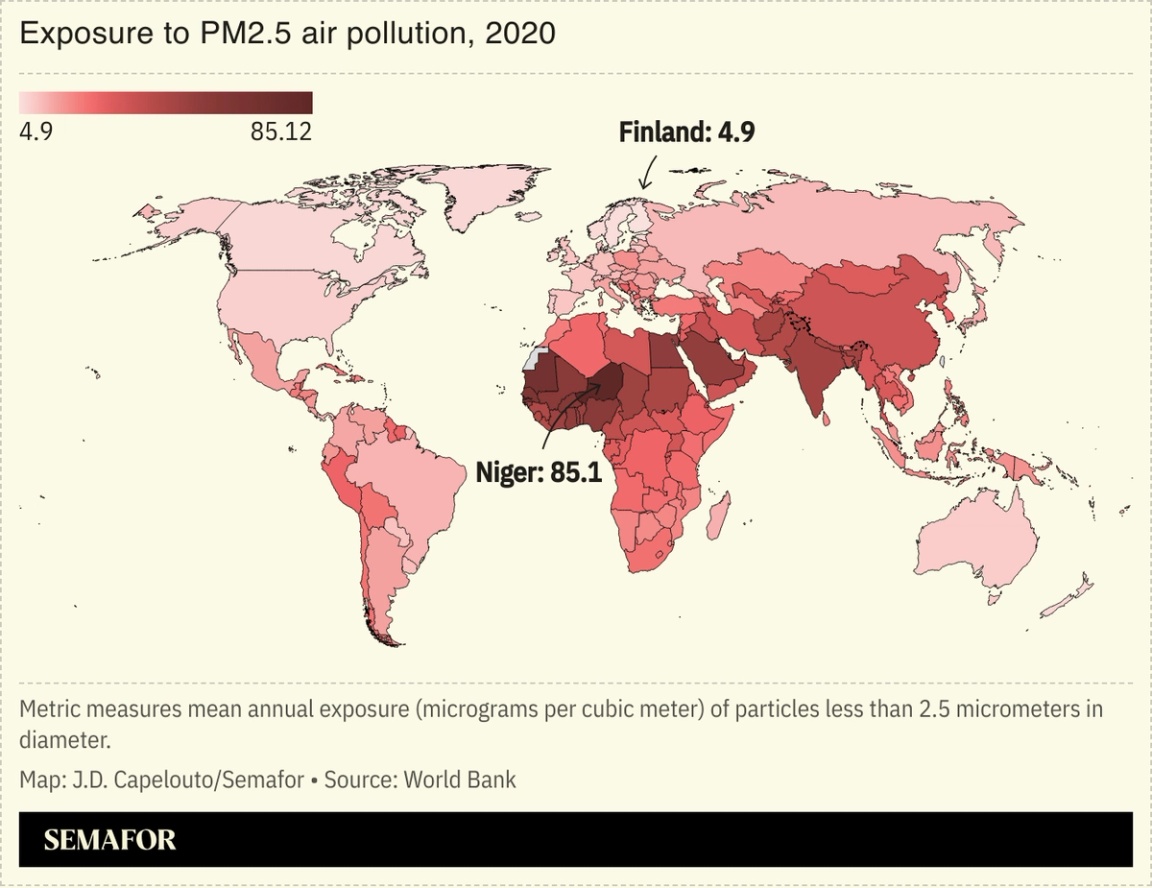 Manhattan’s air pollution has fallen by a fifth since the introduction of New York City’s congestion charge, research said. Municipal data had previously shown that traffic had fallen inside the Congestion Relief Zone, and that crashes, delays, and noise complaints are down since the program was introduced in January. The new study looked at airborne particulate matter in and outside the CRZ and found it had fallen 22% inside the zone and by smaller amounts across the city. Significant air-quality improvements have followed congestion programs in Paris and London. Air pollution has been declining in the West for years but still likely shortens lives by several months in big cities. Meanwhile, India said it was setting its own air standards. |
|
Better forecasts for extreme weather |
 CIRA/NOAA/Handout via Reuters CIRA/NOAA/Handout via ReutersNew technologies are helping prepare the world’s cities for environmental disasters. AI-powered weather forecasting is increasingly good at predicting extreme weather, Nature reported. The technology has until now struggled with rare events because of a lack of training data, but models that use both AI and traditional physics-based simulation models are predicting extreme heatwaves and storms more accurately and faster than either system could on its own. And a huge database of all the world’s buildings — 2.75 billion of them — has been unveiled, allowing much more precise estimates of the impacts of any disaster. Nearly half of the world’s mapped buildings are in Asia, the research noted. |
|
 Dec. 15: |
|
|


