| | In this edition: South Africa rethinks Black ownership, West Africa braces for cheaper flights, and ͏ ͏ ͏ ͏ ͏ ͏ |
| |  Dar es Salaam Dar es Salaam |  Freetown Freetown | Addis Ababa |
 | Africa |  |
| |
|
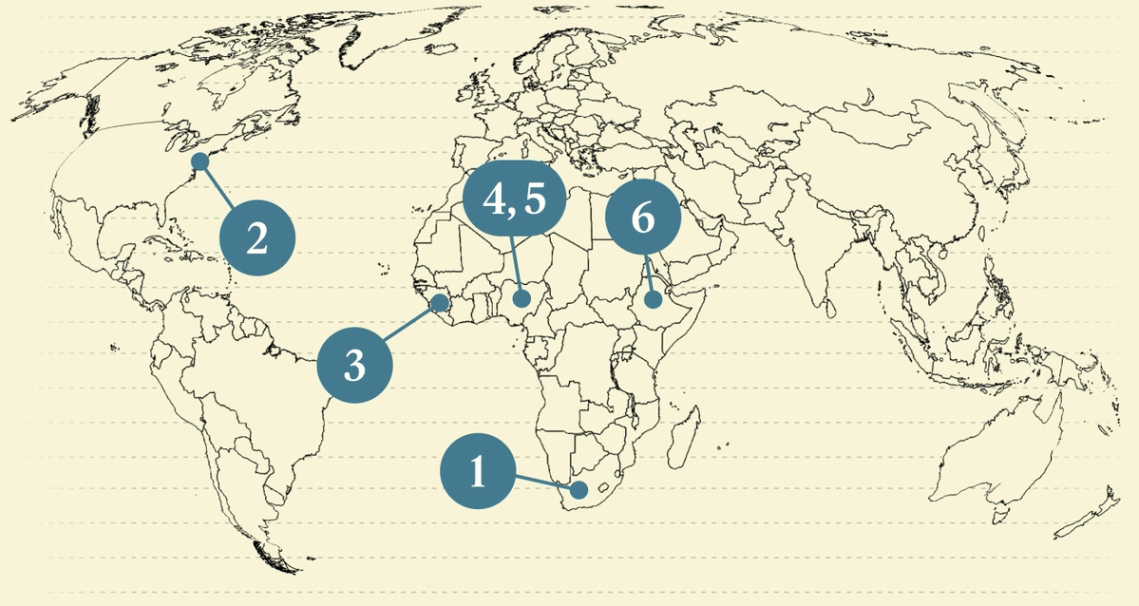 - S. Africa rethinks ownership
- Tanzania’s US lobbyist hunt
- Ecowas scraps air taxes
- Dangote’s regulator feud
- Nigeria’s new gas permits
- Ethiopians lose protections
 The Week Ahead, and why antelopes could help the Sahara Desert. |
|
S. Africa may scrap Black ownership rule |
 Dado Ruvic/Illustration/File Photo/Reuters Dado Ruvic/Illustration/File Photo/ReutersSouth African authorities moved to amend rules on Black ownership requirements, potentially paving the way for Elon Musk’s Starlink and other satellite-internet companies to operate in Africa’s biggest economy. Telecoms Minister Solly Malatsi last week told the industry regulator to allow equity-equivalent investment programs to count toward empowerment rather than insisting on 30% local Black-ownership, a policy introduced nearly 30 years ago to reduce apartheid-era inequality. Pretoria-born Musk has refused to relinquish equity to comply with laws the billionaire has called “openly racist.” Semafor first reported in February that the government was considering using an “equity equivalent” option, such as digital infrastructure investment, to bypass the existing rules. The directive follows a study, published this month, that found most South Africans want the Black empowerment policy to be scrapped, amid criticisms that it has enriched a small group of people at the expense of broader reform. Amending the rules could drive investment but would deepen political divisions: A parliamentary committee has called for the minister’s recent directive to be rescinded, and the row could spark fresh infighting within the coalition government. The ANC said it was “deeply concerned” by the directive issued by Malatsi, a member of the Democratic Alliance party that has long called for the ownership quota to be scrapped. — Alexis Akwagyiram |
|
Tanzania seeks US lobbyist |
| |  | Yinka Adegoke |
| |
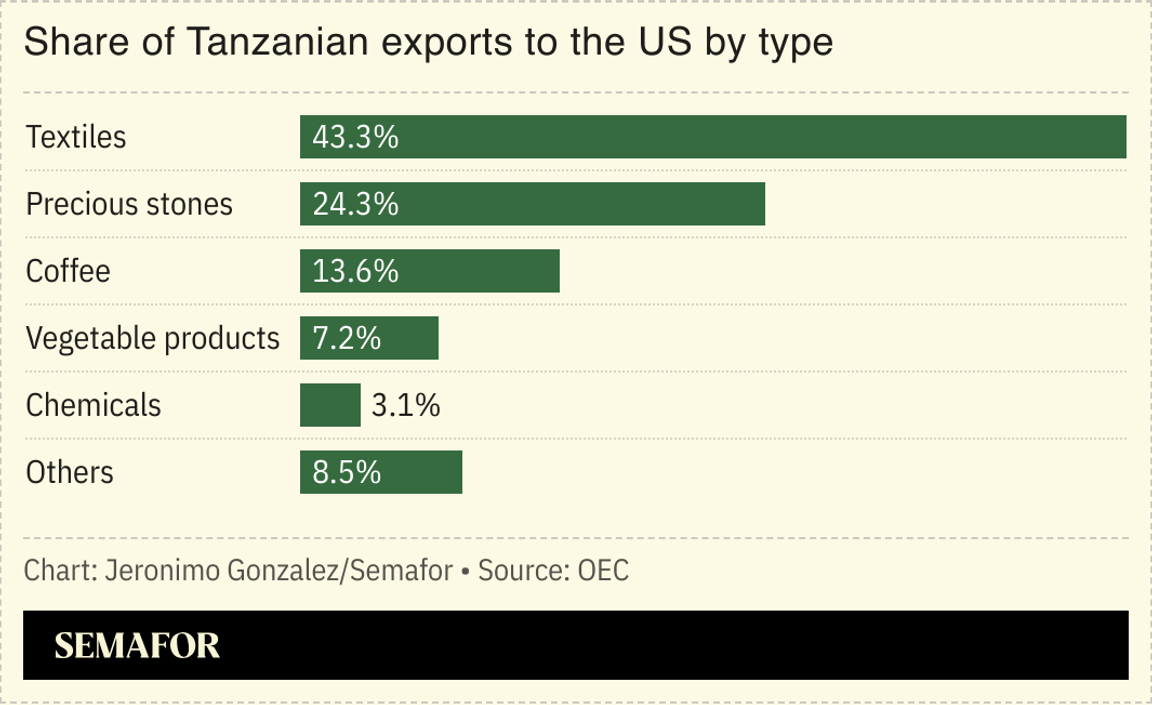 The Tanzanian government is on the hunt for a Washington lobbyist to help “shape its narrative” on Capitol Hill and beyond as the East African nation reels from post-election violence that has spawned its biggest political crisis in decades, according to two people familiar with the plans. On Dec. 4, the US State Department said it was reviewing its relationship with Tanzania, pointing to concerns over “religious freedom, free speech, obstacles to US investment and violence against civilians.” The announcement came as Western embassies push for Tanzania to release the bodies of those killed in October’s electoral violence: Hundreds of people protesting against the electoral process have been killed or detained by security forces, according to reports, but the government has not released an official toll. Tanzanian President Samia Suluhu Hassan’s government wants to bolster its existing relationships on the Hill, the sources told Semafor, with a special focus on countering Washington’s claims of Christian oppression, which it has disputed. |
|
Ecowas ends air transport tax |
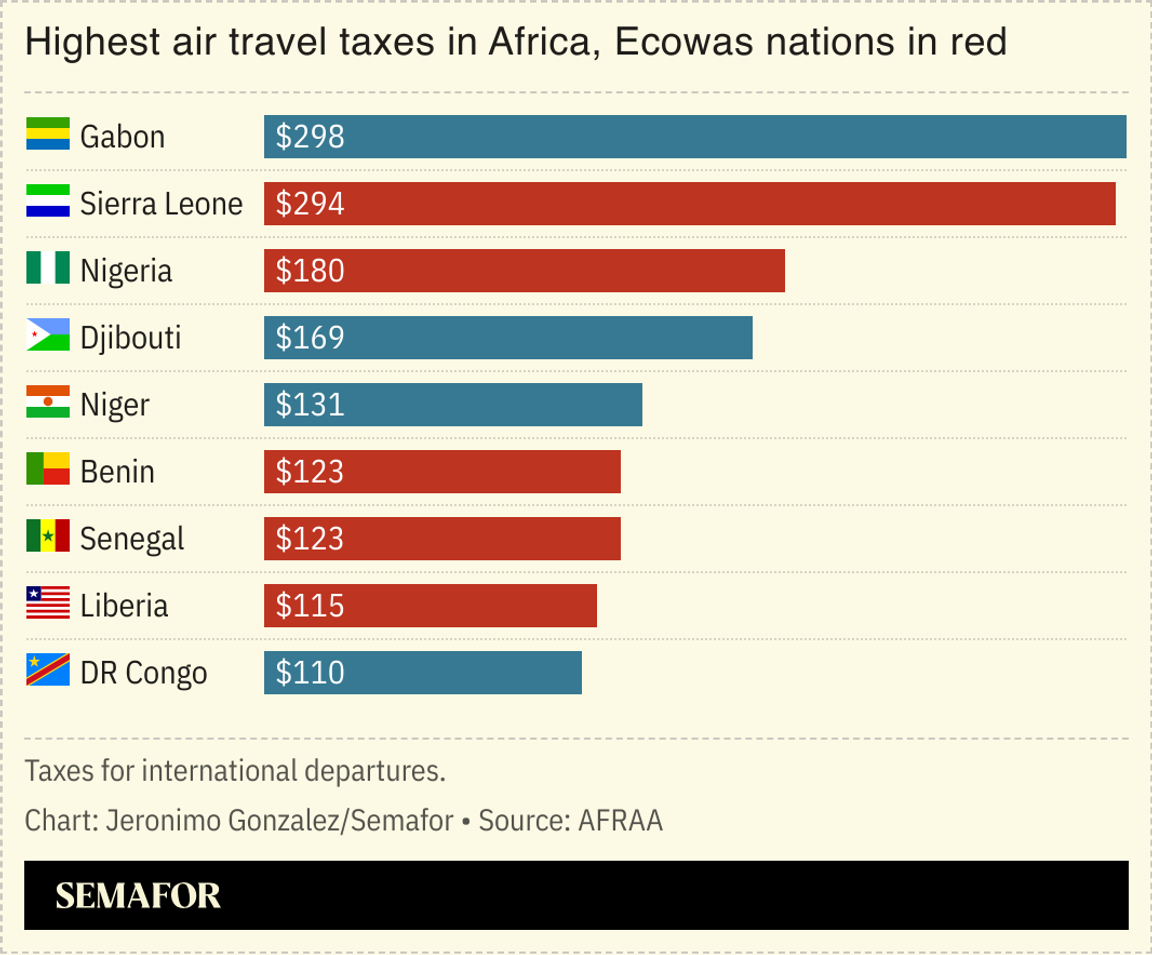 West Africa’s regional bloc Ecowas is abolishing air transport taxes across the region from Jan. 1 in a move that promises cheaper flights and a vital economic boost. West Africa has some of the highest air travel costs on the continent and the bloc hopes the decision will stimulate trade, tourism, and connectivity. The current taxes “suppress demand rather than support growth,” the Ecowas Commission’s transport director told journalists in Abuja last week. “If you want to buy goods from Lagos to Dakar, for instance, a trader will not pay less than about 3,000 dollars in tickets, and a lot of that is taxes.” Business Insider Africa described the move as one of the bloc’s most significant transport reforms in recent years. |
|
Dangote criticizes oil regulator |
 Aliko Dangote. Tiksa Negeri/Reuters. Aliko Dangote. Tiksa Negeri/Reuters.Africa’s richest man Aliko Dangote accused Nigeria’s oil sector regulator of failing to limit fuel imports, which he argues is threatening investments into local refining. Renewing a long-running feud with the regulator, he called for the head of the agency, with whom he has clashed for more than a year, to be investigated for misconduct. Nigeria, the continent’s top crude oil producer, has for years relied on costly fuel imports due to its lack of refining capacity. Dangote, whose oil refinery in Lagos is the largest in Africa and began rolling out fuel products last year, accused the Nigerian Midstream and Downstream Petroleum Regulatory Authority of threatening the country’s energy security. The head of the regulator has previously accused Dangote of pursuing a monopoly. The 650,000-barrel a day Dangote refinery has incrementally scaled up output over the past year to become an exporter to the US, and plans to double its capacity by 2028. The plant plans to supply 50 million liters of petrol daily to Nigerian consumers between now and February, from a previous daily rate of 45 million liters. |
|
Nigeria grants new gas permits |
 The size of investments that Nigeria hopes to attract through an initiative to permit certain companies to access flared natural gas, a byproduct of the oil production process that currently goes to waste. The estimate comes from the Nigerian government agency that oversees oil producers and which last week granted licenses to 28 firms to access natural gas lost to flaring from oil production facilities. The move is part of Nigeria’s plans to take a market-driven approach toward achieving a net zero emissions target, the agency said, hoping the initiative will remove 6 million tonnes of carbon dioxide yearly while creating more than 100,000 jobs. The licensed companies will be expected to capture and commercialize between 250 and 300 million standard cubic feet per day of flared gas, turning it around to produce 170,000 metric tons of liquefied petroleum gas annually, the agency said. |
|
US ends protections for Ethiopians |
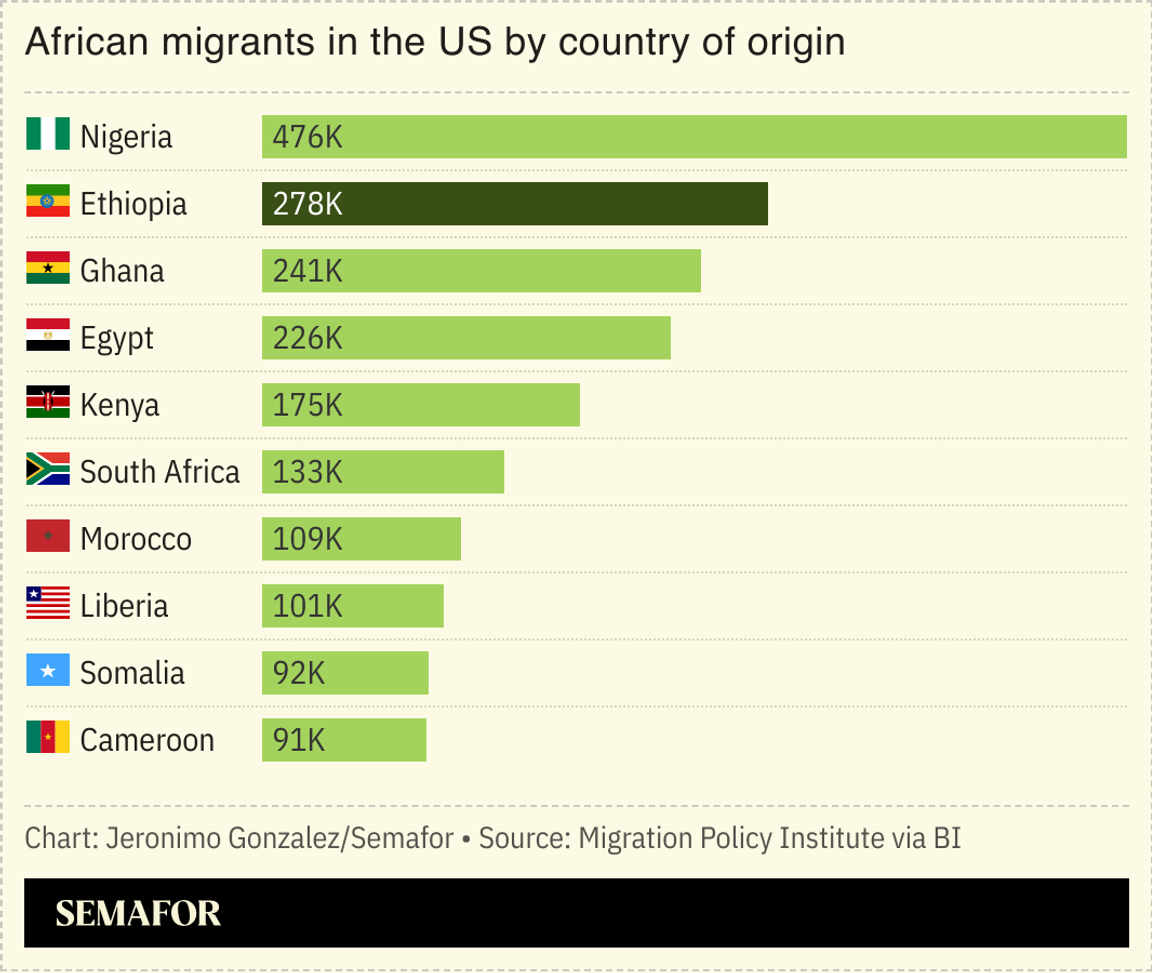 The Trump administration is ending temporary legal status for Ethiopian citizens in the US as part of its ongoing crackdown on immigration. “Conditions in Ethiopia no longer pose a serious threat to the personal safety of returning Ethiopian nationals,” the Homeland Security secretary said in a statement, urging anyone in the US under the Temporary Protected Status designation to leave the country within 60 days, or face potential arrest and deportation. Around 5,000 Ethiopian immigrants have been granted TPS designation since it was initiated in December 2022 due to armed conflict in multiple parts of the country. The new rule is triggering panic among those that have resettled in the US, CBS News reported, with community leaders disagreeing with the White House and questioning the time frame. The current US State Department advisory for Ethiopia urges people to reconsider travel to the country “due to sporadic violent conflict, civil unrest, crime, communications disruptions, terrorism and kidnapping in border areas.” |
|
 Climate & Energy
|
|
|