| | The UK’s new spy chief worries about Russia’s expansionist agenda, nations scramble to finalize trad͏ ͏ ͏ ͏ ͏ ͏ |
| |  MOSCOW MOSCOW | NEW DELHI |  SHANGHAI SHANGHAI |
 | Flagship |  |
| |
|
The World Today | 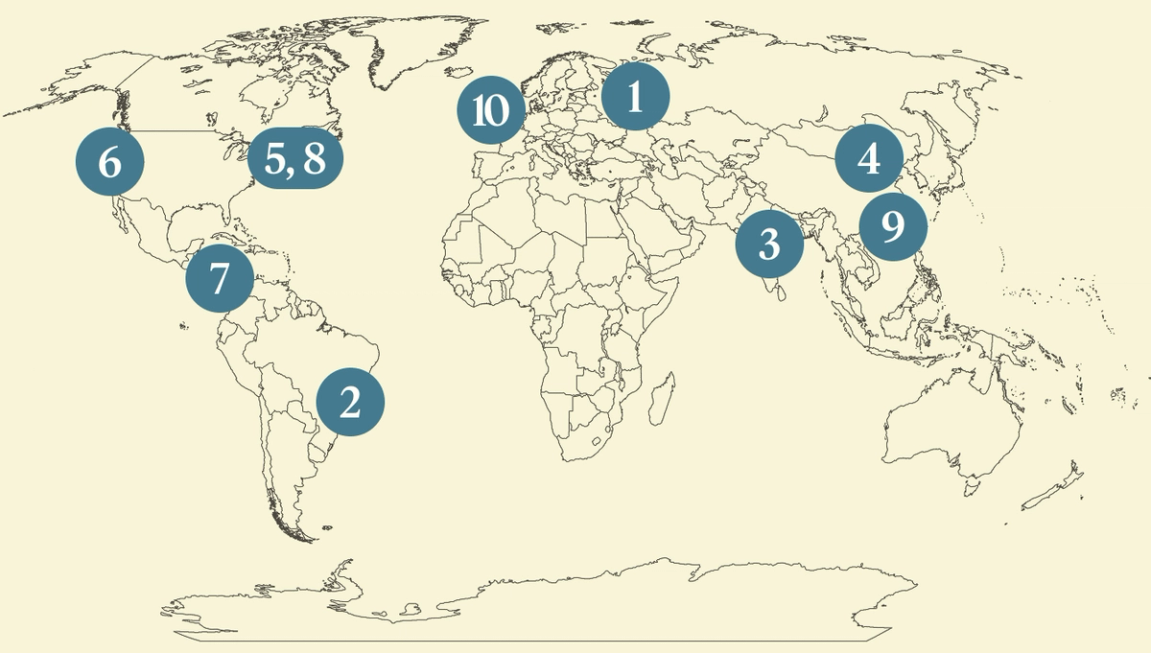 - EU alarm bells over Russia
- Scrambling for trade deals
- Toxic smog in Delhi
- Chinese childbirth stimulus
- Consulting job cuts
- Billionaires in US politics
- Billionaires launch cities
- Oliver Sacks’ ‘fairy tales’
- China’s Zootopia craze
- Human fire-making timeline
 The “Mona Lisa” of UFO art. |
|
Europe warns on Russian expansionism |
|
Year-end scramble to seal trade pacts |
 Yves Herman/Reuters Yves Herman/ReutersMany of the world’s biggest economies are scrambling to finalize long-awaited free trade deals. China’s foreign minister urged Gulf countries Monday to seal an agreement after decades of negotiations. EU leaders this week are also hoping to close the landmark Mercosur pact with several South American countries that has been 25 years in the making, but member states are divided on whether to sign off. At the same time, Brussels is racing to strike a deal with India after a challenging, yearslong effort. The end-of-year hustle reflects US President Donald Trump’s upending of the global trade landscape, and the desire in Europe to diversify partnerships and “open markets abroad… all against a tightening geopolitical clock,” Euractiv wrote. |
|
 Bhawika Chhabra/Reuters Bhawika Chhabra/ReutersDense toxic smog in India’s capital led to hundreds of flight cancellations and triggered travel advisories. Delhi “is a gas chamber right now,” one doctor said. The city’s air quality index breached the “severe” threshold over the last two days, and was more than 30 times the limit recommended by WHO. The government suspended construction, ordered 50% of staff to work from home, and imposed hybrid school lessons, while the UK and Singapore warned its citizens of travel and health risks. The smog, which worsens every winter as stagnant winds trap pollutants, hinders India’s prospects as a rising power, threatening “not only lives but the capacity of the state itself to function, govern effectively, and respond to strategic risks,” a journalist wrote. |
|
China to cover all childbirth expenses |
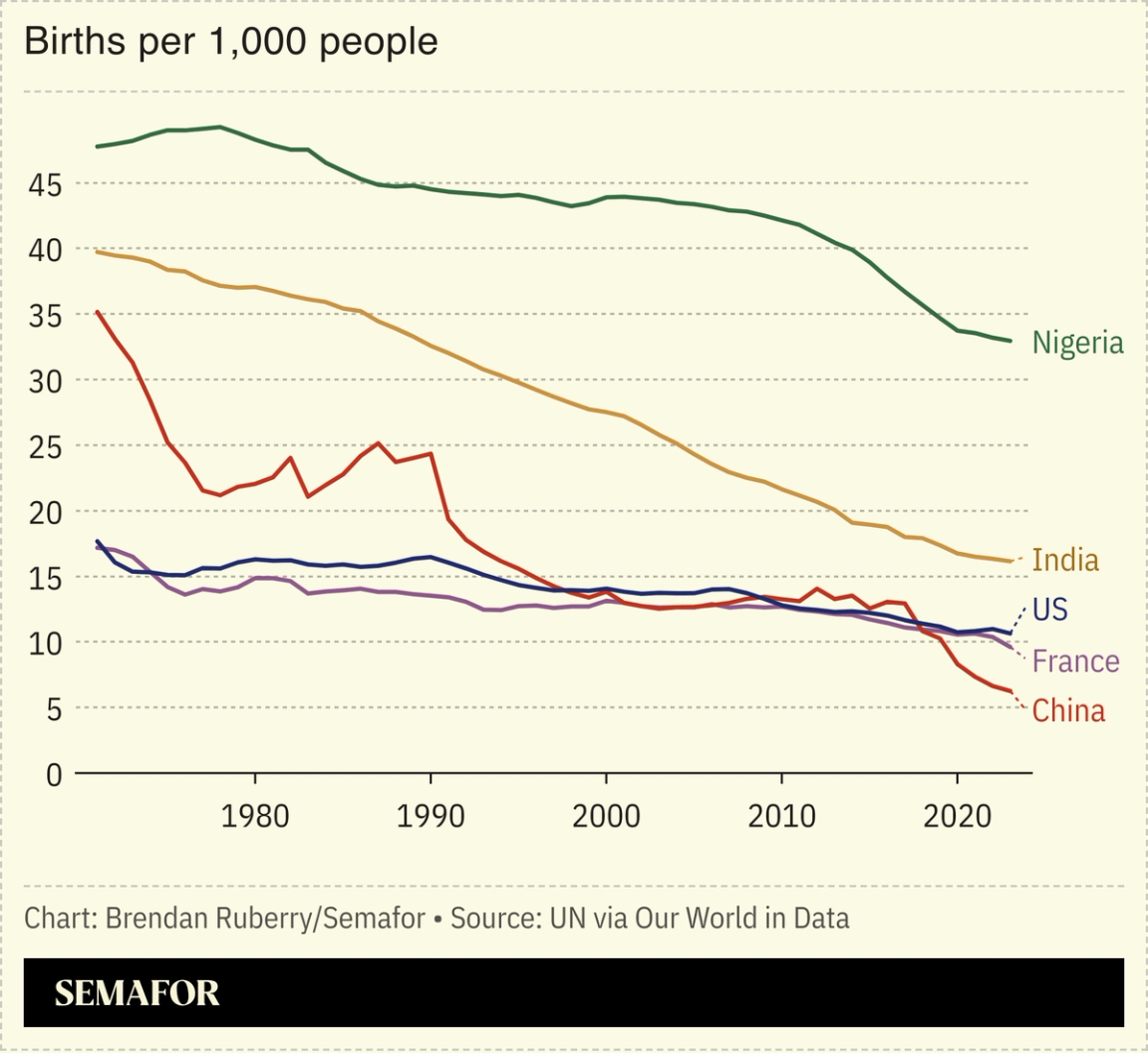 China announced it will cover all out-of-pocket expenses related to childbirth next year, in an effort to reverse its demographic decline. The country’s birth rates have fallen for decades in part because of the one-child policy; officials have already expanded maternity leave benefits and housing subsidies to encourage couples to have more children. The financial assistance could also help address Beijing’s larger problem of lackluster consumption, which has contributed to its economic slowdown. Other East Asian governments facing demographic crises have made similar moves, but experts question whether cash bonuses to encourage marriage and childbirth can offset structural hurdles and population challenges. “Would anyone really get married just to receive a congratulatory payment?” one Korean official said. |
|
Job cuts to hit consulting industry |
 Benoit Tessier/Reuters Benoit Tessier/ReutersConsulting giant McKinsey is reportedly planning thousands of job cuts, part of a larger slowdown across the industry. The company, along with peers EY and PwC, has gotten leaner over the past few years to weather a slump that has seen clients — including businesses and governments — grow more cost-conscious, Bloomberg reported. Accenture said that US President Donald Trump’s push for federal agencies to cull consultancy contracts has hurt revenue, while China’s government has ratcheted up scrutiny of foreign advisory outfits. AI, meanwhile, presents a double-edged sword: While some firms are replacing consultants with chatbots, others are looking to McKinsey or its competitors for advice on how to leverage the new technology. |
|
US debate over billionaires in politics |
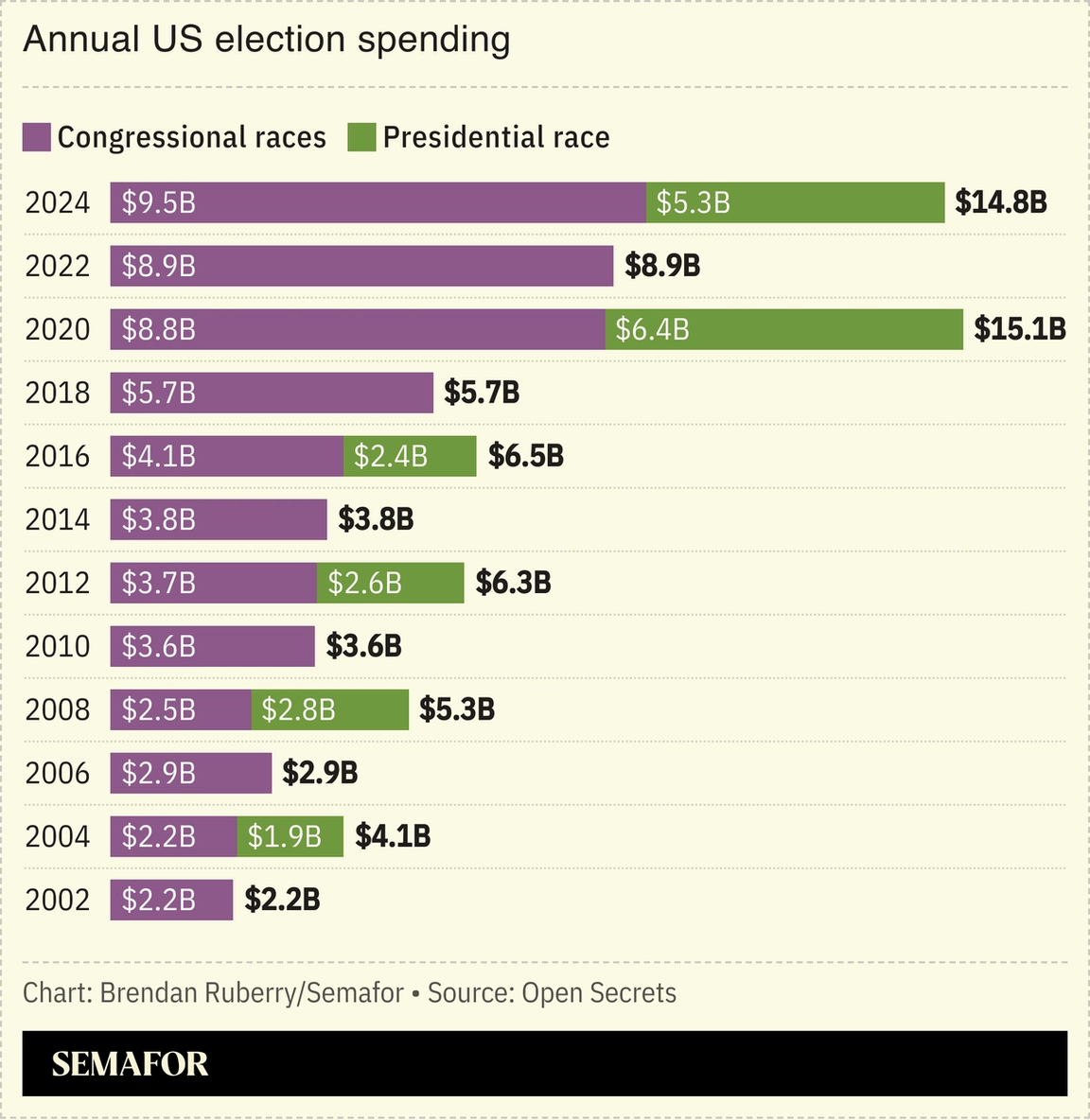 The US political class is divided over the role of billionaires in leading the country. Some Democrats have “villainized wealth,” but others argue the answer to Donald Trump — himself a billionaire — is someone like Illinois Gov. JB Pritzker, worth nearly $4 billion, The Washington Post wrote. Supporters say that wealthy politicians who can fund their own campaigns are less swayed by special interests. But voter backlash to billionaires is already brewing, an entertainment executive argued, as evidenced by polls showing Americans’ growing distrust of them and the recent electoral wins of democratic socialists. Populist pushback to Big Tech billionaires in particular could thrust AI and social media into the spotlight in 2028, some analysts predict. |
|
Tech billionaires eye for-profit cities |
 Próspera PrósperaTech billionaires and venture capitalists are increasingly attempting to decamp from Western democracies by founding their own for-profit cities. Straining against government oversight, tech leaders like Peter Thiel and Marc Andreessen have invested millions of dollars in Próspera, an ultra-low tax Honduran enclave that, by writing its own laws, promises unfettered growth and technological innovation. Similar tech-backed “network states” are being planned in African and Caribbean nations, offering governments direct investment in exchange for land tracts, which critics have described as predatory: “If you’re a weak state and you’re giving over large portions of land to a private state, there’s a really dystopian… feudal aspect to this,” a former Ecuadorian government minister told the Financial Times. |
|
Oliver Sacks fabricated case details |
 Chris McGrath/Getty Images Chris McGrath/Getty ImagesMany of the details in books by Oliver Sacks, the world-famous neurologist and writer, were “pure fabrications,” his own documents reveal. The case studies in his bestselling The Man Who Mistook His Wife for a Hat — notable for the title story about a professor who cannot recognize objects, and an anecdote about twins with autism who could name 20-digit prime numbers — were “fairy tales,” he wrote in a letter recently uncovered by The New Yorker. The events in Awakenings, in which sleeping-sickness patients were miraculously revived with Parkinson’s medication, appear to have been real, but the patients’ characters were often imaginary, ciphers for Sacks’ own struggles with closeted homosexuality. He wrote in his journal of his guilt over his “lies, falsification.” |
|
Why ‘Zootopia 2’ is such a hit in China |
 Go Nakamura/Reuters Go Nakamura/ReutersZootopia 2 flew past $500 million at the box office in China, bucking a trend of lackluster Hollywood releases in the country. The animated sequel has now earned nearly half of its $1.1 billion global haul in China, where the Zootopia franchise is incredibly popular: It resonates emotionally with Chinese audiences in a way other American films don’t, in part because of its feel-good, community-focused message, Jing Daily wrote; Marvel’s superhero narratives, in contrast, are often built on “individual exceptionalism.” At Disney’s first-ever Zootopia-themed land, which opened at Shanghai Disneyland in 2023, Flagship’s J.D. witnessed the craze firsthand last year: More adults were dressed as Judy Hopps than children dressed as princesses. |
|
Humans made fire earlier than believed |
Humans intentionally made fire 350,000 years earlier than thought, new archaeological finds revealed. People are known to have exploited naturally occurring fire — perhaps from lightning strikes — for a million years or more, but evidence of them deliberately making it only goes back to around 50,000 years ago, in the last ice age. The new discovery, in the English county of Suffolk, is 400,000 years old, when brain sizes were approaching modern levels, and shows clay that was repeatedly heated above 700°C (1292°F) and iron pyrite fragments that can be struck against flint to create sparks. Fire mastery was crucial to human development, and the discovery suggests ancient humans’ behavior and social relationships were more complex than believed. |
|
|


