|
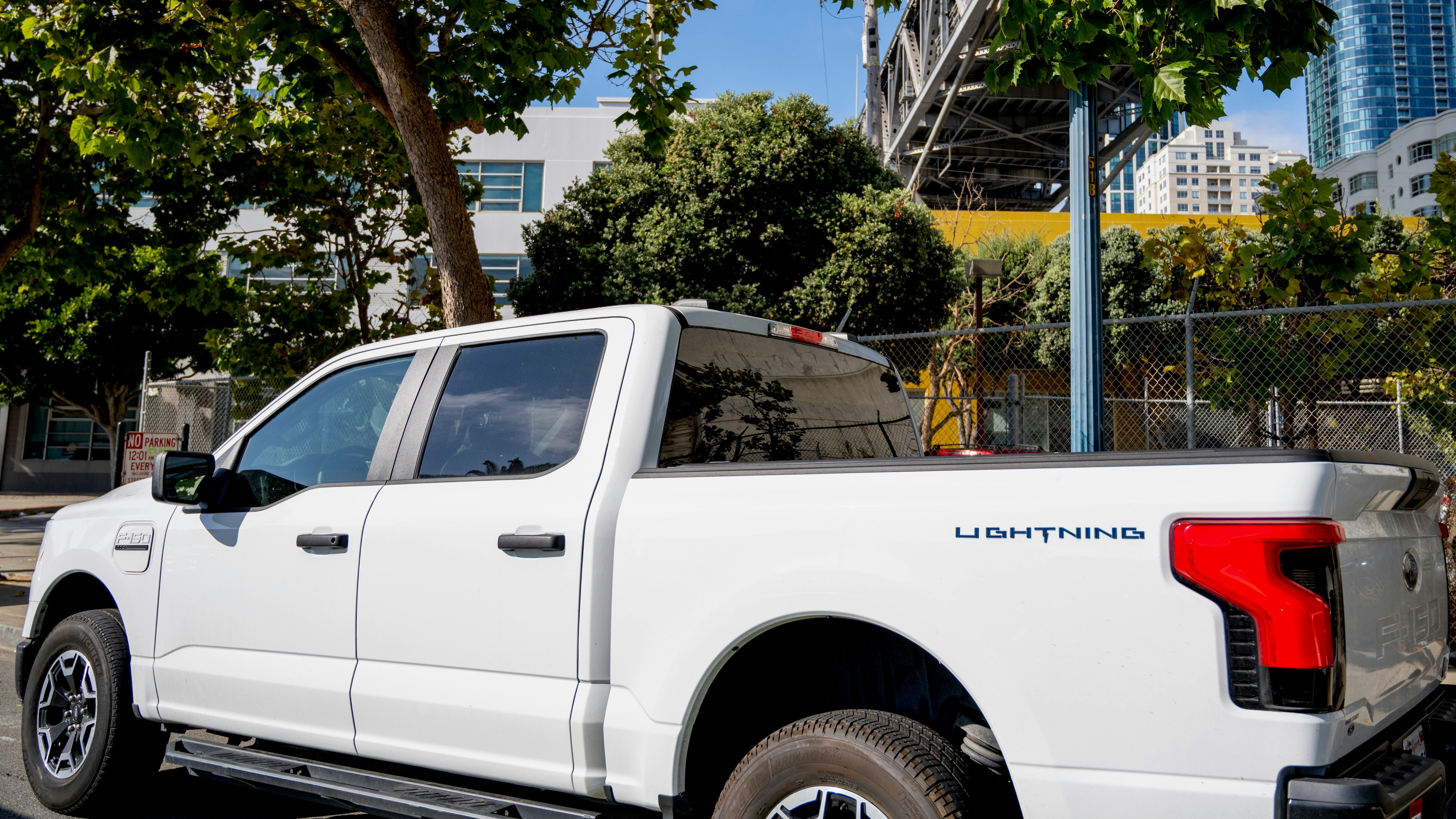
Ford on Monday will halt production of its electric F-150 Lightning pickup after poor sales of the vehicle, and will re-introduce it as a plug-in hybrid that uses an unusual technology to deliver more than 700 miles of range.
The company also sharply cut plans to make batteries in the U.S. and, in a move likely to spark controversy in Washington, will expand its use of Chinese technology in the batteries it does produce. Ford said it will use that Chinese technology to produce stationary storage batteries for use in AI data centers and on the grid.
Ford also said it was taking a $19.5 billion writedown spread across quarters into 2027. The company did not say whether its cutbacks would affect its skunk works in Long Beach, Calif., where it has put much store in a midsize $30,000 electric pickup that is being developed from the ground up by employees hired from Tesla, Apple and other companies for delivery in 2027.
The actions were the latest in an industrywide pullback from electric vehicles because of a general misreading of how fast consumers outside China would switch from gasoline cars. In September, Volkswagen temporarily shut down production of EVs at two plants in Germany. A month later, General Motors cut both EV and battery production in the U.S.
As of the beginning of December, Ford had sold about 25,000 Lightnings this year, suggesting that the company would fail to beat last year’s total sales of 33,510 of the model. The company has the capacity to produce 150,000 Lightnings a year.
A factor behind the move with the Lightning is that many truck users want to tow heavy loads; but when they do, the vehicle’s driving range drops significantly. So Ford instead will turn the Lightning into an extended range EV, or an EREV, which will contain a small gasoline engine and a battery that is smaller than a pure EV but larger than that in a standard plug-in hybrid. The engine will charge the battery. Together, the engine and battery will take the new Lightning 700 miles when it’s not towing, and will still deliver considerable range when it is towing something.
Ford has faced severe criticism from some politicians over its decision to license technology to make lithium-iron-phosphate batteries from Chinese battery giant Contemporary Amperex Technology Ltd. It has planned to make the batteries in Marshall, Mich.
In its announcement Monday, however, Ford said it will also use the CATL license to make at least 20 gigawatt-hours a year of stationary storage batteries in Glendale, Kentucky by 2027. That would be sufficient capacity to power 14 million homes for one hour.
Ford said it was cancelling plans to make 87 GWh of nickel-manganese-cobalt batteries at the Kentucky plant.
|





_01KBQNG99SV74MA8TPDKN07VFS.png)