
AIf you constantly suffer from excruciating back pain…
But no pill or exercises can erase the pain immediately and offer lasting relief, try this:
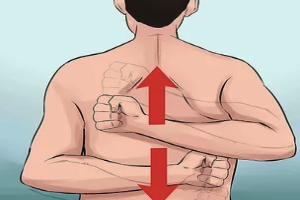
Grab a towel and sit straight on a chair…
Then DO THIS simple one-finger rub.
With this one simple trick, you’ll be able to quickly wipe off more than 90% of the pain, get your normal life back and move freely like a 20-year-old!
It sounds weird, but thousands of men and women suffering from chronic back pain, shoulder pain, neck pain and even arthritis say "IT WORKS WONDERS!"
Moreover, it is 100% backed by the prestigious Kyoto University of Medicine.
See here all the details now!

en flowers are arranged in a group, they are known collectively as an inflorescence. The development of flowers is a complex and important part in the life cycles of flowering plants. In most plants, flowers are able to produce sex cells of both sexes. Pollen, which can produce the male sex cells, is transported between the male and female parts of flowers in pollination. Pollination can occur between different plants, as in cross-pollination, or between flowers on the same plant or even the same flower, as in self-pollination. Pollen movement may be caused by animals, such as birds and insects, or non-living things like wind and water. The colour and structure of flowers assist in the pollination process. After pollination, the sex cells are fused together in the process of fertilisation, which is a key step in sexual reproduction. Through cellular and nuclear divisions, the resulting cell grows into a seed, which contains structures to assist in the future plant's survival and growth. At the same time, the female part of the flower forms into a fruit, and the other floral structures die. The function of fruit is to protect the seed and aid in its dispersal away from the mother plant. Seeds can be dispersed by living things, such as birds who eat the fruit and distribute the seeds when they defecate. Non-living things like wind and water can also help to disperse the seeds. Flowers first evolved between 150 and 190 million years ago, in the Jurassic. Plants with flowers replaced non-flowering plants in ma