
 |
|---|
We’ve noticed something in our coverage over the last year and a half: More so than at any point since the early days of Covid, our journalism is preoccupied by the forces acting upon higher education. And not without reason: These are powerful forces. Reformists in federal and state government are waging ever-more-organized campaigns to remake the academy. Demographic and financial threats, once daunting, now bear down with crushing weight. Artificial intelligence makes new encroachments almost daily into how the sector operates and how it understands itself. |
|---|
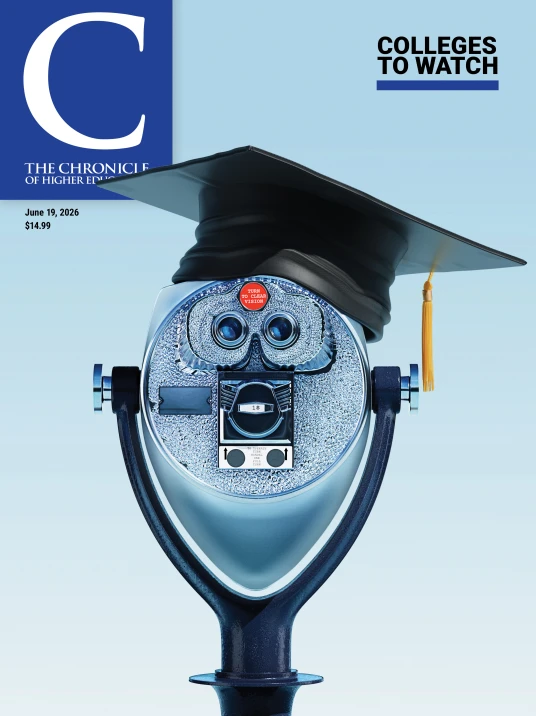 | But to take stock of where higher education is heading, it’s critical to examine not just these forces but also how colleges, universities, and individuals are responding to them. That’s the mission of The Chronicle’s first Colleges to Watch issue. It’s also the focus of our inaugural People to Watch issue, forthcoming in early fall. |
|---|
Who’s building something new, dismantling something old, taking a risk, getting something right that the rest of the sector hasn’t figured out — or, perhaps, getting something spectacularly wrong? Among countless possible answers, here are five.What makes these colleges worth watching? Some are engineering unexpected pivots — like the University of Arizona, the rare flagship looking to shrink enrollment and cut costs as many of its peers adopt a growth-or-death mindset. Others are doubling down on what they’ve always believed in — like St. John’s College, which is stubbornly sticking with deep reading in an era of learning outcomes and multimedia portfolios. Some are innovating, like Maricopa Community Colleges, which have embraced fast-track, stackable credentials that run the gamut from car-engine repair to phlebotomy. Others have arrived at a crossroads. Can Michigan’s Albion College carve out an identity — and an enrollment base — as the state’s large public universities suck up its students? And can one of those large public universities, Michigan State, surmount years of wayward governance and convince a leader to stick around? The choices these institutions make — and the eventual success or failure of those choices — won’t just determine their own financial and intellectual futures. They’ll help map higher education’s future — where the sector goes, and where it won’t, or shouldn’t. The same will be true of our People to Watch issue. We want to identify people with real influence — not to endorse what they're doing with it, but to better understand where the sector is heading. And we need your help. Whose work is having a significant impact and merits closer attention? Selections will be made through a combination of reader nominations and our own reporting. Submit your suggestions using this form by June 30. Brock Read Deputy Managing Editor |
|---|