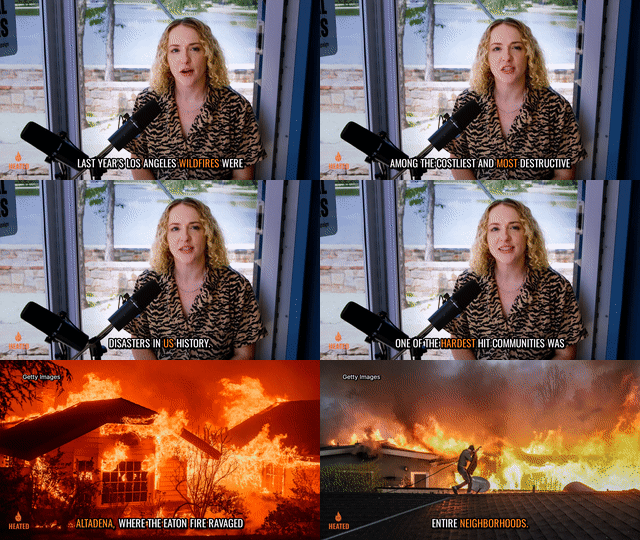
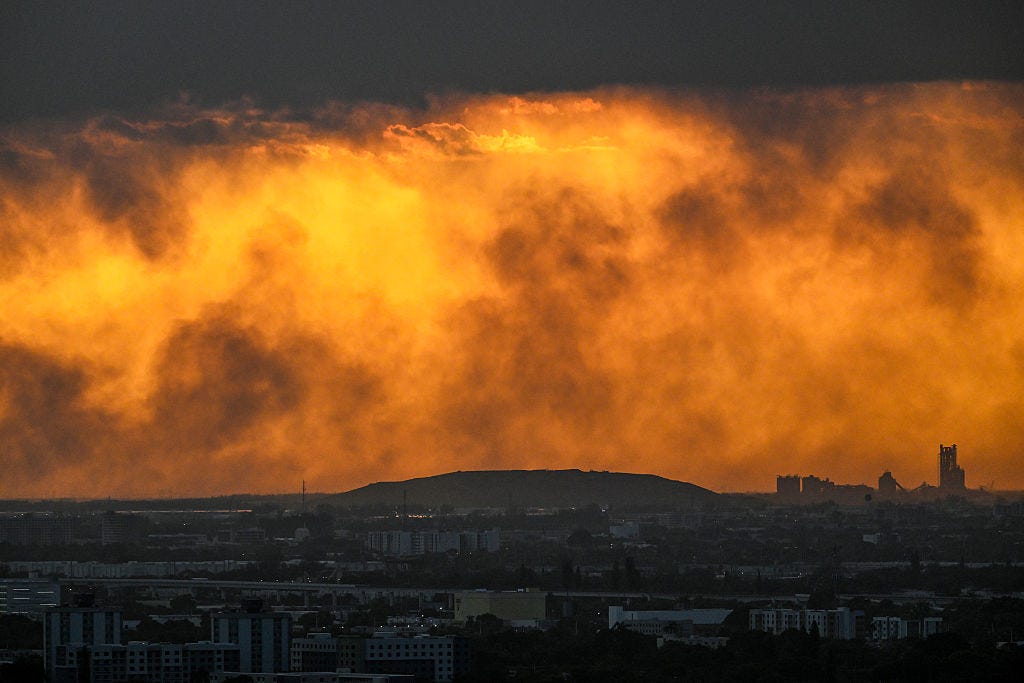
People say all the time, metaphorically, that the country is on fire. Right now, the country is also actually, literally on fire.
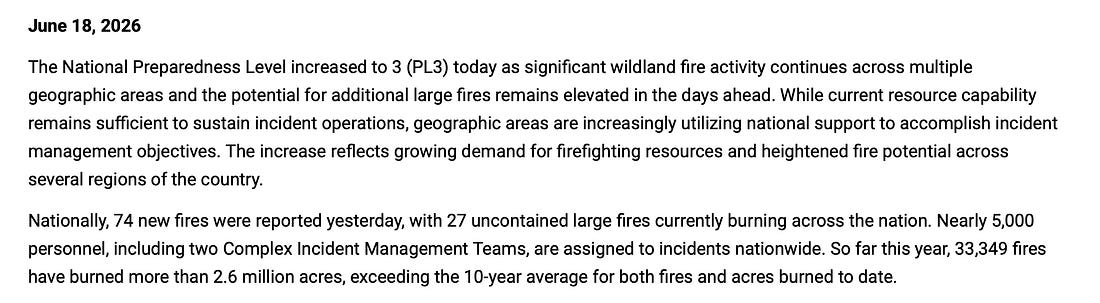
There are currently 27 uncontained large wildfires currently burning across the United States. Three near the Florida Everglades have torched an area the size of Manhattan. Another in Washington state has destroyed at least 15 homes and burned an area roughly the size of Miami. Another Washington wildfire, near Spokane, has forced the evacuation of 12,000, with one person presumed dead. And in Idaho, evacuations are underway as a major fire threatens more than 120 homes.
Because of this, the National Interagency Fire Center on Thursday raised the country’s wildfire preparedness level to 3 out of 5. Level 3 means the country is not yet in total wildfire emergency mode, but that the situation has become serious enough across multiple regions that state and local firefighters are increasingly calling for national backup.
The problem here is that it’s June. The average preparedness level for June over the last decade has been 2, while level 3 is more typical of July. But this is in line with what experts have been predicting about this year’s fire season: That it’s going to be horrifying.
Support independent climate journalism
“Key environmental indicators show that the nation is a tinderbox,” Inside Climate News recently reported, “gripped by widespread drought and with a light snowpack in the mountains that will offer little relief as its remnants melt away.” Already this year, 33,349 fires have already burned more than 2.6 million acres, a little over 4,000 square miles. That’s about 63 percent higher than the 10-year average for this point in the year.