|
|
|
|
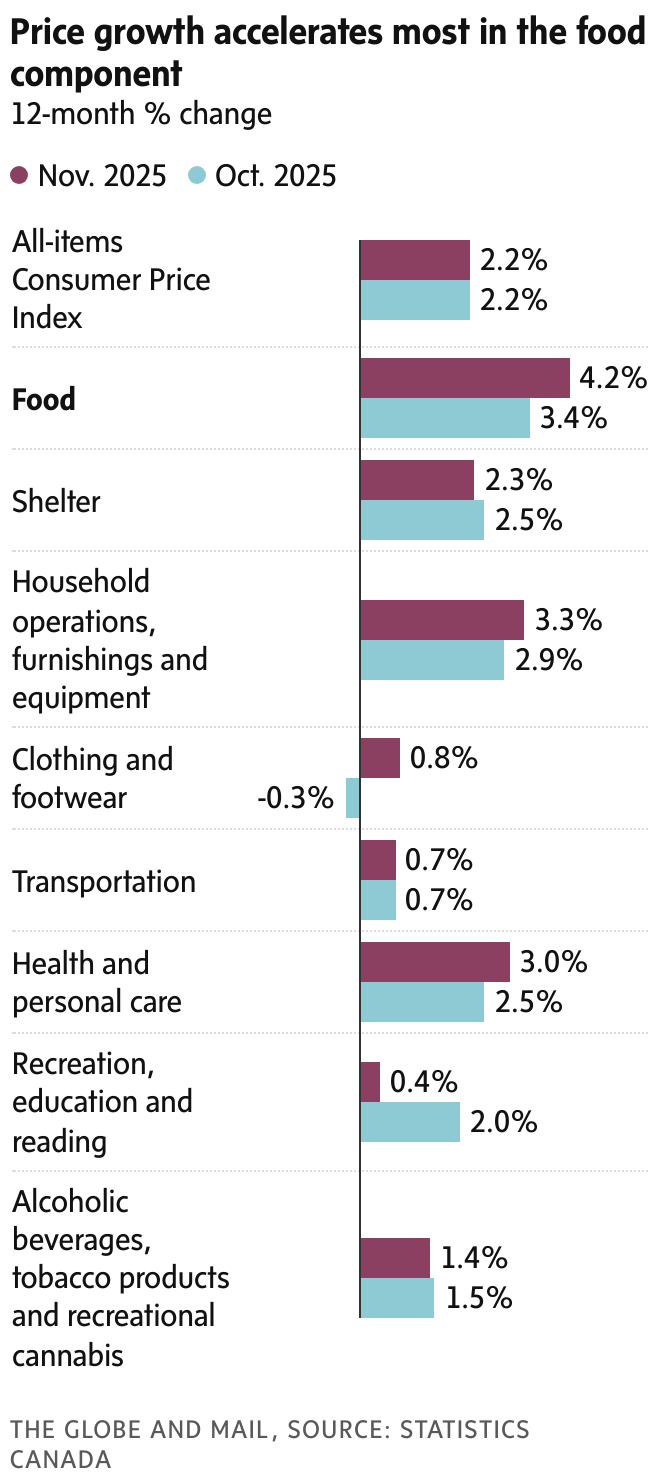
Good morning. Canada’s steady inflation rate masks a tug-of-war between rising grocery prices narrowly offset by cheaper gas, travel tours and hotels, with Taylor Swift-driven spikes to the cost of hotels and short-term stays last year still nudging slower growth this year. That’s in focus today, along with Canada’s IPO dreams. |
|
|
|
|
|
|
|
|
|
|
|
|
|
|
|
|
Mining: Anglo American has received approval from the federal government to acquire Teck Resources, clearing another major hurdle |
|
|
|
|
Institutional investment: U.S. private-equity giant KKR sees Canada’s infrastructure push as an investment opportunity |
|
|
|
|
|
|
|
|
|
|
|
|
|
|
|
|
|
|
|
|
|
|
|
|
|
|
|
Christopher Katsarov/The Canadian Press
|
|
|
|
|
|
|
|
|
|
|
The story behind your grocery bill |
|
|
|
|
Hi, I’m Mariya Postelnyak, The Globe’s consumer affairs reporter. Grocery prices are surging just as Canadians prepare to feed more mouths in one sitting than at any other time of year. |
|
|
|
|
|
|
|
|
Rising costs at the grocery checkout continued to bite in November, even as Statistics Canada reported yesterday that overall inflation was holding steady. |
|
|
|
|
|
|
|
|
|
|
According to Canada’s national data agency, inflation was kept in check by a handful of factors: an 8-per-cent drop in gas prices; slower rent growth; and falling costs for travel tours and hotels (and yes, Taylor Swift). |
|
|
|
|
The cost of travel tours fell 8.2 per cent year over year, owing to fewer Canadians making a trip down south. |
|
|
|
|
Rent rose 4.7 per cent compared with October, down from a 5.2-per-cent bump the month prior. That said, affordability hasn’t caught up everywhere – renters remain hard-pressed to find larger, more livable units, where prices have barely budged, if at all. |
|
|
|
|
Despite some prices easing up, Canadians paid 4.7 per cent more for food this November than the same month last year, marking the sharpest spike since December, 2023, even as headline inflation remained unchanged from the previous month at 2.2 per cent. |
|
|
|
|
|
|
What’s the deal at checkout? |
|
|
|
|
While Canada rolled back most of its retaliatory tariffs on U.S. food by the end of September, the effects of Donald Trump’s trade war – combined with severe weather and persisting supply-chain disruptions – continue to push grocery prices higher. |
|
|
|
|
As many of us look for alternatives to more expensive foods, it’s also creating ripple effects across the grocery aisles. |
|
|
|
|
Canadians paid 4.4 per cent more for fresh fruit in November compared to the previous November, with berries spiking more than 7 per cent. Food experts put some of the blame on droughts in Nova Scotia, which have cut blueberry crops by more than 50 per cent. |
|
|
|
|
But Sadaf Mollaei, the Arrell Chair in the Business of Food at the University of Guelph, told me that we might still be seeing the lingering effects of supply disruptions on packing production. Many Canadian-grown products are shipped to the U.S. for packaging before returning to shelves in this country, leaving prices vulnerable to any cross-border interruptions, she said. |
|
|
|
|
“When there is a disruption and then the price increases, it happens really fast,” she said. “But then when it wants to come down or stabilize, it actually takes longer.” |
|
|
|
|
|
|
|
|
|
|
Beef and coffee prices posted some of the steepest spikes, rising 17.7 per cent and 27.8 per cent respectively. |
|
|
|
|
Drought conditions and shrinking cattle inventories across North America have pushed up beef prices. Meanwhile, coffee has been hit by the double-whammy of U.S. tariffs on key producing countries such as Brazil, alongside disruptions to production brought on by severe weather. |
|
|
|
|
|
|
|
|
|
|
But curbing beef costs gets more complicated. Many Canadians have turned to chicken, creating a new pressure point. |
|
|
|
|
Poultry prices rose 7.5 per cent in November as consumers swapped chicken for higher-priced beef while domestic production struggled to keep up. “We didn’t meet our targets, so chicken prices are going to be high as well,” said Dr. Mollaei. |
|
|
|
|
|
|