Palma studio Resmes, a Noguchi-designed park swing and Finnish artist Anna Pesonen.
|
Wednesday 18/3/26
|

|
|
London
Paris
Zürich
Milan
Bangkok
Tokyo
Toronto
|
|
|
|

Keeping up appearances
We touch down in the Mediterranean for this week’s dispatch, where we read a manifesto for Mallorcan production at studio-cum-showroom Resmes in Palma before meeting with installation artist Anna Pesonen in Malta. Then we take a playful detour by way of a Noguchi-designed park swing and peek behind the limestone façades of Santo Domingo in a new photography book by Nelia Barletta. First, Jessica Bridger helps to keep the wheels turning with a lesson in maintenance.
|
|
OPINION: jessica bridger
Make do and mend
It’s easy to forget about design’s companion: maintenance. Once an object is in the world, it is to be used. And, to be used, most things must also be maintained. Keeping something running in good order is a task – and a form of respect. But designing for maintenance is an art in and of itself; thinking about replacement parts, disassembly and reassembly, and how simple the design can be while still achieving complex goals.
We deride single-use plastic and fast fashion but most people never consider maintenance until something is broken, which means that it is too often ignored. Avoiding throwaway consumerism isn’t simply about what to buy or not. It is about developing a skillset over time – and many durable things require this. Fixing a hole in a beloved eight-ply cashmere cardigan; oiling an oak cutting board; learning to rewire a Kaiser Idell vintage lamp.
|
Stewart Brand’s newly released Maintenance: Of Everything, Part One is a philosophical guidebook about why such practices matter. It is not about how to maintain anything but, rather, about why it is important. “Let ‘maintenance’ mean the whole grand process of keeping a thing going,” writes Brand. “Using this as a frame of reference is – I hope to show – a fruitful way to rethink all manner of things.” Designing for a lifetime is the aim of many works and preservation is the long runway to object permanence.
The book begins with the 1968 Golden Globe sailing race, before exploring Fordism and mass production via detours into the integration of military technology in society. All along he stresses that it is impossible to actually design and live in the world without thinking about maintenance, especially if you want to do so optimally.
|
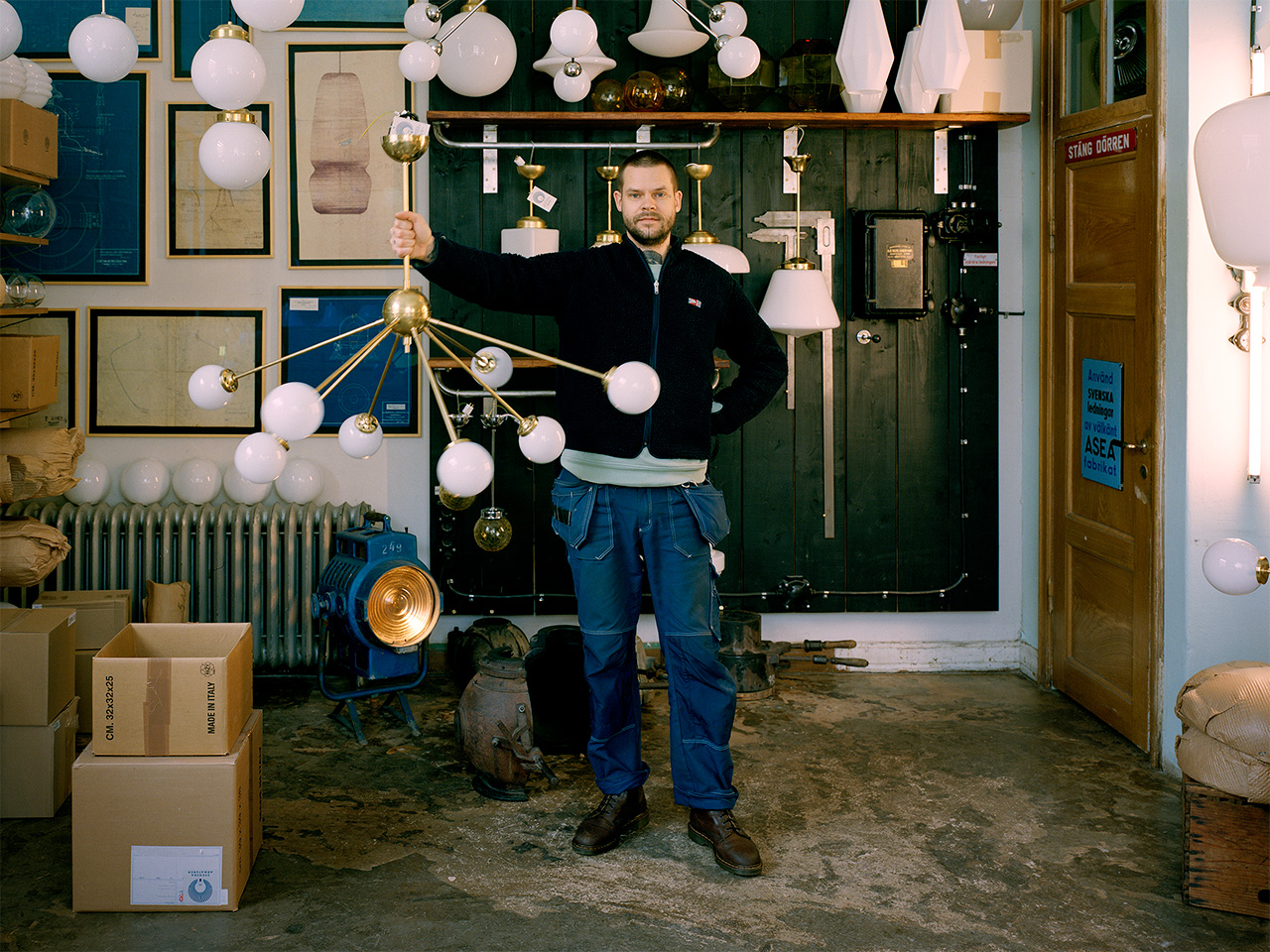
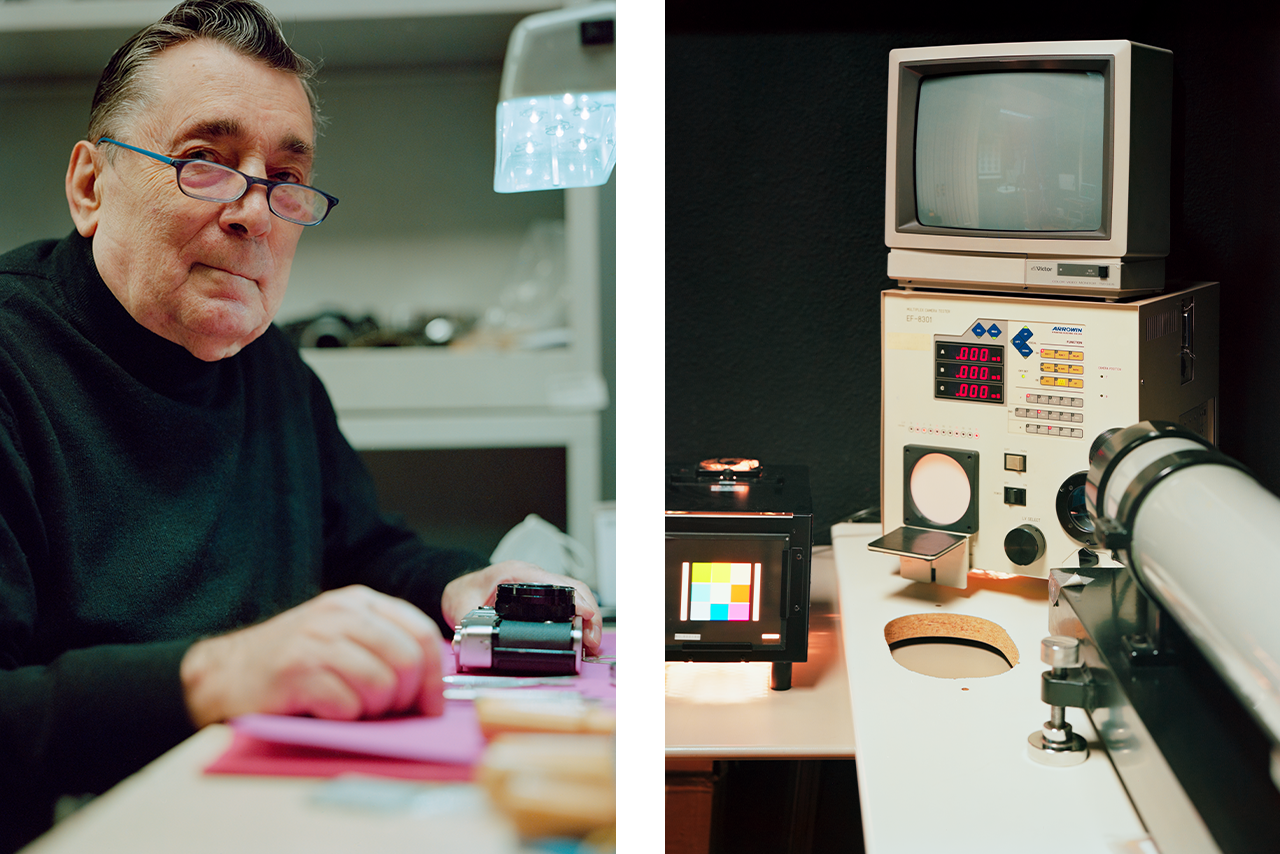
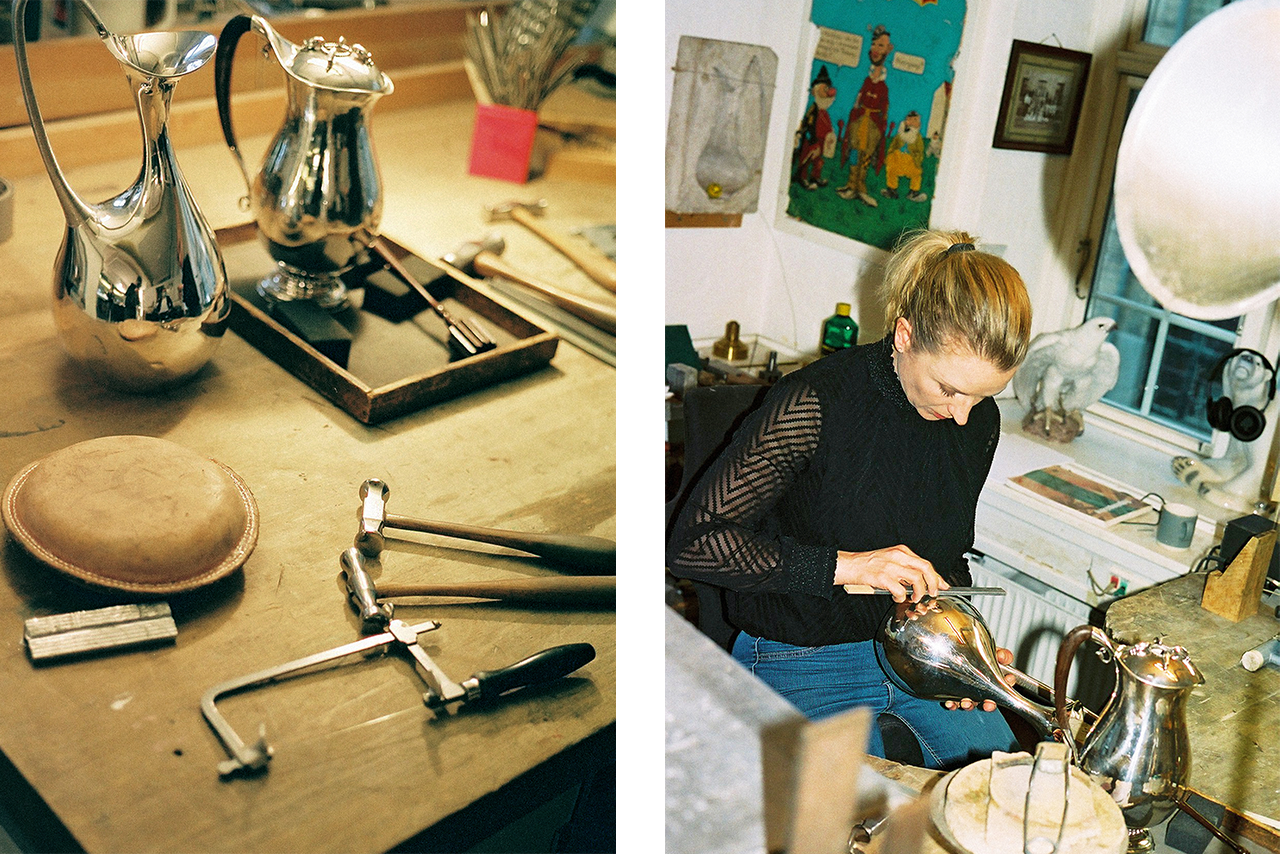
For those of us who aren’t do-it-yourselfers and curious hobbyists, there’s a host of talented people willing to help. Engaging the likes of lighting repair firm Svenska Armaturer in Stockholm, camera specialists Playmon in Madrid (pictured, above) or even Copenhagen-based silver repairer Tina Bentzen, who works with Georg Jensen (pictured, above) can ensure that the objects with which we surround ourselves can remain – or be returned to – top working condition. Beyond the domestic realm, maintenance is the single most important part of keeping cities functioning. Trash must be picked up, potholes mended and sewage treated. This isn’t nearly as glamorous as a new piece of starchitecture.
At all scales, from the individual and the urban to even planetary, maintenance is the reality of keeping a thing or system functioning – of avoiding breakdown and failure. It is a way to “rethink”, as Brand called for, or simply think about what goes into the world around us and how to care for it.
Jessica Bridger is a contributing editor at Monocle.
To read more on the art of repair – and the work of Svenska Armaturer, Playmon and Tina Bentzen – click here.
|
|
Edo Tokyo Kirari  MONOCLE MONOCLE
|
|
DESIGN NEWS: resmes, spain
Life essentials
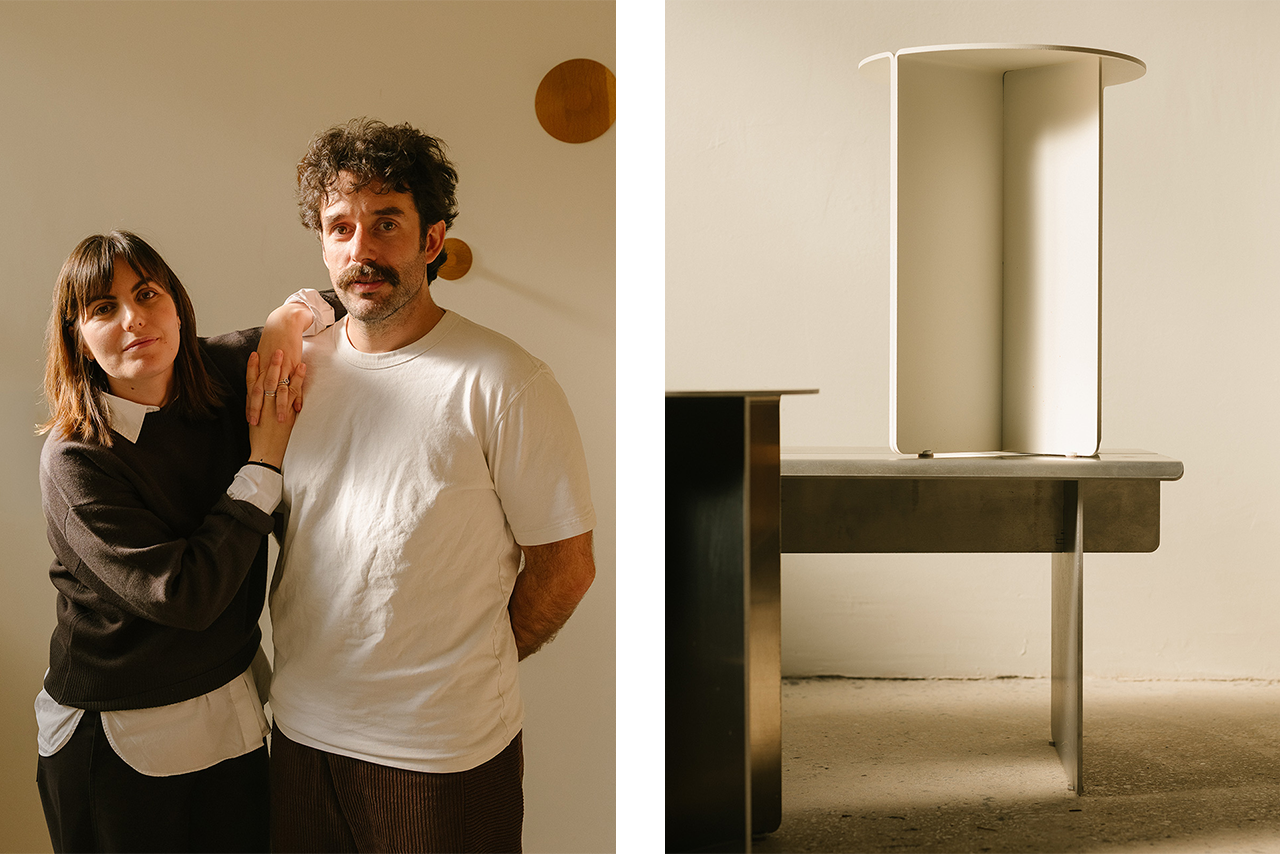
As a young designer nurturing a fledgling business, it’s easy to be overwhelmed by the effort it takes just to keep going. But when Monocle visits Joan Morell and Elena García’s studio-cum-showroom in Palma, the husband-and-wife team behind furniture- and product-design company Resmes explain that beyond finding customers and doing their own photography while assembling product lines, they have another pressing task: writing a manifesto – and one that’s not too demanding or restrictive. “In Mallorquín, the words ‘res més’ translate as ‘nothing more’ and so our brand’s name has a very specific meaning,” says Morell. “We want to make products that feel essential. But we are at the point when we need to write down what we stand for. We need a manifesto.”
|
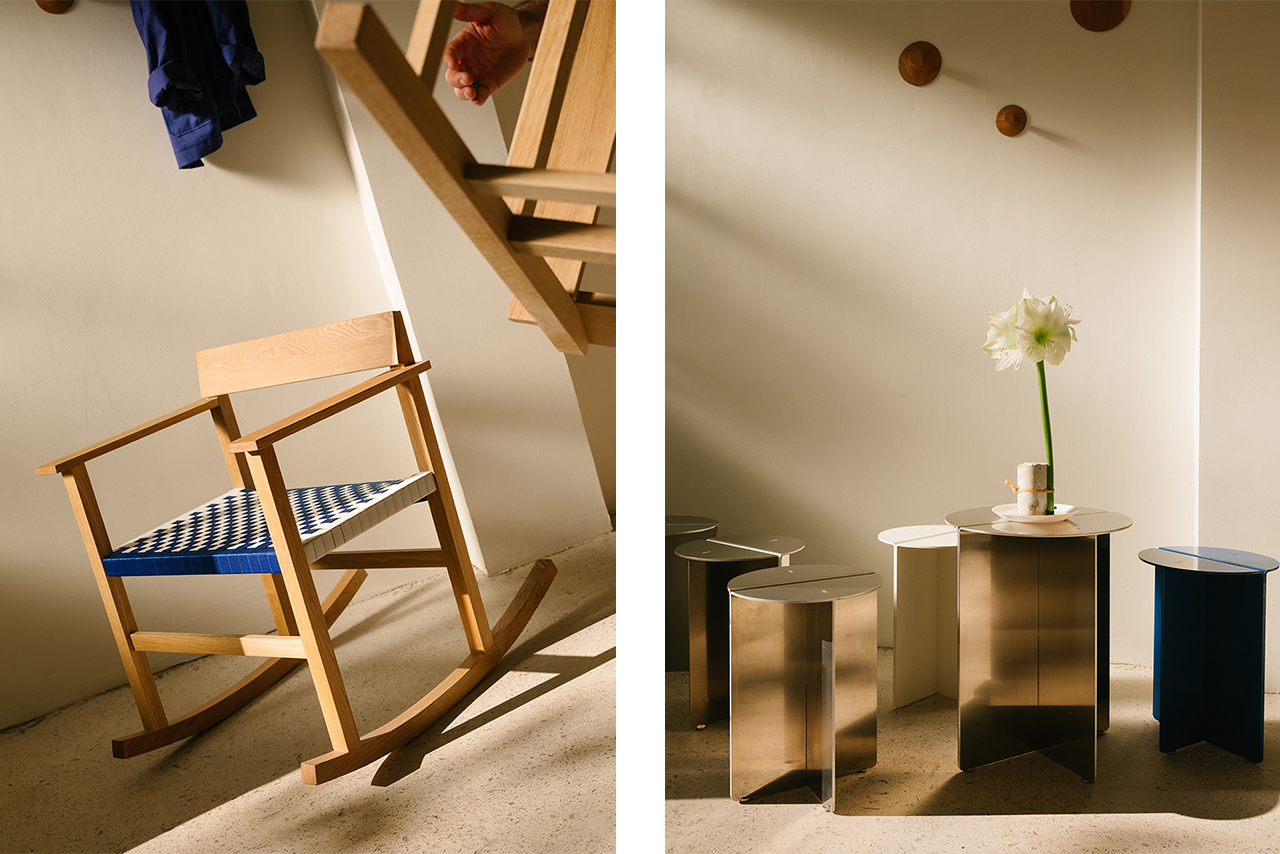
García can already articulate one of their guiding principles. “We want to be the solution to our clients’ problems,” she says with manifesto-like clarity. Those looking for smart seating might have just found the answer. The brand’s Cadira chair (pictured, above) is exceptionally comfortable and crafted from oak with a handwoven-cord seat that takes nine hours to make.
Then there’s the growing Pleg collection (named after the Mallorquín word meaning “to bend”) made from aluminium, which includes a bench, two small tables and shelving (see a selection from the range pictured above). The metal is supplied from the mainland and Morell and García oversee the assembly and spray-painting. The collection has proved popular with restaurants, shops and hotels but the pair also want direct contact with homeowners so that they can provide those promised solutions in domestic settings too.
resmes.es
See how multi-brand shop Colom worked with Resmes at monocle.com.
|
|
WORDS WITH... anna pesonen
Sound and vision
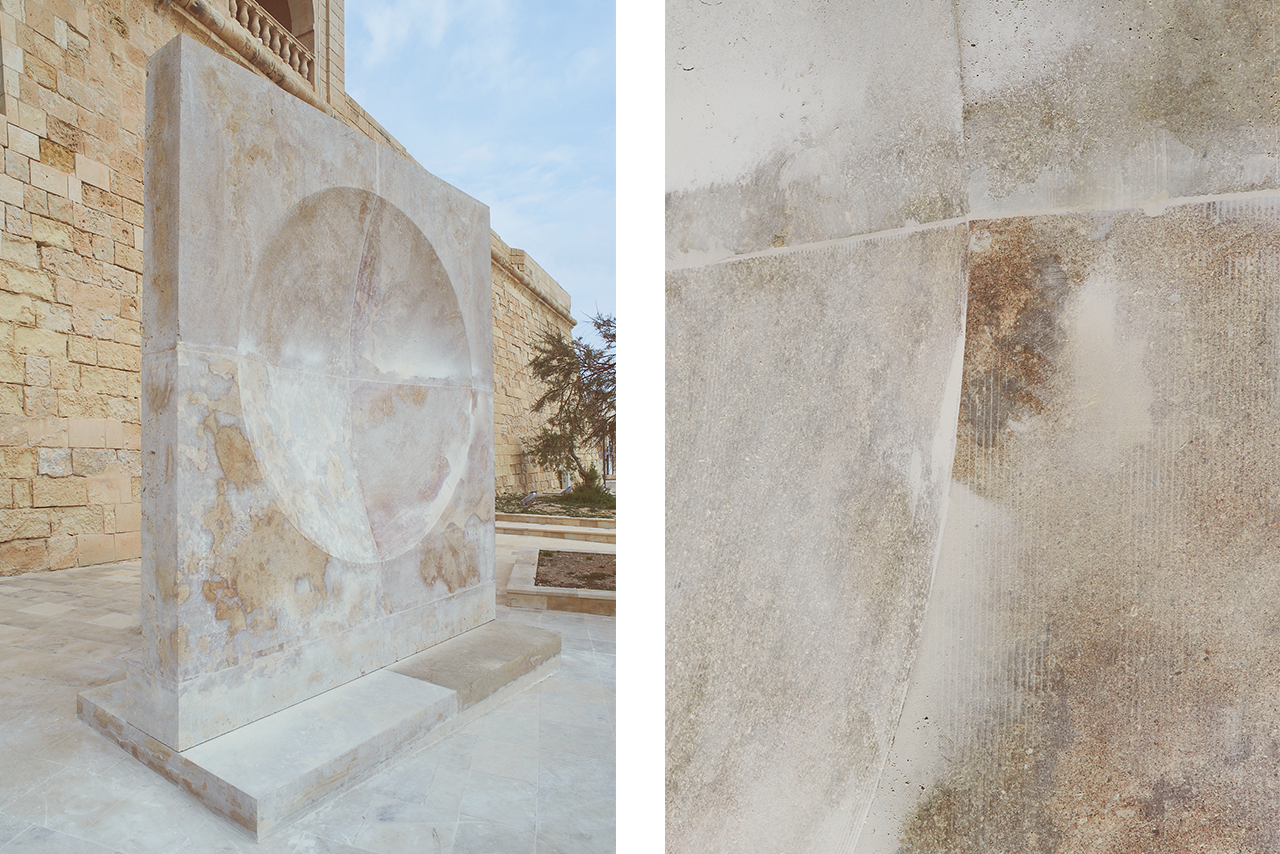
Finland-born, London-based artist Anna Pesonen blends sound, site and sculpture in her work, often in reaction to current events. Her large-scale stone installation, “Bastion of Refugia”, will be on show at the Finnish pavilion as part of this year’s Malta Biennale until 29 May. Staged within a former military fortification, the work repurposes defunct military surveillance technology and features a sonic dimension. Visitors to the pavilion can hear kelkettely, a vocal practice that originates in Karelia – the border region between Finland and Russia. We speak to Pesonen about the influence of land art and minimalism in her work and a museum to visit in Ghana.

|
What design movement has influenced you the most?
The women of land art and minimalism have been foundational – artists working at the scale of landscape, with material directness. Growing up in Finland, Aino and Alvar Aalto were a constant presence. What stays with me isn’t just the aesthetic but the radicality of what they were proposing at the time – a total rethinking of how people should live and work. When I think of good design, I also think of Japan. I lived there briefly and found myself constantly arrested by small details in everyday objects. I love the intensity of attention to detail.
The sky’s the limit: which piece of furniture would you love to own?
Hiroshi Sugimoto’s Glass Tea House. Or Rick Owens’s Glade. Furniture that sits on the edge of sculpture. Both blur the boundary between object and environment.
A recurring source of inspiration?
Authenticity and not living to perform. People who dedicate their lives to speak out on things that bring humanity closer together. [US state representative] Jasmine Crockett, whose clarity and fearlessness I find galvanising. Geological time – the way that stone records its own making. I find myself returning to it constantly, both literally in the quarry and conceptually when thinking about what it means to make something that might outlast the conditions that produced it.
|
A favourite project that you’ve worked on?
The Malta Biennale installation (pictured, above). It’s my biggest work to date and threads together all the pieces of my practice. The installation consists of a three-metre-tall stone sculpture that reflects sound waves, directly inverting the original function of the British Army’s pre-radar sound mirrors at Fort St Elmo. I’ve made a sound work in collaboration with the last known living practitioner of kelkettely – a Karelian joik vocal tradition on the edge of disappearing – alongside [music duo] Space Afrika. The project includes a publication and a public programme with artists who I deeply admire.
A priority for the industry going forward?
Not succumbing to authoritarian governments or changing the history books – artists need to keep talking about things that are going on in society. The risk of censorship is real and growing, and the industry needs to be honest about where it’s already compromising. For me that’s inseparable from the work itself: if the practice is about foreclosed futures, staying in that conversation is part of the commitment.
Which city has the best design scene?
I’m really interested in AlUla, Seoul and Nairobi – places where the relationship between contemporary practice and deep cultural histories is being worked out and intertwined in new ways. The edges are interesting, though London has a great energy at the moment and I’ll be spending more time in New York, which I’m excited about. If I had to give one tip it would be to visit Limbo Museum in Accra.
|
|
|
SPONSORED BY Edo Tokyo Kirari
|
|
|
|
|
|
from the archive: Playground swing by Isamu Noguchi, US
In full swing
Isamu Noguchi is a household name thanks to his abstract totem-like sculptures, Vitra’s bestselling glass Coffee Table and the ubiquitous Akari paper lamps. Still, the Japanese-American designer maintained that his best projects never saw the light of day. He harboured ambitions to be an urban planner, particularly to make playgrounds, but city officials wouldn’t hear of it. Those torpedoed ideas, such as this swing set, are the subject of Noguchi’s New York, an exhibition at The Noguchi Museum in Queens, which runs until 13 September.
|
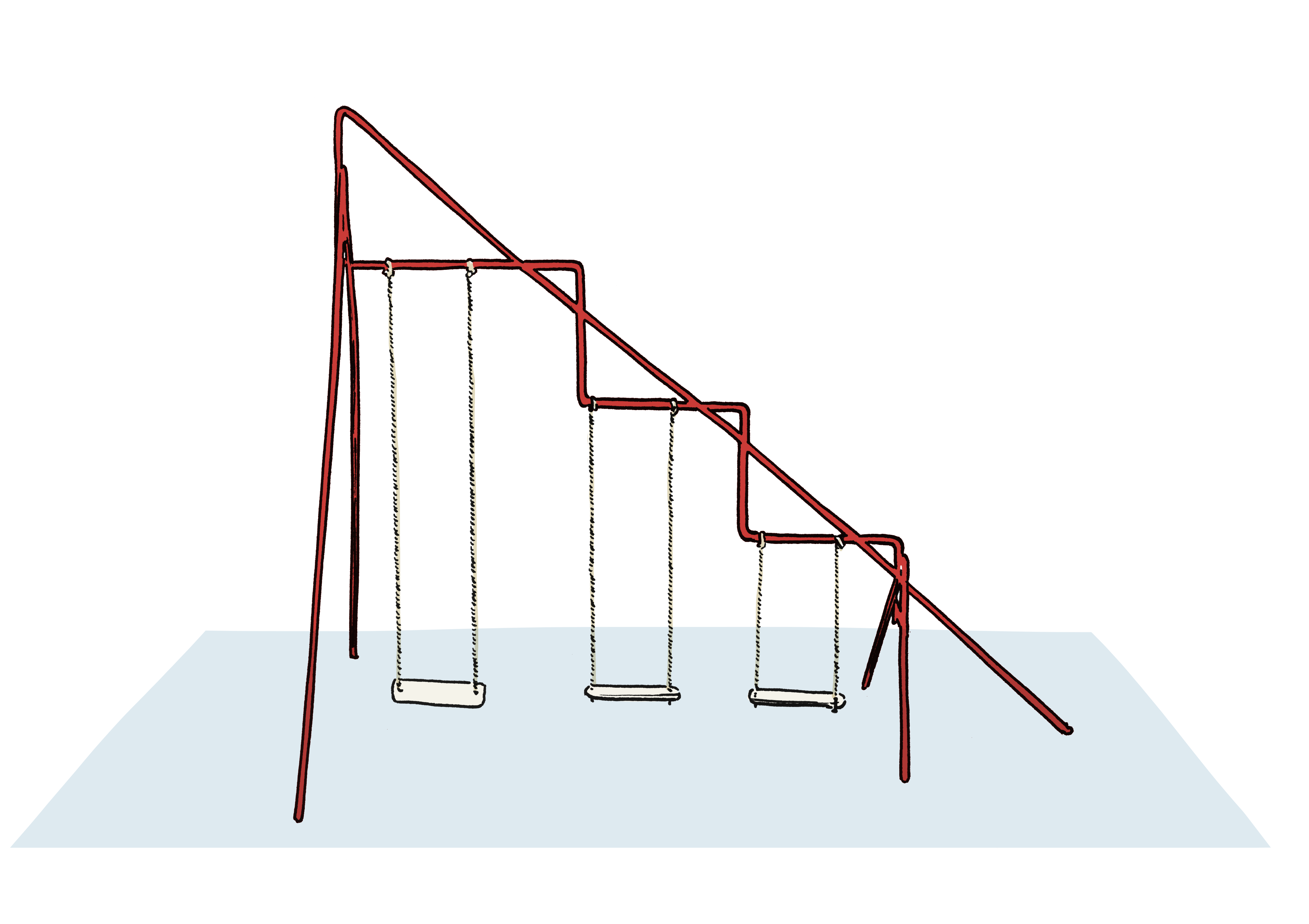
This three-piece swing was originally conceived in 1940 for a playground in Hawaii, which would also have included a curved slide and a jungle gym. That plan was derailed by the Japanese attack on Pearl Harbor a year later, with Noguchi spending seven months in an internment camp in Arizona. Later, he pitched the scheme in New York but was unsuccessful; a version of the design finally went up in Atlanta in 1975. With hindsight, everyone can agree that Noguchi should not have had to work so hard to bring play to public spaces.
noguchi.org
|
|
around the house: ‘Mundos Interiores’, Dominican Republic
Behind closed doors
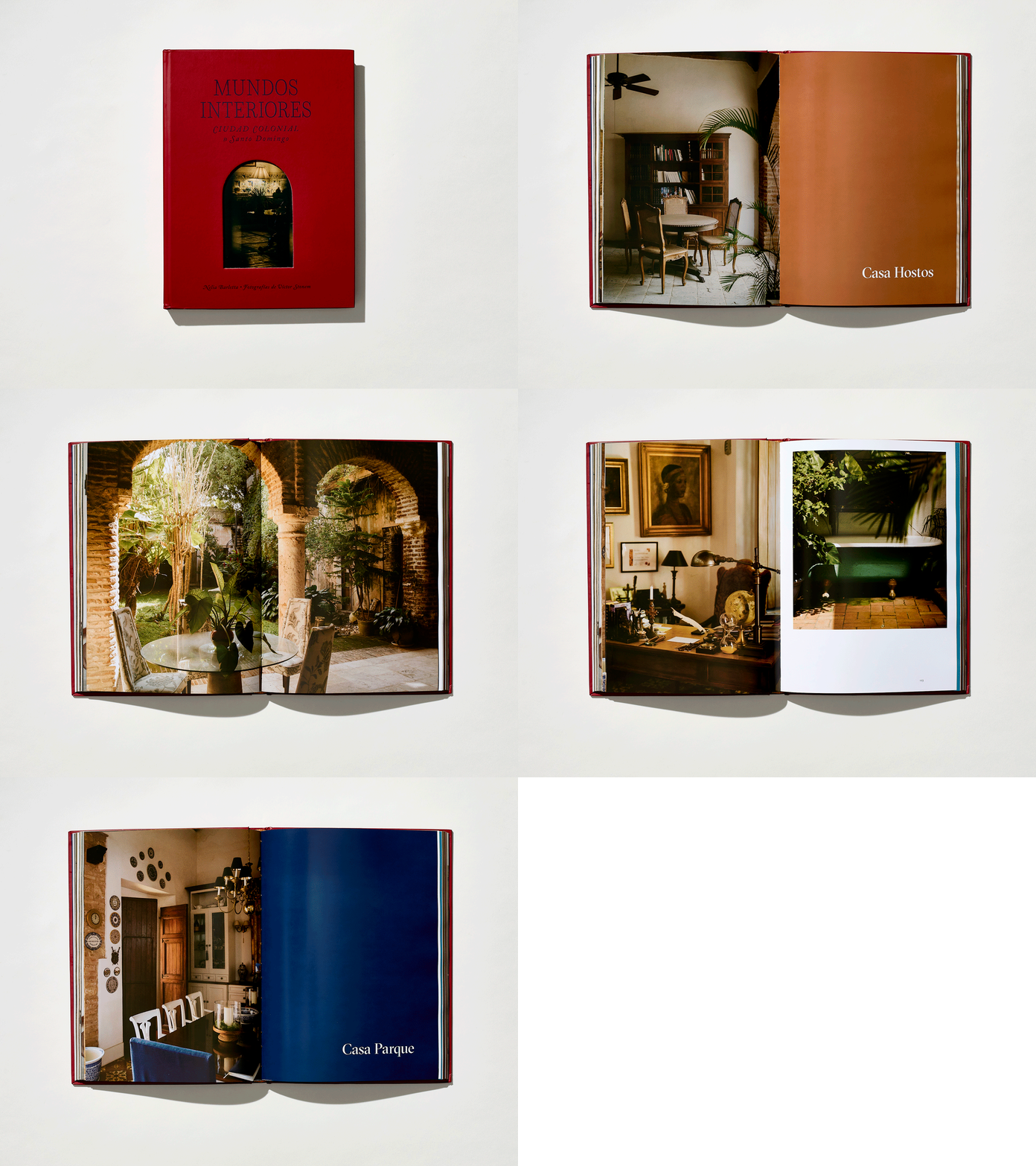
Santo Domingo might be more than 500 years old but the city retains a vibrant residential community, though, like many historic centres, it’s at risk of overtourism. The old city’s coral limestone façades and wrought-iron entryways have long intrigued writer and resident Nelia Barletta. For her third book about the historic district, which is the oldest European settlement in the Americas, she enlisted photographer Victor Stonem. Together, they talked their way into 22 homes and businesses to document what goes on in the city’s courtyards and living rooms.
Keen to capture life without gloss, Stonem did not shy away from framing a dusty desk or a plastic-wrapped sofa. The only requirement? Some kind of colonial feature, from a heritage wall to a vintage chair, even if the space | | | | |