| | The US steps up efforts to open the Hormuz Strait, Netanyahu says war’s end is near, a Russia oil sh͏ ͏ ͏ ͏ ͏ ͏ |
| |  | Flagship |  |
| |
|
The World Today | 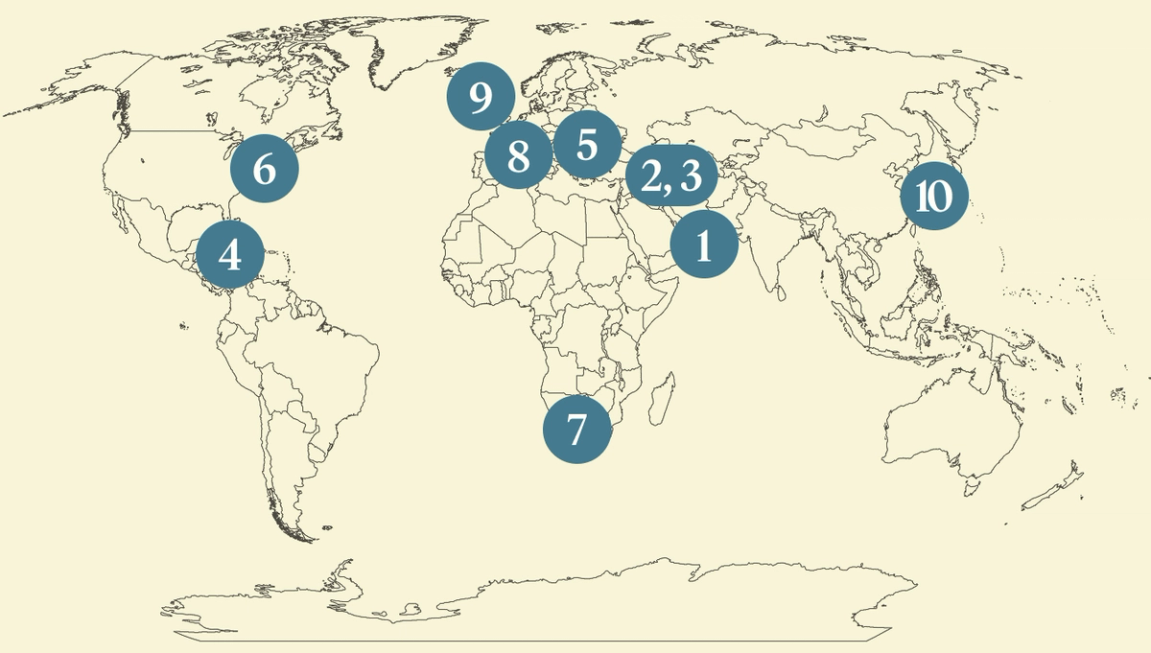 - US ups Hormuz efforts
- Israel-US tensions mount
- War is working: analysts
- Russian oil heads to Cuba
- Orbán blocks Ukraine loan
- Tech boss held over chips
- Africa gambling crackdown
- Paris votes for new mayor
- Banksy is unmasked
- BTS’ big-ticket return
 A ‘searing and subtle story of grief and guilt’ at New York City’s Metropolitan Opera. |
|
Iran has ‘advantage’ in Hormuz |
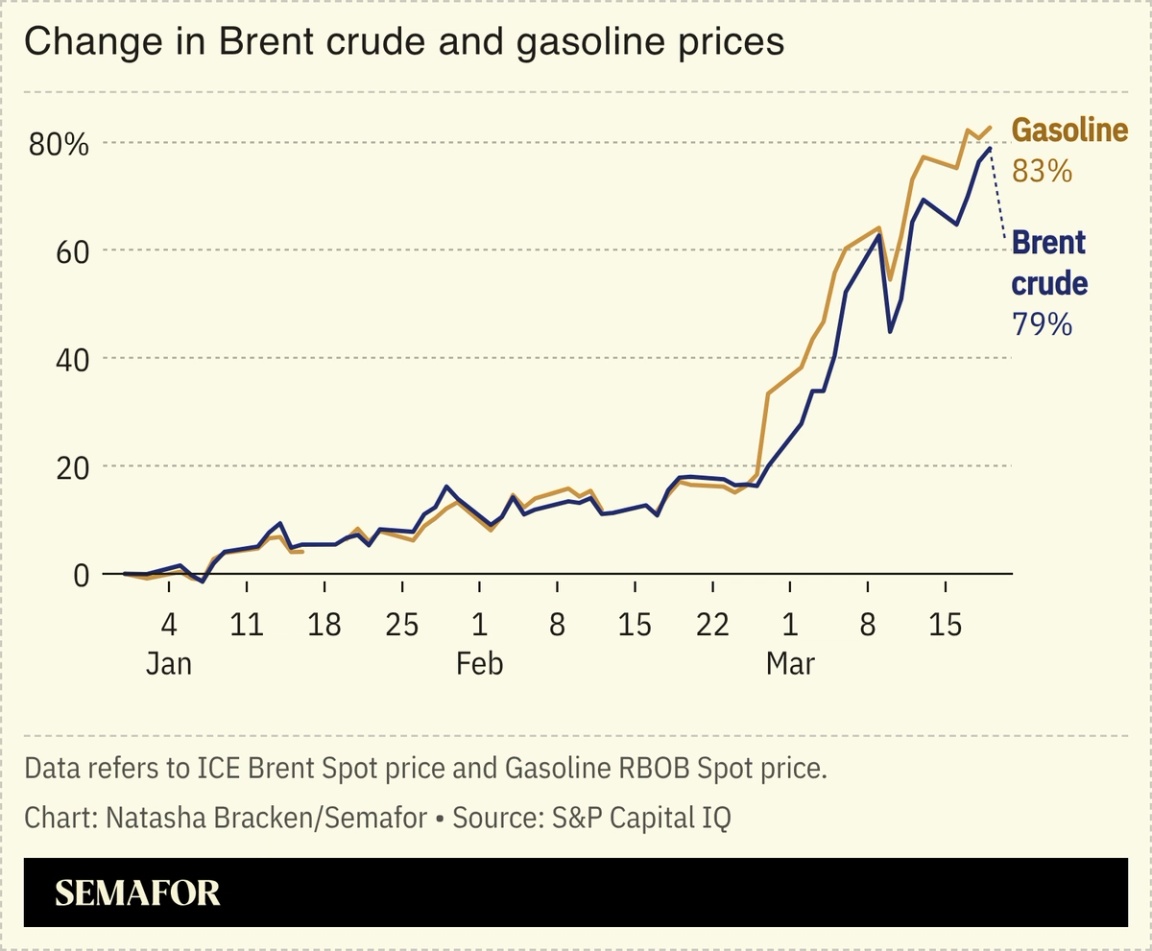
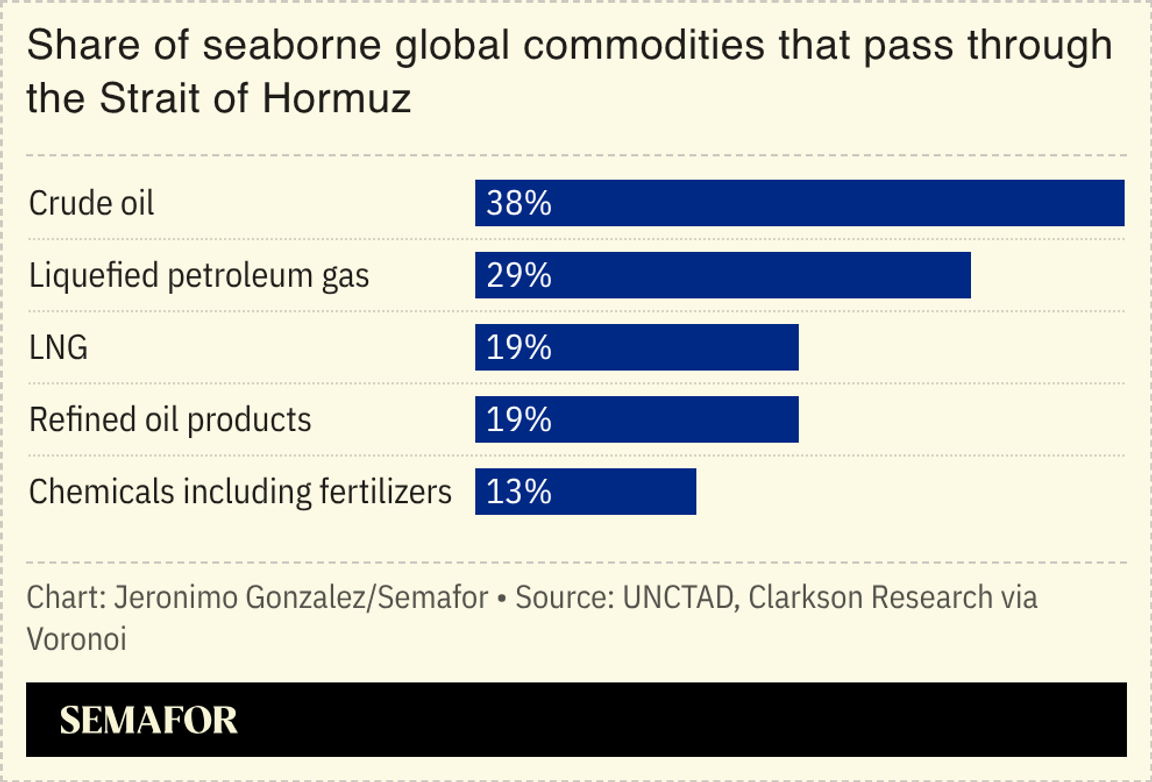 The US stepped up military efforts to reopen the Strait of Hormuz amid growing worry over the global economic fallout of energy export curbs and attacks on oil and gas installations. The latest offensive, involving helicopters and low-flying attack jets, follows intense strikes against Gulf energy facilities that drove oil prices to nearly $120 a barrel. Though the pace of such attacks has slowed, Iran hit a Kuwaiti refinery. Tehran has also “created a de facto ‘safe’ shipping corridor,” allowing vessels from countries including China, India, Iraq, Malaysia, and Pakistan through the Strait, according to the shipping-focused outlet Lloyds List. Ultimately, one leading expert wrote of Hormuz, “Iran holds the advantage — and America has no good options.” |
|
Netanyahu suggests end to war is near |
 Israel’s prime minister suggested the Iran war may end “a lot faster than people think,” in remarks that sought to play down divisions with the US. Benjamin Netanyahu said three weeks of US-Israeli strikes had destroyed Iran’s ability to enrich uranium and produce ballistic missiles; Tehran quickly denied the latter charge. The Israeli premier insisted his alliance with US President Donald Trump was unshaken, though the American leader has publicly admonished Netanyahu for an attack on an Iranian gas field, while top US intelligence officials have outlined diverging war goals from Israel’s. “In a war… with no end in sight,” the energy facility strikes “revealed that the two allies were clearly not coordinated in their approach,” The New York Times wrote. |
|
Analysts say US, Israel weakening Iran |
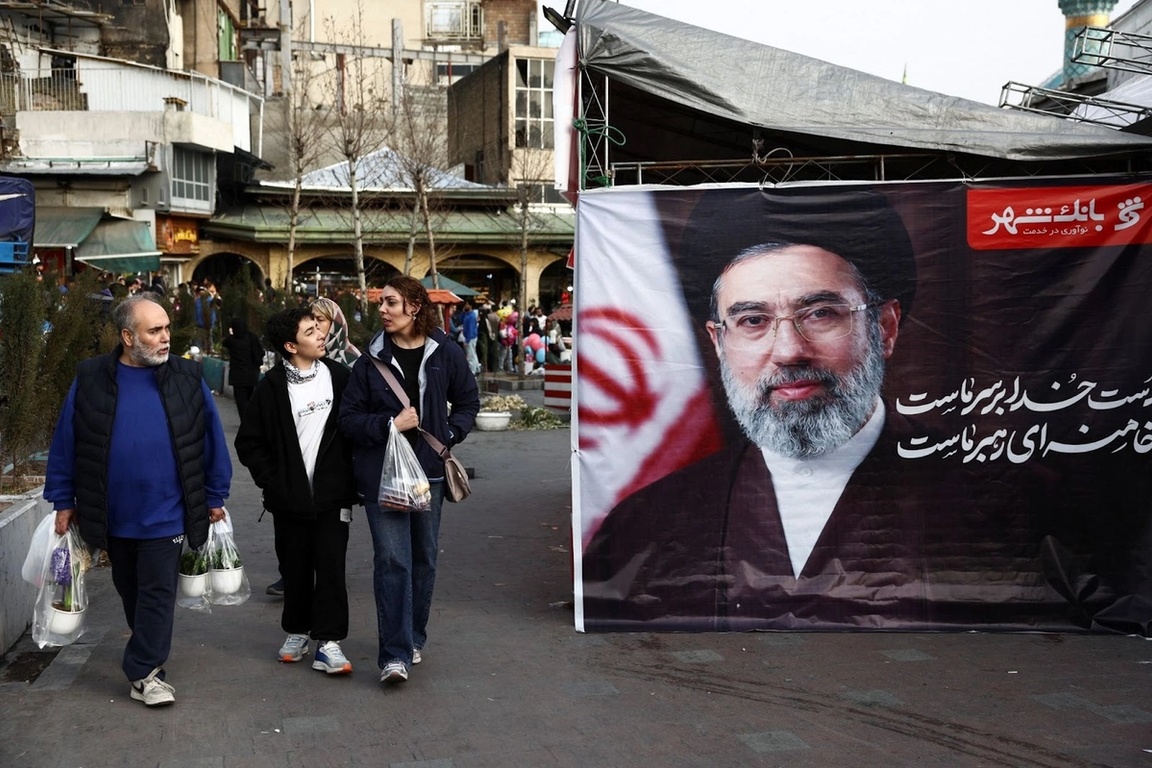 Majid Asgaripour/WANA via Reuters Majid Asgaripour/WANA via ReutersDespite criticism over its strategy, legality, and achievability, the US and Israel’s assault on Iran is in fact working, some analysts argued. Tehran’s nuclear program, military, and command system have been degraded, a Qatar-based academic wrote in Al Jazeera, and Iran’s Strait of Hormuz blockade is self-harming and unsustainable. Two foreign policy experts went further in The Atlantic, saying air strikes were undermining the regime’s repression, and the Islamic Republic may be close to an end. Another analyst warned against overoptimism, though: Iran’s military rebuilt quickly after 2025 strikes; its proxies will regenerate if there is no postwar plan; and a surviving regime would be in “a new unstable normal where all previous taboos on military action are off.” |
|
Russian oil heads to Cuba |
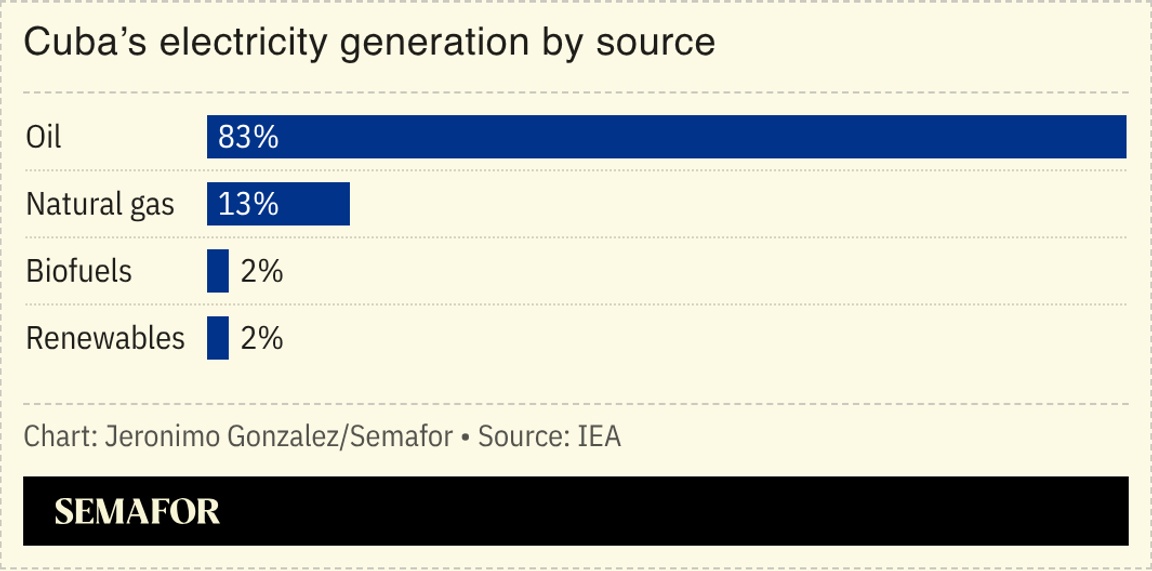 Hundreds of thousands of barrels of Russian oil are headed to Cuba, in a test of Washington’s embargo on the island nation. Tighter US restrictions on crude shipments to Cuba have led to the worst crisis in generations, forcing swaths of the island’s economy to shut due to a lack of energy; many are now riding bicycles to get around as fuel pumps run dry. It is not clear whether Washington will allow the ship carrying Russian crude to dock, but regardless, reprieve for Cuba would not be immediate: Refining the oil to produce fuels would take up to 30 days. And in any case, the Trump administration has vowed to see through its bid to replace Havana’s Communist regime. |
|
Hungary blocks Ukraine pipeline loan |
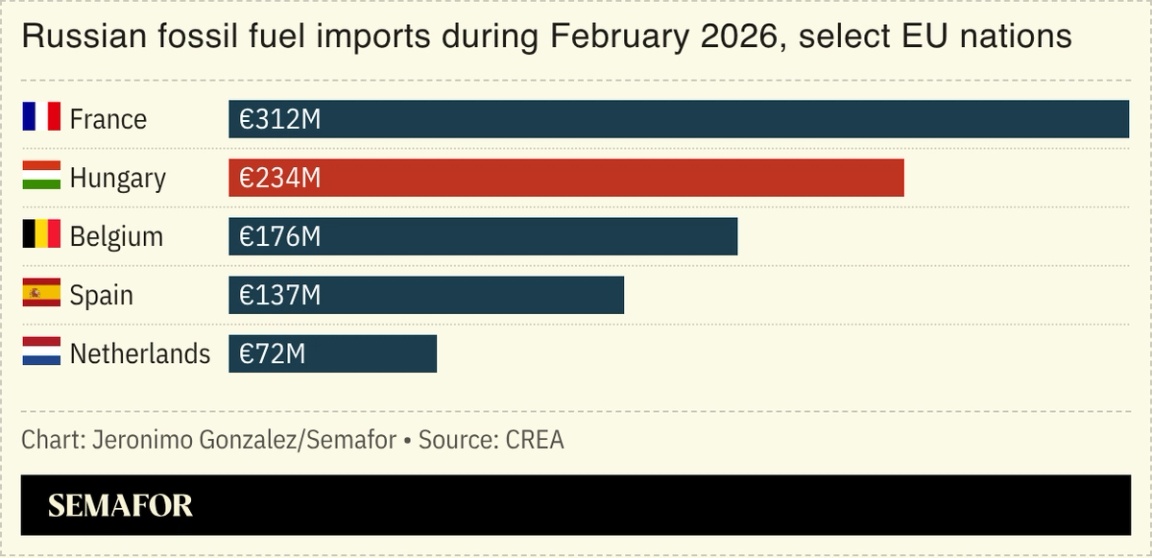 Hungary’s leader blocked a $104 billion EU loan to Kyiv, ostensibly over repairs to an oil pipeline in Ukraine but which critics characterized as political grandstanding ahead of a tight election at home next month. Viktor Orbán has demanded access to Russian oil in exchange for Budapest’s support, a move Germany’s chancellor slammed as a “gross act of disloyalty.” Analysts and diplomats said that Orbán was maneuvering for a domestic audience, with Politico reporting that Brussels was now planning to simply wait for the polls to see if the longtime Hungarian leader loses. On the battlefield, Ukraine has been “imposing increasing challenges on Russia at the tactical, operational, and strategic levels,” the Institute for the Study of War noted. |
|
Tech exec arrested over chips to China |
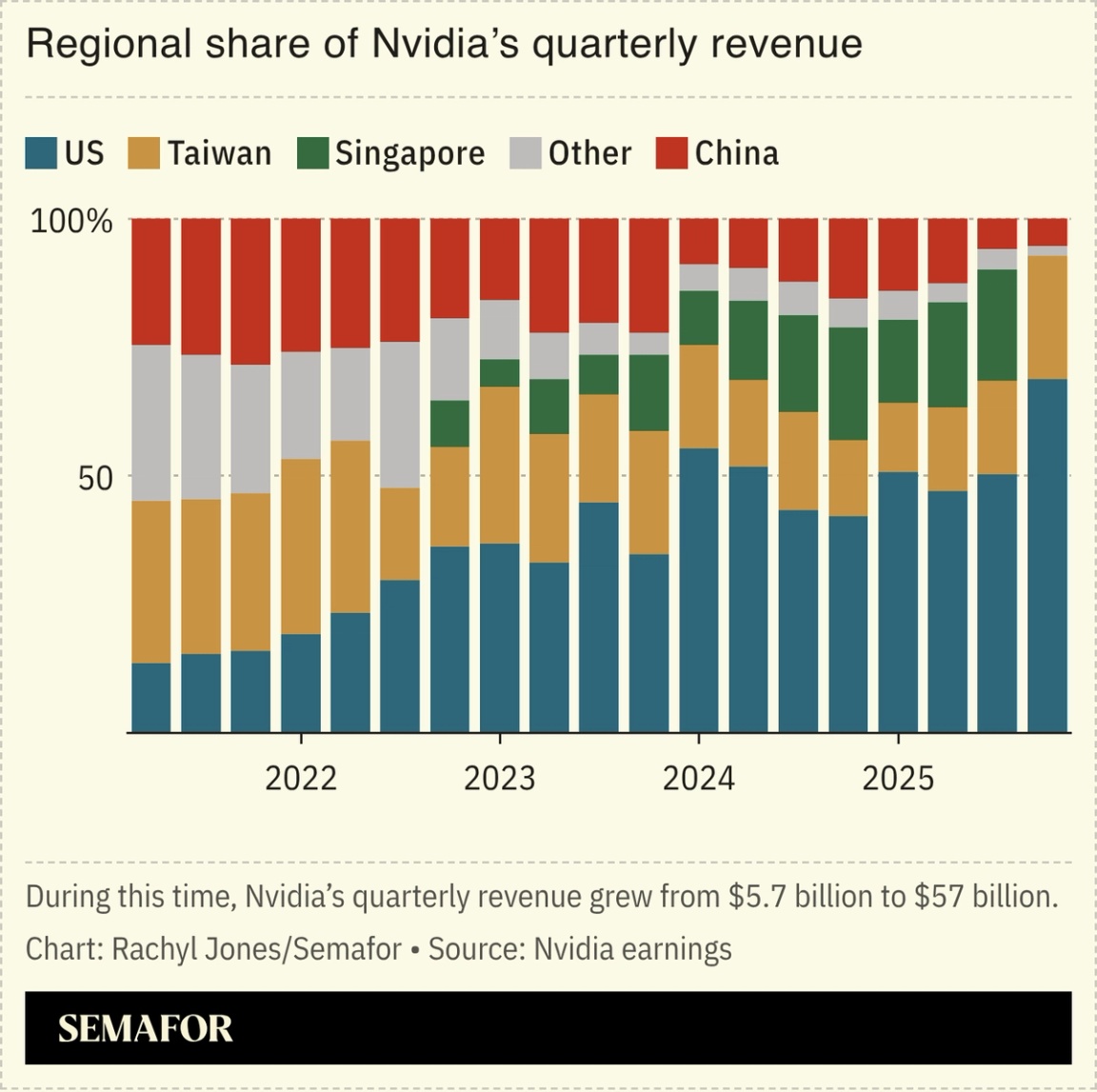 US officials arrested a co-founder of AI server manufacturer Super Micro for allegedly helping smuggle $2.5 billion worth of high-end semiconductors to China. Prosecutors allege that Wally Liaw trafficked advanced Nvidia chips to Chinese firms, allowing them to skirt US restrictions: Washington has banned the export of Nvidia’s most advanced chips to China as it looks to stymie Beijing’s progress in the AI race. But the California-based tech giant has won concessions from the Trump administration to export less advanced semiconductors, and its CEO vowed this week to invest more to serve the Chinese market, which provided around a quarter of the firm’s revenue before the sanctions kicked in. |
|
Online betting fears in Africa |
 Zohra Bensemra/Reuters Zohra Bensemra/ReutersAfrican governments are imposing restrictions on online betting amid growing fears of a rise in gambling addiction on the continent. South Africa’s gambling industry regulator estimates that around two-thirds of adults engage in online bets, more than double 2017 levels. In response, Pretoria has proposed a 20% tax on online gambling profits, a move that could also boost government coffers. Malawi and Zimbabwe have recently imposed similar restrictions too, Reuters reported. Gambling is one of the most harmful addictions, according to experts: Estimates show that 2% to 5% of gamblers will develop compulsive behaviors, while one in five of compulsive gamblers will attempt suicide, higher than for any other category of addict, The Atlantic’s McKay Coppins wrote. |
|
 When the business world moves, these are the people turning the wheel. Introducing The CEO Signal, a new video and audio series hosted by Penny Pritzker, founder and chairman of PSP Partners and former US Secretary of Commerce, and Andrew Edgecliffe-Johnson, CEO editor at Semafor. Episodes are released every two weeks. Building on The CEO Signal newsletter, the essential briefing read by the world’s top chief executives, the show brings that perspective to revealing conversations with the people steering the world’s biggest companies. In the debut episode, Andrew and Penny sit down with Starbucks CEO Brian Niccol. Now 18 months into his tenure, Niccol has launched his “Back to Starbucks” campaign — an effort to revive the brand’s classic coffeehouse feel, including baristas writing names on cups again. In the conversation, Niccol explains how he’s rallying Starbucks’ global workforce behind one of corporate America’s most closely watched turnarounds — and working to restore momentum to one of the world’s most recognizable brands. Niccol also reflects on why he tends to step into difficult situations — from Chipotle’s crisis to Starbucks’ reset — and what it takes to lead a company through moments of pressure. Watch the first episode of The CEO Signal now. |
|
Bike battle dominates Paris mayor race |
 Abdul Saboor/File Photo/Reuters Abdul Saboor/File Photo/ReutersParis residents will elect a new mayor on Sunday, with the city’s move to reduce car traffic a hot-button issue. Since becoming mayor in 2014, Anne Hidalgo has rolled out policies restricting car use while incentivizing cycling. Her strategy has largely worked: The city’s automotive traffic fell by around half in the two decades to 2023, while the number of bicycle lanes increased sixfold. Bikes now make twice as many as journeys as cars. While Hidalgo holds that “the bike beat the car,” a rightist candidate has vowed to roll back some of the changes. “The city’s transition away from the car, though fantastically chaotic, has become a global role model,” Simon Kuper wrote in the Financial Times. |
|
Banksy identity revealed, maybe |
 Rebecca Naden/Reuters Rebecca Naden/ReutersBanksy’s identity has, apparently, been confirmed in a major investigation. The Bristol-based graffiti artist is a British national treasure, and his works have sold for tens of millions of dollars. Over the years, various potential Banksys have been proposed: Robert Del Naja, frontman of Bristol trip-hop band Massive Attack; Thierry Guetta, a French street artist, among them. But Reuters gained access to police records from Banksy’s 2000 arrest in New York City, which included a signe |
|
|


