|
|
|
Newsletter continues after sponsor message
|
|
|
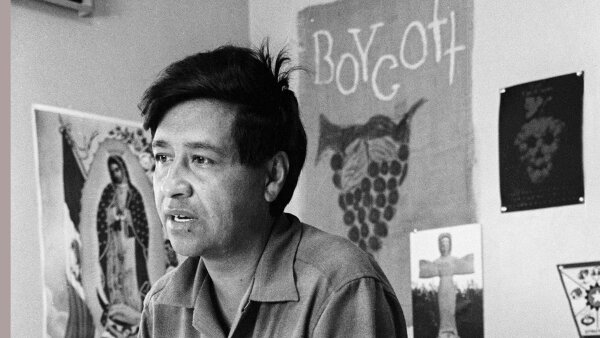
My phone kept going off on Wednesday afternoon with texts from different friends — each wanting to trade thoughts on what felt like the second death of Cesar Chavez.
His first death happened on April 23, 1993. He was 66 and died of natural causes. Over 50,000 people attended his funeral in Delano, Calif.
At that time, I was in elementary school in suburban Chicago, far from California. It was then that I first learned of Chavez and his movement’s hard-fought efforts to secure better wages and improved working conditions for farm workers. As a daughter of janitors and a factory worker, I knew what better pay and the right to a union meant for people like us.
Chavez’s second death landed on Wednesday after a The New York Times investigation revealed he had been accused of sexual abuse and rape.
For several years before joining Morning Edition as an editor, I covered sexual violence for ProPublica, an investigative newsroom. My work there was often not about catching the bad guys but rather about listening to the people they hurt. Consistent with statistics, the perpetrators whom I wrote about were often family, bosses, clergy or others in positions of power.
This week, many of the voices of the victims I spoke with hearkened back to the experiences that the New York Times’s investigation revealed in telling of the sexual abuse that Ana Murguia, Debra Rojas and Dolores Huerta shared with the publication. I was grateful to learn Murguia’s and Rojas’ names alongside the much more familiar one of Huerta, the civil rights icon in her own right who co-led the United Farm Workers movement that made Chavez famous.
I’ve learned that justice for many means the world recognizing the harm done to them — and the difficult work they have done to no longer live defined by it. And I’ve learned that sometimes sharing their stories is one way to prevent future harm.
My friends and I may be down a hero this week. But, we gained two new heroes in Ana Murguia and Debra Rojas, who, alongside Dolores Huerta, showed us it's never too late to speak up. In fact, it might be the only way out for them and others. |
|
Kennedi Carter/Ascend PR Group |
|
Check out what NPR is watching, reading and listening to this weekend:
🍿 Movies: Cillian Murphy returns as gangster Tommy Shelby in the Peaky Blinders: The Immortal Man. In this movie-length sequel, Shelby decides to break his self-isolation when his son's recklessness forces his hand.
📺 TV: Steve Carell stars as an unlucky writing teacher at a small college in the comedy series Rooster. His daughter, also a teacher, is the subject of campus gossip because her husband just left her for a student.
📚 Books: Roger Bennett's We Are the World (Cup) is a love letter to the game that explores how past World Cups met cultural and geopolitical moments.
🎵 Music: R&B singer Jill Scott's first full-length album in over a decade, To Whom This May Concern, embraces various iterations of herself, including her current role as family caregiver and her eighth-grade self.
🎭 Theater: The Martha Graham Dance Company celebrates its 100th anniversary this year with an international tour. Graham founded her company in the 1920s with the revolutionary idea to use dance to tell American stories.
❓ Quiz: From food-centric news to a soccer star's milestone achievements, a great memory of this week’s events, along with some good guesses, might take you far in this week's news quiz. |
|
What does it mean to be an American? There’s no single answer. At NPR, we think of American identity as a story, one that’s constantly being rewritten by the people who live it.
The American Storytelling collection brings together stories from local stations across the NPR Network, from small-town struggles to natural wonders to the layered histories that shape our nation. These are some of our biggest little-known shows, all in one place.
Explore the American Storytelling channel on Apple Podcasts or find it in the NPR App. |
|
|
|
Adventure_Photo/E+/Getty Images |
|
| | The FDA abandoned a long-running proposal this week that would have banned tanning beds for people under 18 and required users to periodically sign forms acknowledging skin cancer risks. |
|
|
|
| | Planned Parenthood of Illinois will pay $500,000 to end a government investigation into discrimination charges tied to its diversity, equity, and inclusion efforts. |
|
|
|
| | Twenty-five years ago, Julia Labes was in severe pain in the emergency room. A woman in the waiting area recognized Labes' signs of shock and demanded that the receptionist get her immediate care. The next morning, her doctor told her that if she had waited one more hour for treatment, she would have died. Labes credits her unsung hero with saving her life. |
|
|
|
Stream your local NPR station. |
|
| Visit NPR.org to find your local station stream. |
|
|
| |
|
|
|
|
|
| | | |