How Secure Is the CCP?; The Price of Democracy; AI, Automation, and War
Foreign Affairs Books & Reviews

March 21, 2026 | View in Browser


Sponsored by Oxford University Press


China’s Fragile Future

How Secure Is the CCP?

 By Andrew J. Nathan


A Foreign Affairs subscription is less than $3.50/month.

Subscribe Now →

A Foreign Affairs subscription is less than $3.50/month.

Subscribe Now →
 

The Price of Democracy: The Revolutionary Power of Taxation in American History

Those on the American right who equate taxation with “tyranny,” Williamson writes, are perpetuating a myth.

Reviewed by Jessica T. Mathews

 
[alt_3}

AI, Automation, and War: The Rise of a Military-Tech Complex

King’s informative and thoughtful chapters explain the history of AI and run through its possibilities and limitations.

Reviewed by Lawrence D. Freedman


Advertisement: Oxford University Press

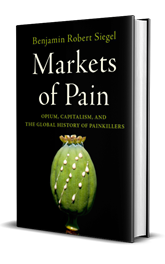
Opium, Capitalism, and the Global History of Painkillers


Markets of Pain offers a sweeping history of the business of licit opium, showing how this potent crop reshaped global trade, medicine, and geopolitics, while also revealing how a seemingly marginal crop became an unlikely engine of modernization, a tool of Cold War geopolitics, and a harbinger of today’s global opioid crisis. 

Learn More
Cover Image of “Markets of Pain”

Opium, Capitalism, and the Global History of Painkillers

Markets of Pain offers a sweeping history of the business of licit opium, showing how this potent crop reshaped global trade, medicine, and geopolitics, while also revealing how a seemingly marginal crop became an unlikely engine of modernization, a tool of Cold War geopolitics, and a harbinger of today’s global opioid crisis. 

Cover Image of “Markets of Pain”
Learn More
 

Goliath’s Curse: The History and Future of Societal Collapse

Kemp surveys the rise and fall of states, empires, and civilizations across the last five millennia.

Reviewed by G. John Ikenberry


The Abraham Accords: The Gulf States, Israel, and the Limits of Normalization

Thorough and judicious, Fakhro offers a welcome analysis of the Abraham Accords in this valuable guide for Middle East policymakers.