| Welcome, Weekenders! In this newsletter: |
| • The Big Read: A rising star at Microsoft has a challenging new job |
| • Defense Tech: Anduril’s big bet? An Ohio weapons factory |
| • Tech Culture: Fat with funding, AI startups binge on private parties |
| • Plus, Recommendations—our weekly pop culture picks: “Blood Will Tell”; “The Complex” and “This Is Where the Serpent Lives”; and “Train Dreams” |
| |
| At the moment, I might describe the difference in AI enthusiasm between Silicon Valley and other parts of the world as chasmic. |
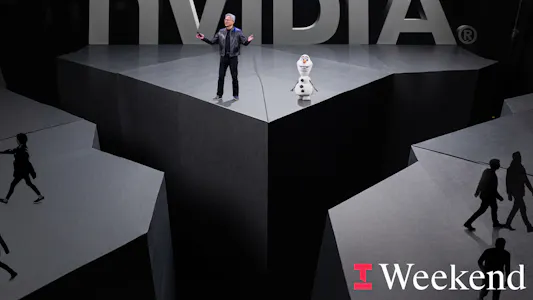
| Judging by the commotion at Nvidia’s shindig in San Jose over the past week, you’d think we lived in a world where everyone agreed the AI promised land had fully materialized long ago. It was, of course, the company’s annual developer conference, GTC, which has been likened to the industry’s Super Bowl. The analogy fits: For souvenirs, the company sold green knit sweaters emblazoned with a cutesy image of CEO Jensen Huang, who has achieved such pop-star status that attendees queued hours before his address to ensure they could see him speak. In those remarks, he seemed to describe utter prosperity, with Nvidia, now the world’s most valuable company, expecting to do $1 trillion in sales through 2027. |
| And yet: A couple days earlier down in Los Angeles, a prominent playwright accosted OpenAI co-founder Sam Altman at a boozy Oscar party and loudly likened him to Nazi propagandist Joseph Goebbels. |
| Later, the dramatist, Jeremy O. Harris, acknowledged that his analogy didn’t fit as well as he would like, and he expressed regret at its imprecision. “It was late, and I had a few too many martinis, so I misspoke when I said Goebbels,” he told Page Six. “I should’ve said Friedrich Flick,” a German industrialist who aided the Reich. |
| The Oscars were full of AI angst, a tone host Conan O’Brien set within the first few minutes. “I am honored to be the last human host of the Academy Awards,” O’Brien said as he introduced himself. “Next year, it’s going to be a Waymo in a tux.” |
| The sentiment extends beyond Hollywood. On Thursday, Hachette, a major book publisher, removed a feminist horror novel, “Shy Girl,” from Amazon and stores in Britain—and canceled its upcoming U.S. release—on the mere suspicion that it was partly written via AI. Think about that: Hachette is so wary of stirring up hard feelings over AI that it just axed “Shy Girl” without saying whether it had found proof that the author had used AI. |
| Even the cool sweater kids at Nvidia occasionally kick up anti-AI feelings. At GTC, Nvidia unveiled an updated version of its Deep Learning Super Sampling, an AI tool for rendering videogame graphics. I’d wager Nvidia wasn’t expecting Deep Learning Super Sampling to be a bigger talking point than the trillion-dollar sales forecast, but videogame fans reacted with aghast horror to the footage: It was like they’d come face to face with a real-life block of Raccoon City. They criticized how the tool seemed to make every game look like it had been made with the same boring Instagram filter. In response, Huang tried to calm concerns, telling gamers simply that they were “completely wrong.” |
| I bring up all these examples because I’m not sure Silicon Valley is paying enough attention to how most people feel about AI. Generally, I find even the smartest people in tech tend to be stubbornly blind to life outside their hyperbaric chambers: They latch on to things and don’t let go. After all, Meta Platforms can’t even bring itself to turn off the lights on its ill-conceived metaverse realm, Horizon Worlds, a place with as much life as deep outer space. And it was only just a couple days ago that the two men behind the $69.3 million purchase of Beeple’s “Everydays” from 2021 finally agreed to stop arguing over who really owns the NFT—years after anyone has consecutively uttered the letters N, F and T aloud. |
| Silicon Valley isn’t completely oblivious to how few everyday consumers share its zealotry for AI, and as a result, the start of 2026 has been defined by a crazed push to roll out AI that attracts businesses. The prime example is OpenAI, which has thrown so much emphasis on its Codex coding tool and hired the OpenClaw creator. Corporations are just an easier sell: A company can look at AI in strictly quantitative terms. If a technology can cut costs by 10%, then why not adopt it? Or at least, why not give it a try? |
| On a personal level, many AI programs today already offer a noticeable way to make yourself more productive: I’m not here saying AI is a crock. But people—well, again, most people—don’t enjoy existing in a strict state of quantification. Pursuits and pastimes—joy—are underpinned by qualitative thought, and those considerations make people less likely to want to involve AI just to get something at a tenth of the cost or five times faster. |
| Put another way, I see an indefinite struggle ahead for Silicon Valley to get people to pay for consumer AI at the scale required to make it worthwhile to develop it. It will take a lot of time to convince people to use it, and such adoption will occur more slowly than the tech industry expects—and it won’t happen all at once, en masse. The smartest venture money in 2026 will show at least a little caution about plunging into more consumer AI, and I can faintly detect that the thought has occurred to some investors. This is a true iPhone moment for the AI era, where a new, must-have product that fundamentally changes how we interact with the technology would alter my thinking; I just find it very hard to picture a desktop-bound chatbot as a handmaiden of utopia. |
| Oh, something else would definitely signal that Silicon Valley had figured out how to narrow that chasm in enthusiasm and make AI more appealing: the moment someone coins a better name for agentic AI. |
| What else from this week… |
- Tired: Wired magazine stories about technology, say the tech elite. Wired: Wired magazine stories about technology, say the media elite.
|
- Keeping online Oscar discourse alive just a liiittle bit longer: Vulture’s ranking of every Best Picture winner. (“Nomadland” is ahead of
“Ben-Hur,” “Titanic” and “No Country for Old Men”—I’m sorry, did somebody suffer a bolt-gun blast to the brain?)
|
- In Silicon Valley, some AI evangelists see the Bloomberg Terminal as an outdated technology—a ripe target for disruption. On Wall Street, the Terminal remains something akin to sacrament.
|
- Paul Graham, a man who appreciates a fine Patek, on watches: “Obsolete technologies don’t usually get adopted as ways to display wealth. Why did it happen with mechanical watches? Because the wristwatch turns out to be the perfect vehicle for it. Where better than right on your wrist, where everyone can see it? And more to the point, what better to do it with? You could wear a diamond ring or a gold chain, but those would have seemed socially dubious to investment bankers. They might have been barbarians, but they weren’t mafia.”
|
- After a correspondent for The Times of Israel reported on an Iranian missile strike, Polymarket gamblers embarked on a death-threat campaign against the reporter, trying to convince him to change his story.
|
- In writing about his own Tesla crash, Raffi Krikorian, who formerly led Uber’s self-driving cars, neatly underlines the dilemma of automated AI. “We are asking humans to supervise systems designed to make supervision feel pointless,” he writes. “A machine that constantly fails keeps you sharp. A machine that works perfectly needs no oversight. But a machine that works almost perfectly? That’s where the danger lies.”
|
- Several new search engines allow people to upload an individual’s photo and find OnlyFans influencers who resemble that person. And it gets creepier: Creators are marketing their sites as a positive force in the world—as a way to discourage people from making deepfake porn.
|
| |
- As the founder of Blank Street Coffee has discovered, venture capital and multishot espressos have something in common: More is not always better.—Abram Brown (abe@theinformation.com)
|
|
|
|
| The Big Read |
 |
|
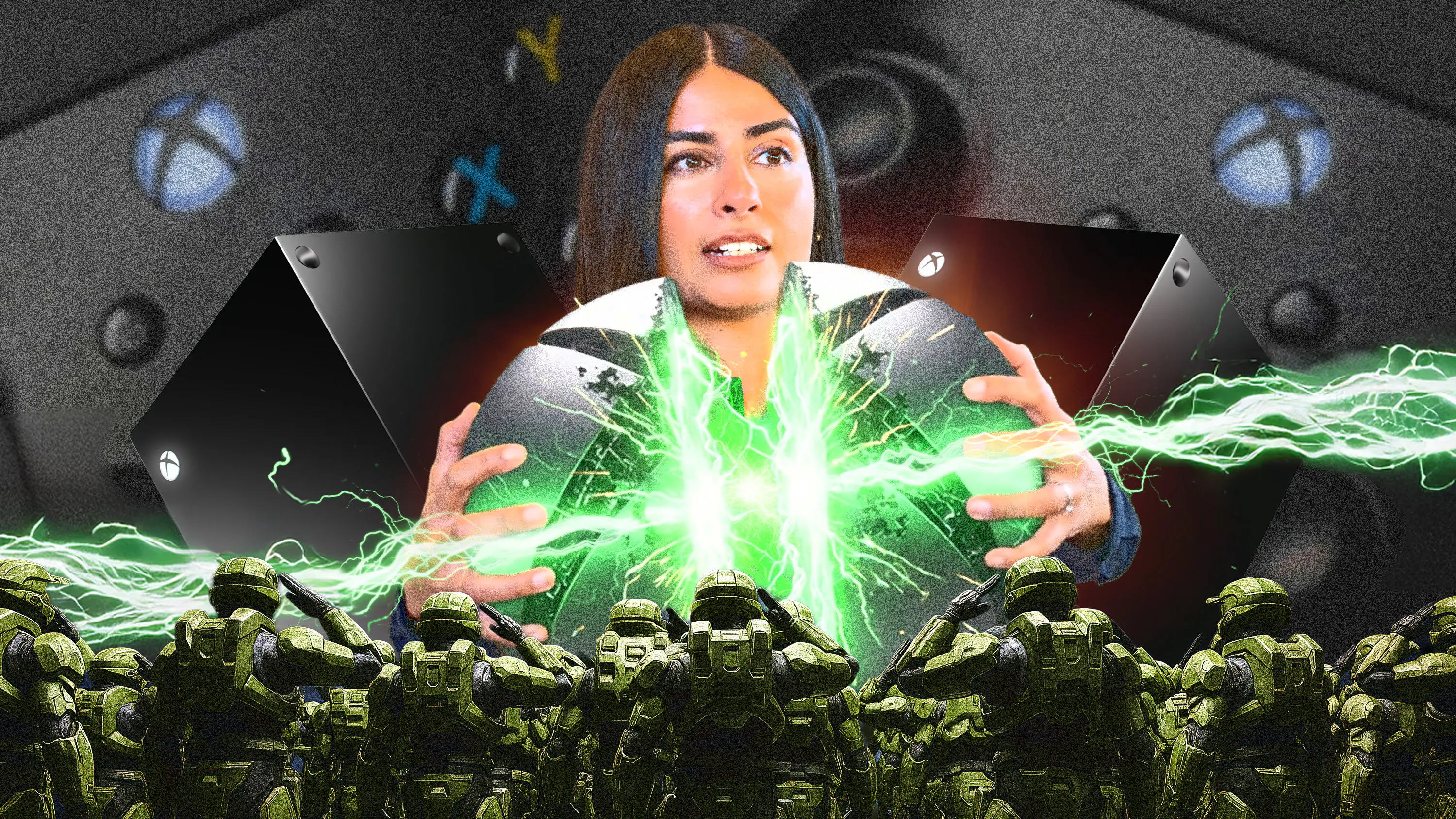
| CEO Satya Nadella has handpicked Asha Sharma for a challenging assignment in an industry that has perennially frustrated Microsoft. |
| Defense Tech |
 |
|
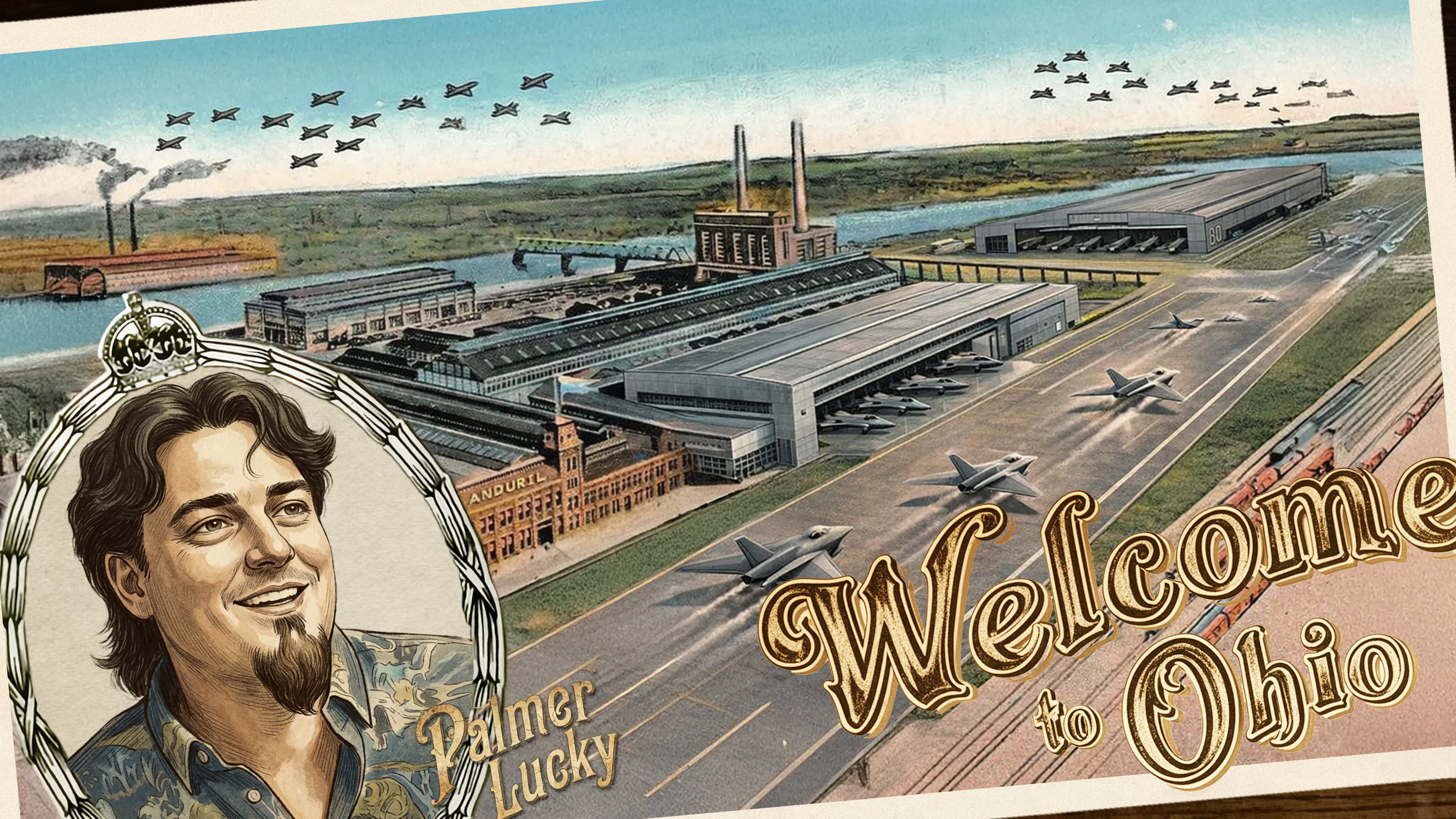
| The defense tech startup has promised its investors it can grow into its giant valuation, pinning its hopes |