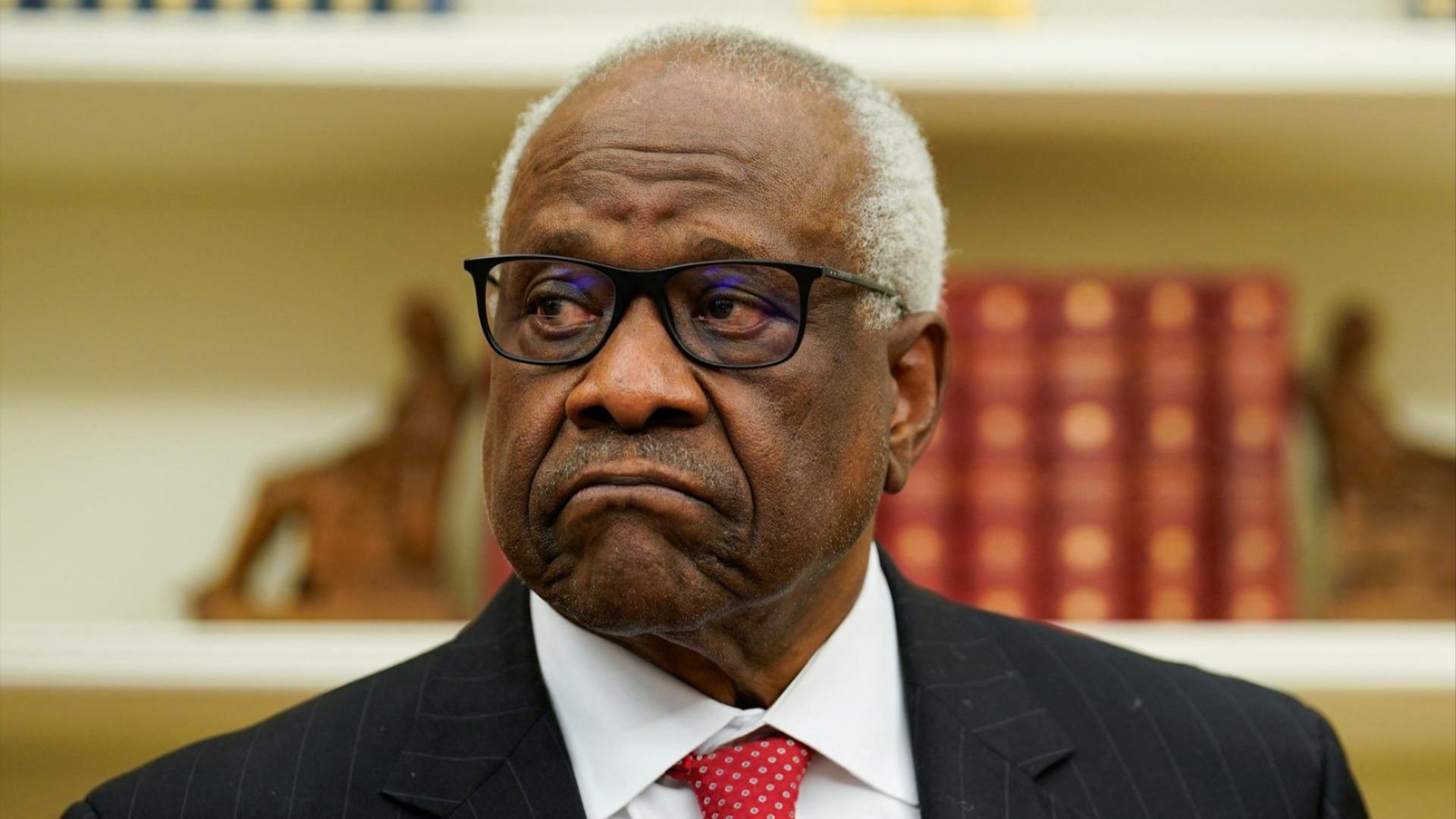
U.S. Supreme Court Justice Clarence Thomas hit a major milestone on Monday, becoming the second‑longest‑serving justice in the court’s history as he nears 35 years on the bench.
Thomas’ influence
Appointed in 1991 by President George H.W. Bush after a contentious confirmation battle, Thomas spent years on the margins before helping shape the court’s modern conservative era. With a 6–3 conservative majority since 2020, he has played a central role in landmark decisions, including the expansion of Second Amendment gun rights and the 2022 ruling overturning Roe v. Wade. Long an advocate of sweeping conservative principles on religion, race, executive power and campaign finance, Thomas has seen positions once pressed in dissent increasingly embraced by the court.
‘Bad precedents’
Thomas is known for his willingness to overturn settled law he considers wrongly decided. From his first full term, when he voted to dismantle Roe, to later concurrences attacking affirmative action and other doctrines, he has argued that precedent deserves little weight when it strays from the Constitution. Over time, some of those views, including ending affirmative action and reshaping abortion and gun rights law, have become binding precedent, even as his most far‑reaching proposals remain outside the court’s mainstream.
What’s next for Thomas?
Approaching 78, Thomas has given no hint of stepping aside and has suggested he intends a lengthy tenure. If he remains on the bench until 2028, he would become the longest‑serving justice in U.S. history. Allies say longevity and legacy matter to him, and his recent years, marked by continued blunt rhetoric and active engagement at oral arguments, suggest he plans to keep pressing his vision of constitutional law for as long as he serves.
Jan Wolfe has more here.