Image

Daily News Brief

May 5, 2026


Dear readers,


The Daily News Brief is taking a hiatus after Friday, May 15, and will return in a refreshed form after Labor Day.


With global events unfolding in unprecedented ways, the Council on Foreign Relations is committed to helping our members and community make sense of a rapidly changing world. Our flagship newsletter will be reimagined to bring you the same global news you expect, alongside analysis from our experts and glimpses from inside the Council—a weekday afternoon dispatch you won't find anywhere else.


It has been our honor to land in your inbox each morning. Reply to this email to share feedback or sign up for updates as we test new formats this summer. (We read every email.)


Warm regards,


The Daily News Brief team


Welcome to CFR’s Daily News Brief. Today we’re covering attacks around the Strait of Hormuz, as well as...

  • Victories for India’s ruling party in state elections
  • Ceasefire proposals for Ukraine
  • U.S.-Zambia tensions regarding health and mineral deals


Top of the Agenda

Clashes in and around the Strait of Hormuz yesterday tested the U.S.-Iran ceasefire and threatened to derail a U.S. bid to restart global shipping. After the United States began guiding ships through the strait yesterday, Washington said it sank multiple Iranian boats in response to Iranian attacks on ships in the waterway. Separately, the United Arab Emirates (UAE) said it had also come under Iranian attack. Defense Secretary Pete Hegseth told reporters this morning that the ceasefire with Iran had not ended, but Iranian Parliament Speaker Mohammad Ghalibaf wrote on social media today that U.S. actions had violated the truce and that a “new equation” was emerging in the vital waterway. 


The latest strikes. Brad Cooper, head of U.S. Central Command, said yesterday that Iran launched missile, drone, and small boat attacks at commercial ships that Washington was helping guide through the strait. The United States sank multiple Iranian boats while successfully helping two U.S.-flagged merchant ships transit the strait, he added. The flare-up has apparently affected states not party to the conflict. Seoul reported an explosion yesterday on a South Korea-flagged vessel, though it did not immediately announce the cause. The UAE said Iranian attacks had set fire to an oil refinery and injured three Indian nationals, and Joint Chiefs of Staff Chairman Dan Caine told reporters today that Iran also attacked Oman. Iran did not immediately comment. 


What parties are saying. Trump told Fox News yesterday that Iran would be “blown off the face of the earth” if it attacks U.S. ships in the vicinity of the strait, while Ghalibaf wrote on social media that Tehran had “not even begun” potential escalatory actions. Gulf countries, Pakistan, and the European Union (EU) condemned the attacks on the UAE, while Abu Dhabi said it reserved the “full and legitimate right to respond” to them. In a sign that diplomacy might not be fully exhausted, Iranian Foreign Minister Abbas Araghchi is traveling to China today to discuss regional security.   


“Trump has tried bombings, a blockade, and now a vaguely defined escort operation—and Iran still controls the Strait of Hormuz. Only diplomacy can lead to a true resolution.”

—CFR Senior Fellow Max Boot in an Expert Brief


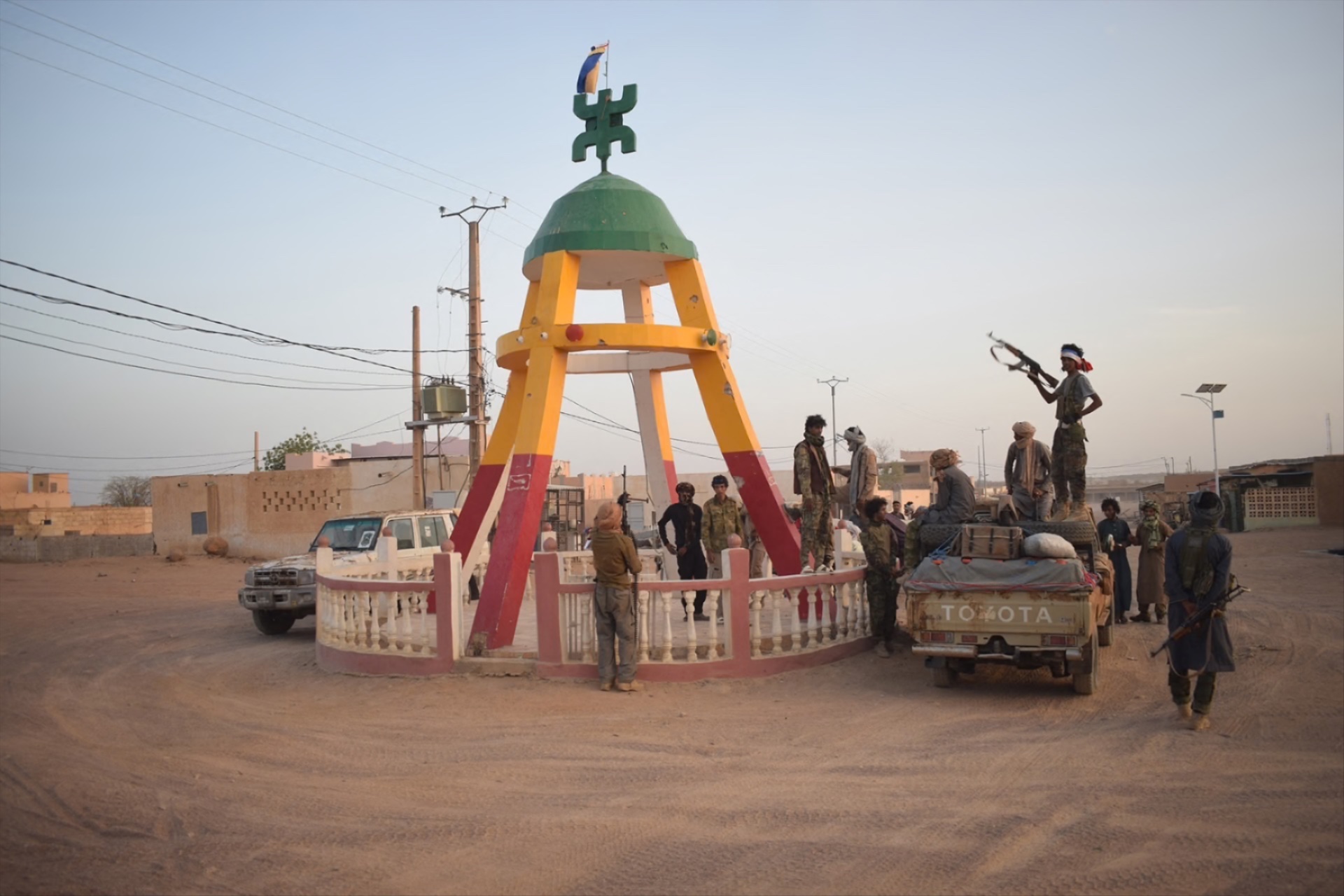
Mali Is the Linchpin of West Africa—Now It’s Under Jihadist Siege

Tuareg rebels of the Azawad Liberation Front (FLA) coalition gather at a statue in Kidal, Mali, on April 26, in the aftermath of attacks on the city.

AFP/Getty Images

An unusual alliance between armed groups in Mali could embolden others in neighboring countries and put Russia’s foothold in the region at risk, Senior Fellow Ebenezer Obadare and CFR’s Nathan Schoonover write in an Expert Take.


Across the Globe

Ukraine ceasefire announcements. Russian President Vladimir Putin announced yesterday that Russia would observe a two-day ceasefire in Ukraine on Friday and Saturday, threatening a major attack if Kyiv disrupted its planned events to mark the anniversary of the end of World War II. Ukrainian President Volodymyr Zelenskyy wrote on social media that Kyiv had not received a formal proposal about those dates and planned to observe a truce beginning at midnight tonight. 


India’s state elections. India’s ruling Bharatiya Janata Party (BJP) won a sweeping majority in the parliament of West Bengal—an opposition stronghold— following elections last month, results showed yesterday. It also grew its majority in Assam state and made small gains in Kerala and Tamil Nadu. Prime Minister Narendra Modi pledged to focus on state elections after the BJP lost its national parliamentary majority in 2024. Opposition members accused election officials of unfairly purging voter rolls ahead of subsequent elections, while the BJP said the changes simply cleaned up data.


Carney’s trip to Europe. Canadian Prime Minister Mark Carney became the first non-European leader to attend a summit of the European Political Community yesterday, a group founded after Russia’s invasion of Ukraine that includes EU countries and several others in the region. The international order “will be rebuilt out of Europe,” Carney said at the event. He also announced almost $200 million in new aid for Ukraine through a NATO-led program.


EU funding curbs for Chinese clean tech. The bloc announced a ban yesterday on public funding for Chinese inverters, a key part needed for solar energy installations. A European Commission spokesperson said foreign actors could use the technology to remotely access data and shut down energy systems across the EU. European, Japanese, and South Korean manufacturers also make the technology. China’s foreign ministry has said it does not aim to use its green technologies for political advantage.  


Zambia’s stance on health funding. Zambia opposes a U.S. attempt to link potential agreements on healthcare and critical minerals access, the country’s foreign minister said yesterday. Washington’s proposed health aid deal included data-sharing terms that would have violated Zambians’ right to privacy and the critical minerals agreement required preferential treatment for U.S. companies, he said. The State Department has declined to comment on the terms of the deals. 


Putin’s isolation. Putin has limited his movements and increased personal security measures since early March amid fears of an assassination attempt, per reports yesterday from the Financial Times and Russian investigative outlet Important Stories. The reports cited unnamed people close to Putin and a European intelligence briefing. Putin and his family have reportedly stopped visiting their Moscow residences, staffers are no longer permitted cell phones, and he is spending more time in bunkers.


Cambodia-Thailand tensions. Thailand exited a twenty-five-year-old joint offshore energy exploration agreement with Cambodia today, following the countries’ armed conflict last year. The deal allowed for exploration in areas where both countries have overlapping territorial claims. Cambodia said it would now seek to settle the maritime territorial dispute under the United Nations Convention on the Law of the Sea.


U.S. visa bans for journalists. Costa Rica’s leading newspaper, La Nación, wrote yesterday that the Trump administration appeared to have revoked visas for its executives in retaliation for the paper’s “editorial stance,” calling the move “unprecedented.” The newspaper published reports in 2022 about sexual harassment allegations against now-President Rodrigo Chaves, who has aligned himself with Trump. Washington has also revoked visas for two opposition lawmakers critical of Chaves, a former Costa Rican president who partnered with China while in office, and several other officials and citizens. The State Department did not immediately comment. 


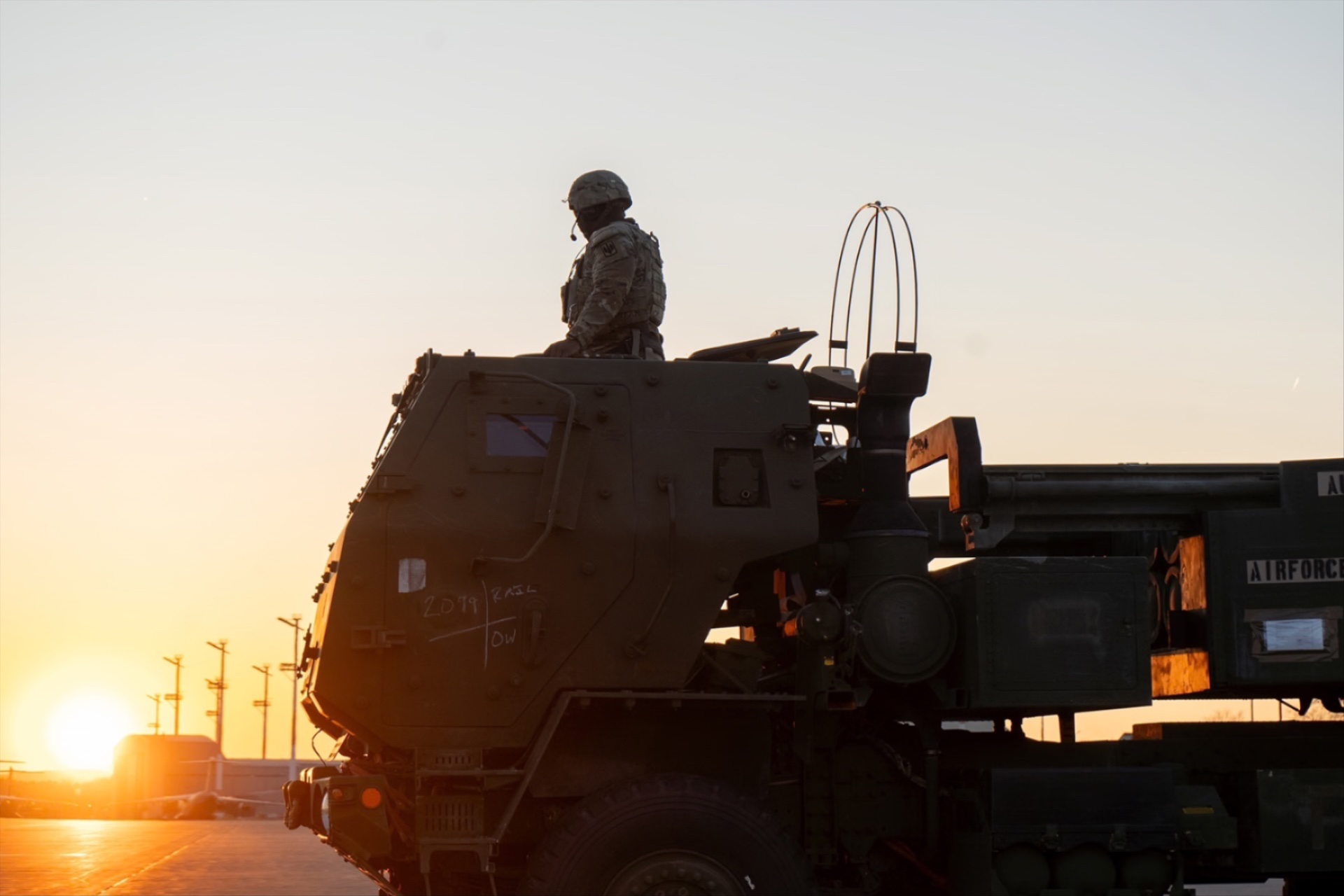
Trump Is Pulling Troops From Germany. The Missiles Are a Bigger Problem.

U.S. Army Staff Sgt. Zykee Allen, assigned to 3rd Battalion, 321st Field Artillery Regiment, sits atop an M142 High Mobility Artillery Rocket System (HIMARS) to receive a fire mission during a training mission at Ramstein Air Base, Germany, on March 27, 2025.

Carlos Marquez/U.S. Army

Canceled missile deployments and dwindling weapons stockpiles are eroding the foundations of NATO deterrence, Senior Fellow Liana Fix writes in an Expert Take.


What’s Next

  • Today, Group of Seven trade ministers meet in Paris.
  • Tomorrow, the General Council of the World Trade Organization starts a two-day meeting in Geneva.
  • Tomorrow, the Association of Southeast Asian Nations summit begins in the Philippines.


What Is Birthright Citizenship and Could the Supreme Court End It?

Protestors rally outside the Supreme Court on May 15, the day it is scheduled to hear oral arguments over President Donald Trump’s efforts to restrict birthright citizenship.