Plus, EU skepticism greets Tesla’s FSD

Get expert insight into the technologies and trends shaping the global automotive industry on Reuters.com. Subscribe for $1/week. Subscribe now.


Auto File

Auto File

By Nick Carey, European Autos Correspondent

Greetings from London!

In a shocking but not surprising twist, President Donald Trump has promised to hike U.S. tariffs on cars imported from the European Union back up to 25%, claiming the bloc has not upheld its side of a trade deal agreed last year.

A fresh trade war is an interesting choice, given the Trump administration is already engaged in an increasingly intractable military conflict with Iran. The possibility of further price hikes amid soaring fuel costs is hardly likely to make U.S. consumers any happier.

Yet despite an outcry from Europe -  the EU parliament's trade committee chair said the tariff move shows the U.S. is unreliable – the administration says the tariffs are definitely happening.

Assuming the tariffs really do happen – Trump’s directives can change from day to day - this will be bad news for Germany’s automakers, who are already struggling with weak sales in China and the fallout of the war in the Gulf.

Which brings us to today’s Auto File…

Today

  • China’s carmakers take it to the next level
  • EU regulators skeptical on FSD
  • Volkswagen’s China solution for Europe 


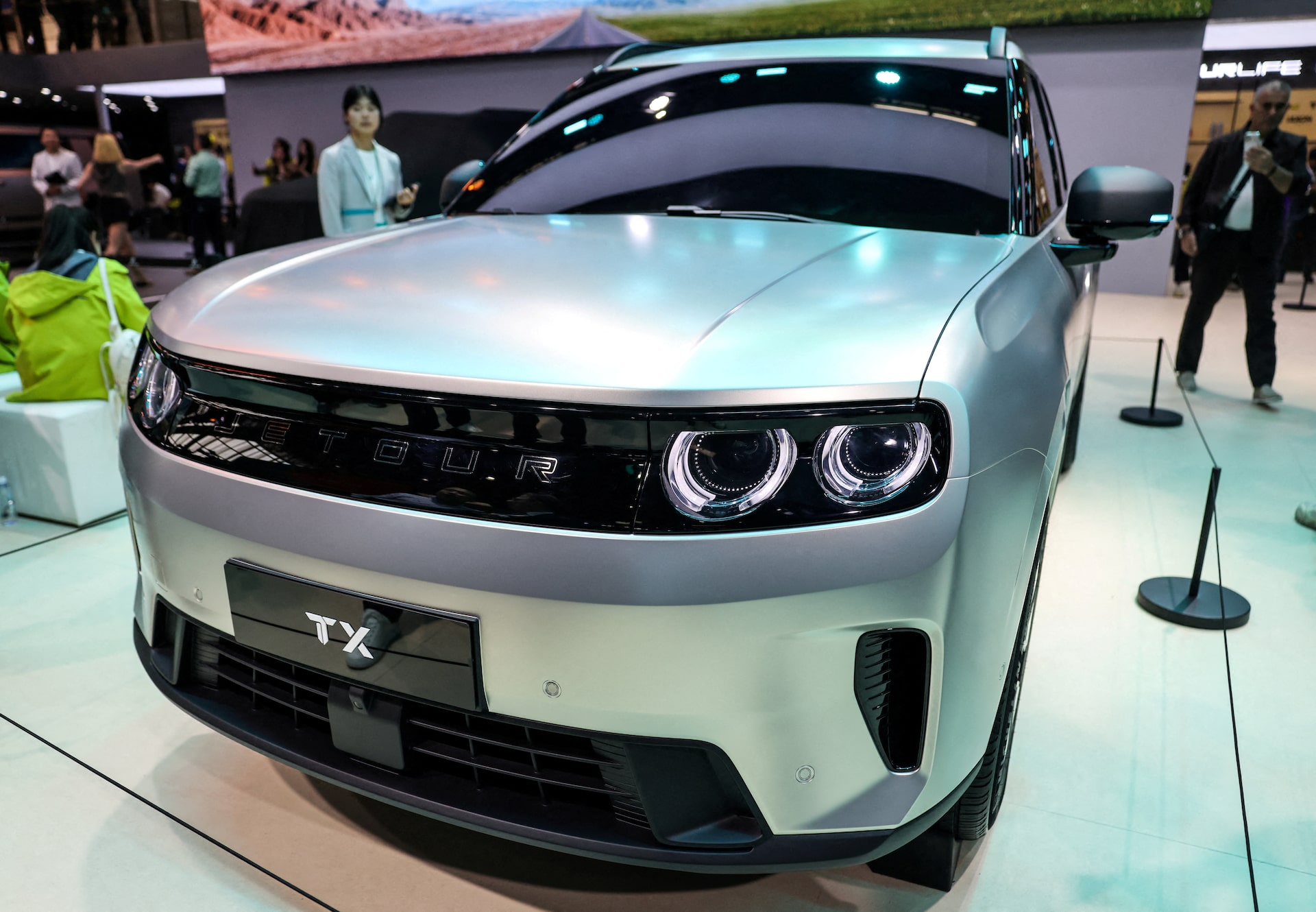
Jetour's TX electric EV was designed for Europe - REUTERS/Maxim Shemetov.

Chinese cars made for Europe

In their first wave of cars for Europe and emerging markets, China’s carmakers used popular models from their home market and tweaked them for global consumption.

That has worked well for early sales, but industry experts say what the Chinese need is a ‘Yaris moment’ – a reference to the Toyota Yaris, designed for Europe and launched in 1999, it took the Japanese automaker’s sales to a new level.

As they rush to compete for overseas sales, major Chinese automakers are now taking a leaf from Toyota’s playbook, with hatchbacks for Europe and pickup trucks for consumers in markets like Australia, Mexico and Brazil.

You can read all about it here.

Hatchbacks, for instance, are a rare breed in China where big SUVs and minivans rule the roads.

But as BYD’s No. 2 executive Stella Li points out, they make up a large chunk of sales in some European markets and if the carmaker doesn’t play in that segment, “we lose.”


Essential Reading

  • Musk settles Twitter disclosure lawsuit
  • Rivian expects smaller U.S. loan faster
  • Pentagon cuts deals with AI companies 


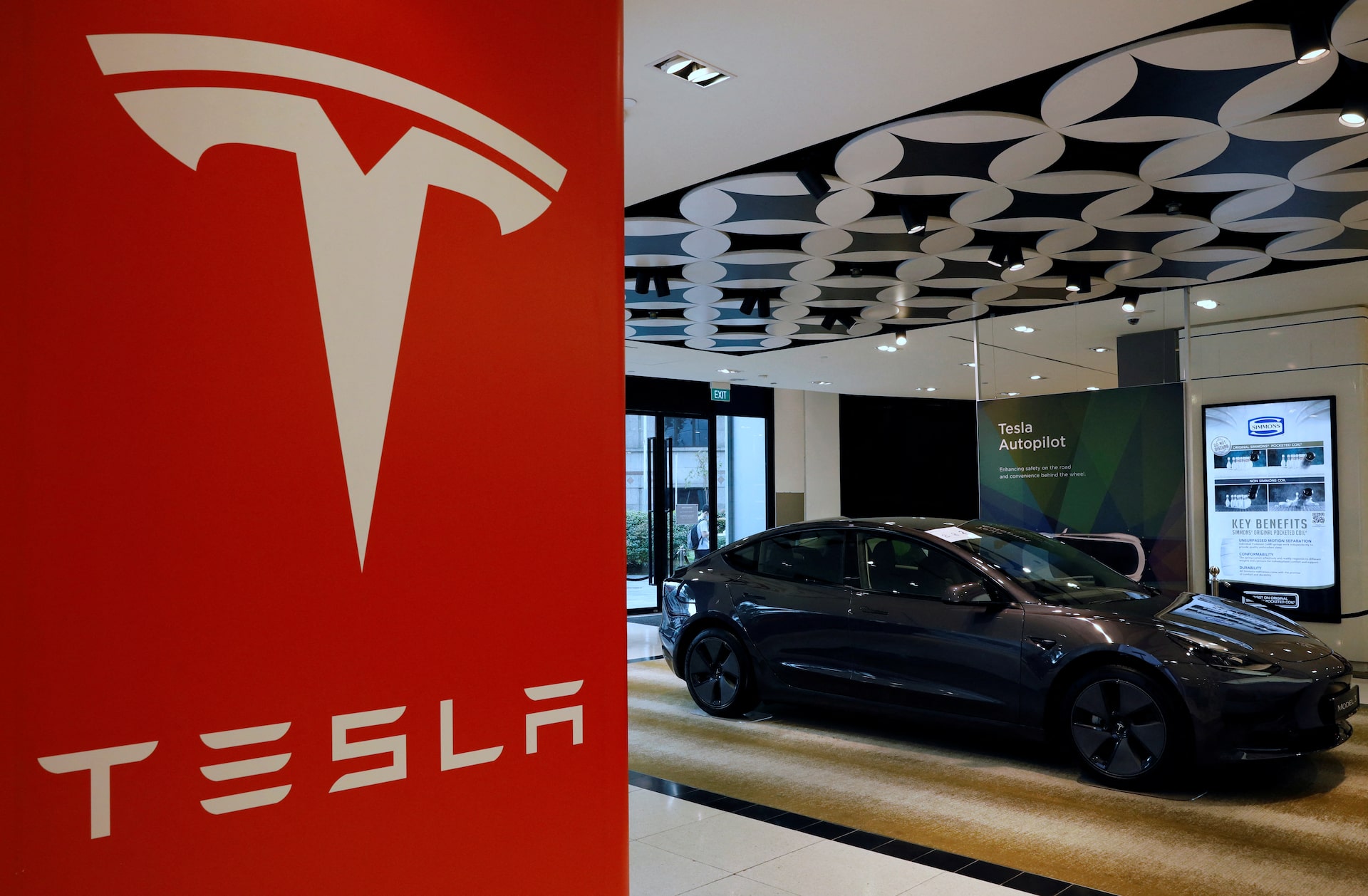
Some European regulators are skeptical of Tesla's FSD - REUTERS/Edgar Su.

EU’s Full-Self Driving skepticism

Tesla made real headway in Europe last month when a Dutch regulator approved its FSD driver assistance technology for use in the Netherlands.

CEO Elon Musk has projected confidence that the EU will soon follow suit and approve Full Self‑Driving supervised for use across the bloc.

But according to a report from Reuters colleagues Marie Mannes and Chris Kirkham, regulators from several EU countries have expressed skepticism over the purported safety benefits of FSD.

You can read all about it here.

Emails from regulators ahead of a key meeting in Brussels today where Dutch officials will spell out why they approved FSD, show their concern over the system's tendency to speed, along with whether safety on icy roads and drivers' ability to circumvent features designed to prevent cell-phone use.

Some complained about being hounded by Tesla enthusiasts pushing for approval, a move encouraged by Musk.  


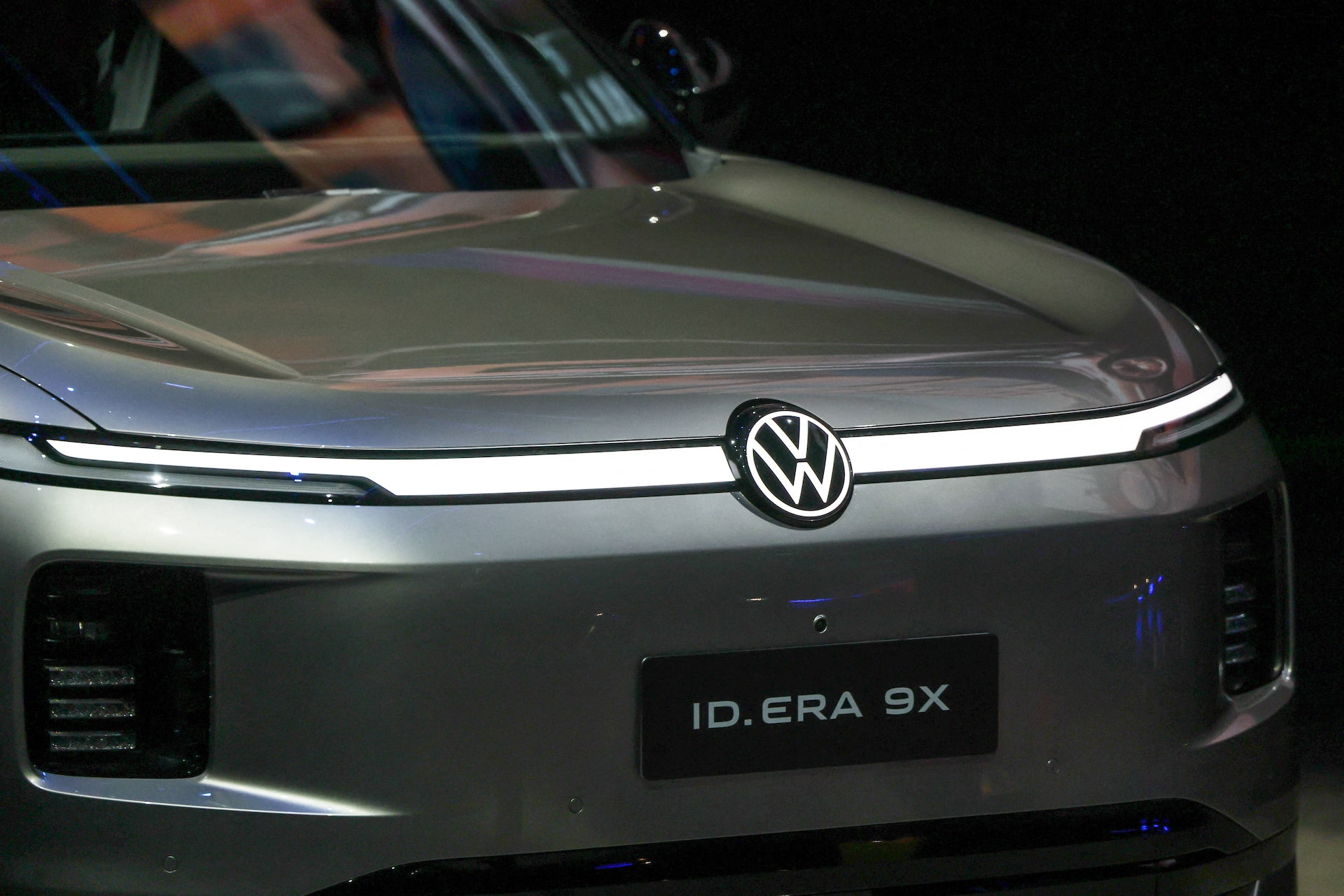
Coming to a VW factory near you? - REUTERS/Maxim Shemetov. 

Chinese VWs in Europe?

While China’s carmakers are developing cars specifically for European consumers, Volkswagen is considering leaning the other way.

While reporting a drop in first-quarter profit, Volkswagen CEO Oliver Blume said the group is considering building markets it has designed specifically for China at its plants in Europe.

You can read all about it here.

The German automaker might also share some of the unused production capacity at its Chinese partners, Blume said.

Suddenly, it seems like everyone is shopping factory capacity in Europe.

Stellantis has reportedly been shopping its capacity to Chinese carmakers. CEO Antonio Filosa says the company’s deal with Leapmotor – where it sells and will make some Leapmotor cars in Europe – could serve as a model for future cooperation with other Chinese automakers.


A Tesla Semi emerges

Tesla’s first Semi big rig rolled off the factory line in Nevada as the company gears up for mass production, nine years after CEO Musk first unveiled the truck.

Taking nearly a decade to get a vehicle to production was slow by even traditional automakers’ standards.

But now that Chinese electric truckmakers have apparently mastered how to make those vehicles themselves in just a few years, it looks positively glacial.

When Tesla unveiled the Semi in 2017, it looked like the company had the chance to be ahead of any other electric truckmaker.

But after lengthy delays, Tesla now faces a growing crowd of competitors.