| | Ryan Cohen’s disastrous eBay play, a bit of Nordic chip diplomacy, and continued disruption in the M͏ ͏ ͏ ͏ ͏ ͏ |
| |  | Business |  |
| |
|
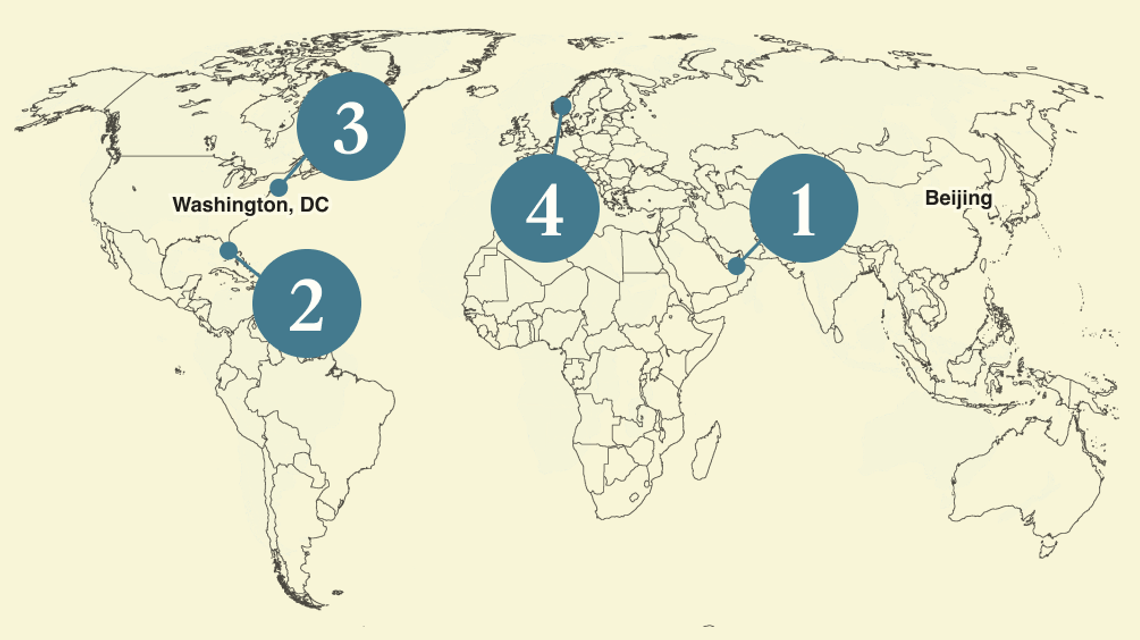 - An uneasy peace, disrupted
- Ryan Cohen’s game, stopped
- Marc Lore is an IPO guy
- Chips alliance grows
 Semiannual reporting is almost here… |
|
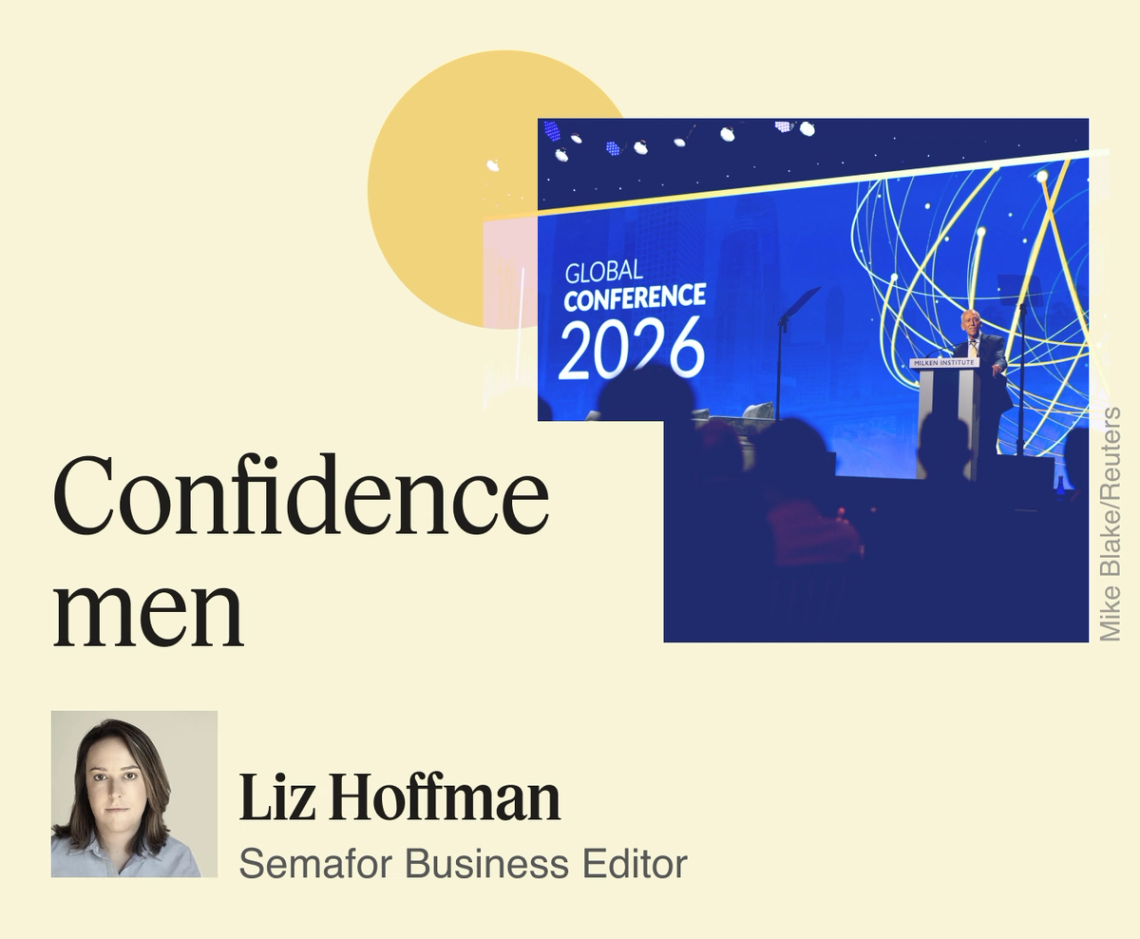 Hello from the Milken conference in Beverly Hills, the birthplace and holy temple of confidence men. It’s a fitting backdrop for Ryan Cohen’s incoherent bid for eBay, which would see GameStop, the $12 billion meme-stock survivor, cobbling together $55 billion to buy the e-commerce giant. The Milken Institute Global Conference is the annual home of ambition untethered from arithmetic, where the world’s most elaborately credentialed optimists descend on Wilshire Boulevard to remind one another that the future belongs to those bold enough to ignore the math. Cohen’s unsolicited $55 billion offer for eBay landed here this week like a native species returning to its habitat. The art of it all is Cohen’s letter from TD Bank saying it’s “highly confident” it can raise $20 billion for the bid. Even with that (more on which below) the offer is still missing $16 billion, as CNBC’s morning crew pointed out, comically and with a lot of dead air. Milken is the spiritual birthplace of the “highly confident” bank letter. In 1983, corporate raider Carl Icahn wanted to buy oil giant Phillips 66 but didn’t have the money. He turned to Drexel Burnham, the scrappy investment bank powered by the patron of this week’s annual investment conference in Los Angeles, Michael Milken. Drexel didn’t have the money either, but armed Icahn with a letter saying that it was sure it could raise it by selling the newfangled financial product of the age, junk bonds. Milken understood something essential: confidence is the product. The “highly confident” letter was the great hand-wave of modern finance, born of an era that formed the great hand-waver of modern politics, President Donald Trump, whose early years in real estate paralleled Milken’s rise and adopted the bravado of the age. Confidence, conjured from vibes, was a democratizer that allowed scrappy misfits to put any corporate, or national, balance sheet in play, no matter how big or blue-chip. The broader economy hums along on the same frequency. The US is confident the Strait of Hormuz will reopen. CEOs are confident consumers — who are in the worst mood on record — will keep the global economy chugging. The conference rooms in LA are full and the decks this week are generally bullish. The confidence isn’t despite the chaos; it feeds on it. |
|
Renewed hostilities fracture Mideast peace |
 Vessels in the Strait of Hormuz near Bandar Abbas, Iran. Amirhosein Khorgooi/ISNA/West Asia News Agency via Reuters. Vessels in the Strait of Hormuz near Bandar Abbas, Iran. Amirhosein Khorgooi/ISNA/West Asia News Agency via Reuters.The biggest business gathering in the Gulf since the war began was followed yesterday with a barrage of missiles and drones, a sign that normalcy won’t be quick to return to the region. “Make it in the Emirates” was intended to be a projection of optimism, reinforcing that the Middle East’s golden era is on pause, not in decline. Then Iran launched a barrage of missiles and drones, striking an oil facility in Fujairah and raising concerns that the US-Iran ceasefire could collapse. By Tuesday, thin commuter traffic suggested many people had stayed home, while schools pivoted back to remote learning, and the congestion that had built up in recent weeks evaporated, Semafor’s Mohammed Sergie reported. Semafor’s Gulf briefing brings you the latest from the region 4 times a week. Subscribe here. → |
|
|
Ryan Cohen’s eBay gambit looks DOA |
 Steve Marcus/File Photo/Reuters Steve Marcus/File Photo/ReuterseBay’s board will meet this week to review an unsolicited $56 billion bid from GameStop’s Ryan Cohen, according to people familiar with the matter. The billionaire didn’t help his case Monday, when he squandered what goodwill he had with the Street in a disastrous CNBC interview, playing to his base rather than the investors he now needs. Cohen’s problem is that he’s made a name for himself as a friend of retail investors by showing contempt for the legacy financial press and big institutional investors. But those investors are crucial if he is serious about taking over eBay. (That’s an open question; Cohen didn’t fully commit to staying around the hoop — “There’s ways to do something before next year,” he said of a potential proxy fight — and has already lost one of his biggest boosters.) Asked to explain the deal math for the investors tuned in to Squawk Box, Cohen simply said,“It’s on our website.” A visibly exasperated Andrew Ross Sorkin and Becky Quick put in yeoman’s effort, with zero to show for it. eBay shares traded up more than 12% going into Cohen’s interview, but now sit exactly where they were before Cohen announced his bid. He scored points with his loyalest fans for “mogging” CNBC, as one FinTwit commentator put it, but failed to convince any serious shareholders to publicly back him. — Rohan Goswami |
|
Marc Lore is done with M&A |
 Marc Lore, founder and CEO of Wonder Group, attends the Milken Institute Global Conference 2025. Mike Blake/Reuters. Marc Lore, founder and CEO of Wonder Group, attends the Milken Institute Global Conference 2025. Mike Blake/Reuters.Marc Lore became a dealmaking legend by selling two startups for top dollar: Diapers.com to Amazon and e-commerce startup Jet.com to Walmart. He says he’s done with that. “I’m the IPO guy now!” said Lore, who said he plans to take his $7 billion food-delivery startup, Wonder, public in 2028. “We’ll be ready to go in 11 months.” It’s an unusually specific marker for a CEO — a lot can go wrong in startup land — and shows Lore eager to rewrite his résumé and show that he can make food delivery, long a wasteland of venture capital, into a profitable standalone business. Wonder, which owns GrubHub and meal-delivery kit company Blue Apron, is also launching a tool that allows influencers to vibe code their own restaurant concepts from a single AI prompt. The influencers take a cut while driving customers to Wonder at little acquisition cost. He also talks about why he didn’t even try to negotiate when he bid for the Minnesota Timberwolves — a deal about, unlike Mark Cuban, he has no regrets — and his plans for Telosa, a city of the future that replaces capitalism’s worst tendencies. |
|
Norway becomes latest US chip booster |
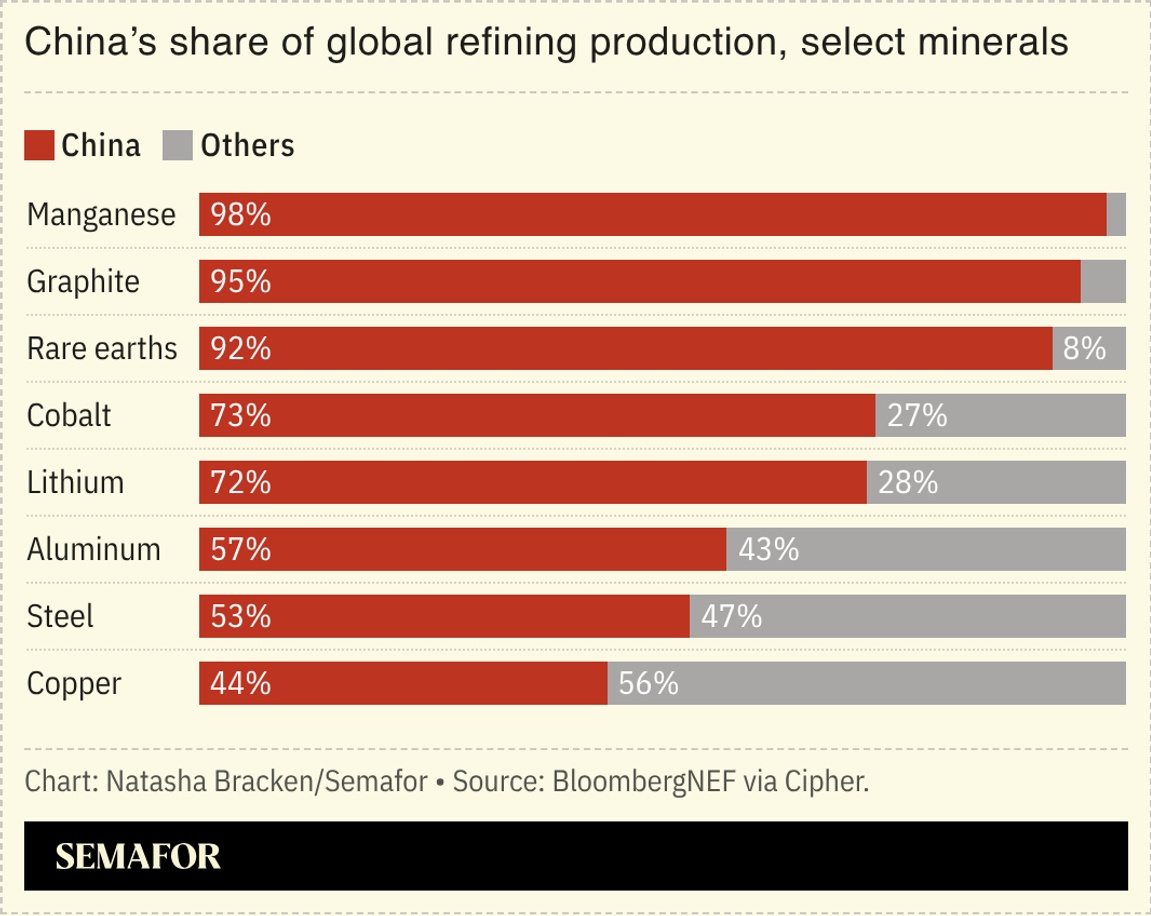 The US this week plans to announce that Norway will become the 15th country to join Pax Silica, a consortium of countries that is trying to counter China’s influence in critical minerals, tech, and AI, Semafor’s Shelly Banjo scooped. “Norway is home to the world’s largest sovereign wealth fund, and the depth of that institutional capital combined with critical mineral reserves are important,” Jacob Helberg, Undersecretary of State for Economic Affairs told Semafor. While the declaration isn’t binding, Helberg said the State Department plans to announce a series of commercial deals with a half-dozen large corporations in what he called a “product-based approach to economic statecraft.” The move comes as the Trump administration continues planning for a summit in China later this month in Beijing, where Trump is expected to meet Xi Jinping. |
|
 Financial headlines can feel overwhelming. Get calm, clear insights—without the fear—from The Daily Upside. Some call it the closest thing to earning your MBA in Cambridge. Join 1M subscribers who trust The Daily Upside. Subscribe for free today. |
|
➚ BUY: Nuclear. Asset manager Brookfield is starting a joint venture with The Nuclear Company to restart and develop nuclear power plants in the US. ➘ SELL: Meltdown. Spirit Airlines ceased operations over the weekend, starting the political blame game in Washington. The Biden administration’s blocking of Spirit’s 2024 merger with JetBlue is squarely at the center of the fight. |
|
 Companies & Deals- Inside the house: The head of American Airlines’ pilot’s union praised United Airlines CEO Scott Kirby’s “bold vision,” after the executive pitched a merger of the two companies to President Trump.
- Slim is sexy: OpenAI chief Sam Altman weighed spinning out the company’s robotics and consumer-hardware divisions last year, figuring it would give the company more room to grow its core AI business.
- Analyst of the year: Anthropic is muscling into yet another hot, disruptible space: M&A. It’s launching a suite of AI tools to help analysts craft pitch decks and review documents.
Watchdogs- No regrets: Former Paul Weiss boss Brad Karp told a Harvard Law School class that the firm had to settle its legal battle with the Trump administration to ensure its survival (Jeffrey Epstein and privileged conversations were the only topics explicitly off limits, per the Harvard Crimson.)
- Off shore, on mind: FINRA is probing Morgan Stanley’s Budapest investment banking program over licensing issues.
|
|
|


