
|
 |
 |
| ||



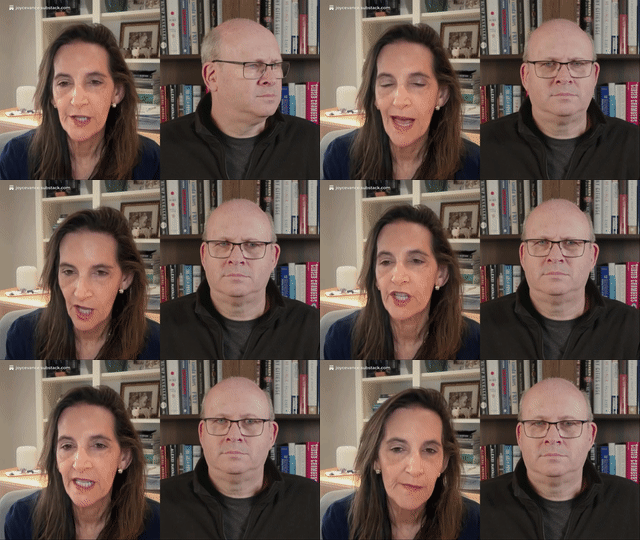
The only thing I can say about my conversation with voting rights and election law lawyer Marc Elias this morning is that if you missed it, it’s essential viewing. Fortunately, you can click on the video above and get caught up if you weren’t able to join us live.
Marc is known for being plain spoken. In the wake of the Supreme Court‘s decision last week in Callais, a decision that devastated what was left of the Voting Rights Act, he speaks candidly. That includes a decision by the Supreme Court last night to make Callais final on an expedited basis rather than the usual wait of 32 days to permit the party that lost to ask for a rehearing. It’s a hypocritical move that flies in the face of the so-called Purcell principle, which the Court uses to delay implementing changes that benefit voters seeking to protect their right to vote when a court imposes them “too close” to an election.
Now, the question is whether the Court will use Purcell to delay changes when it’s white voters who benefit from them. The rule in Purcell was justified as preventing confusion too close to an election. Marc and I revisit Milligan, the Alabama case where the court declined to let changes that benefited Black voters go into effect because six months was “too close” to election day. Now, Louisiana’s governor has declared “an emergency” and stopped a primary election that was already in progress. So, what will the Supreme Court do?
As we wait to find out, Marc gives you the baseline of knowledge you need to process what’s coming next. It’s like getting a semester of law school in under 40 minutes. Most importantly, if you aren’t already, register to vote and urge the people around you to register. Nothing defeats a gerrymander like voter turnout. We all have important work to do.
We’re in this together,
Joyce
 | A guest post by
|
You're currently a free subscriber to Civil Discourse with Joyce Vance . For the full experience, upgrade your subscription.