| | The US downplays flare-ups in the Strait of Hormuz, Anthropic pushes into financial services, and Ch͏ ͏ ͏ ͏ ͏ ͏ |
| |  | Flagship |  |
| |
|
The World Today | 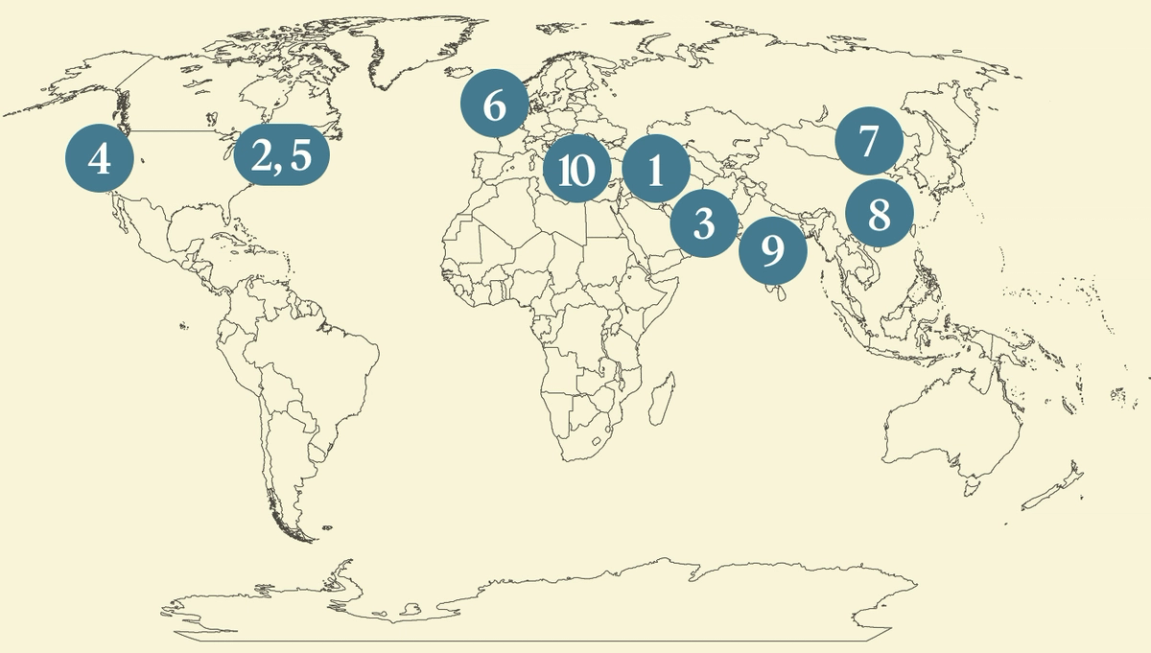 - Trump downplays conflict
- US energy squeeze warnings
- The real oil price shock nears
- Anthropic makes Wall St. play
- GameStop’s ‘confidence’ bid
- UK DeepMind union vote
- Beijing’s AI slop scrutiny
- AI robots reshape Chinese life
- Indian mangoes are unrivaled
- If Odysseus were from Boston
 A Daniel Radcliffe show in which the audience also stars. |
|
WH downplays Hormuz flare-ups |
 Kylie Cooper/Reuters Kylie Cooper/ReutersThe US sought to downplay the Iran war’s economic impact and recent flare-ups in the Strait of Hormuz. The Pentagon on Tuesday insisted Washington’s ceasefire with Tehran was holding after the countries clashed in the waterway; US President Donald Trump characterized the attacks as a “skirmish.” Trump also sought to minimize the conflict’s impact on Americans’ wallets as energy prices rise: The president cheered tax cuts and “record business,” creating “a sharp contrast with the economic reality outside Washington,” The New York Times wrote. And Trump may not be eager to return to war, but the US and Iran are “one step away from renewed all-out escalation,” Haaretz’s defense analyst argued. |
|
Energy shock concerns grow in US |
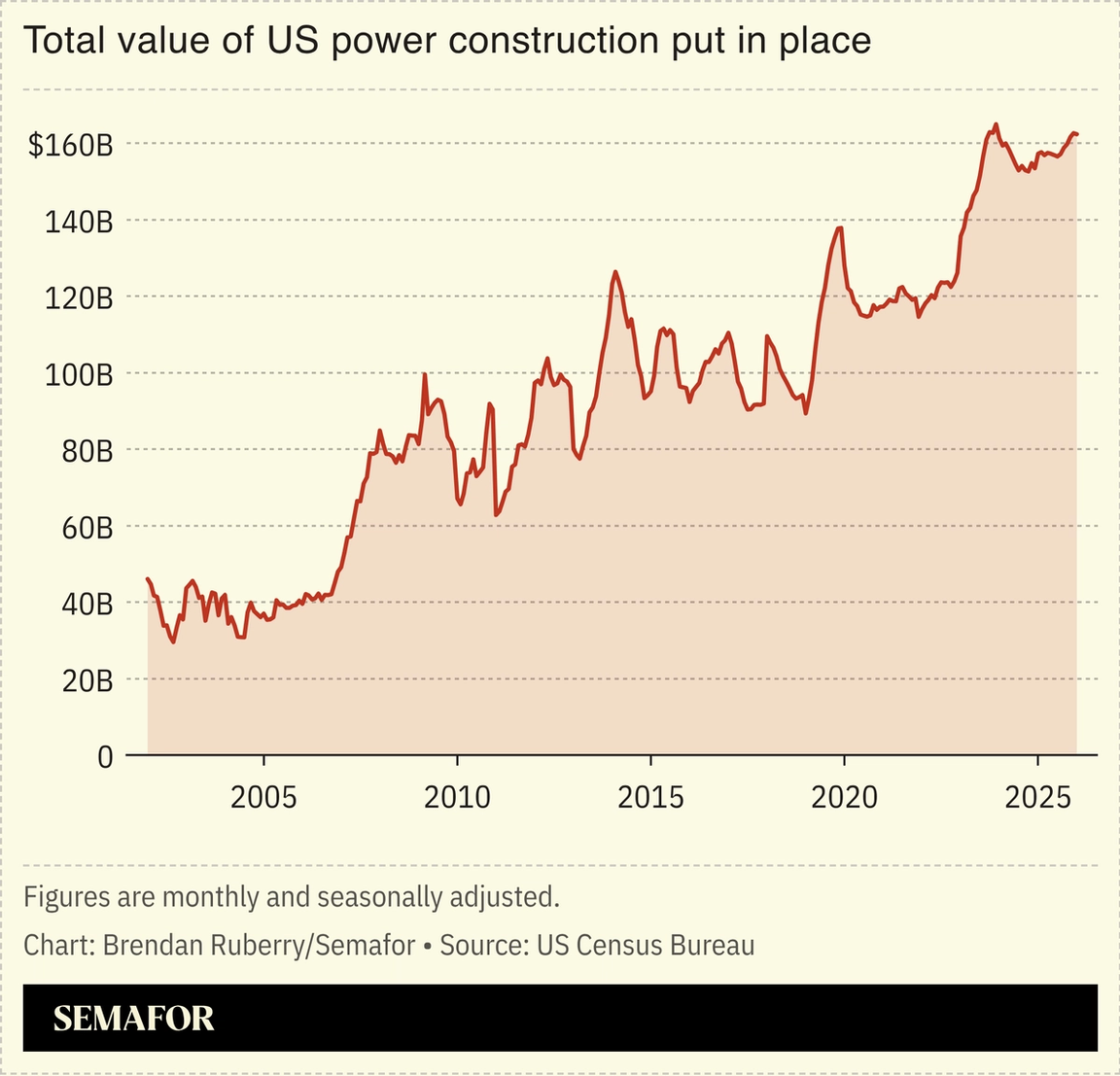 The Iran war and the AI buildout are driving up concerns over the prospect of an energy squeeze in the US. The country has been a net energy exporter since 2019, and fuel exports have spiked since the conflict led to shortages around the world. But rising domestic gas prices are “raising questions about the merits of sending so much overseas,” a Reuters columnist wrote. Billionaire hedge fund manager Ken Griffin on Tuesday warned energy scarcity “will create the conditions for a global recession, and the United States will unquestionably feel some of that pain.” The concerns come as US data center power demand is expected to more than double by 2027, according to a new Goldman Sachs analysis. |
|
Fuel price crunch could worsen |
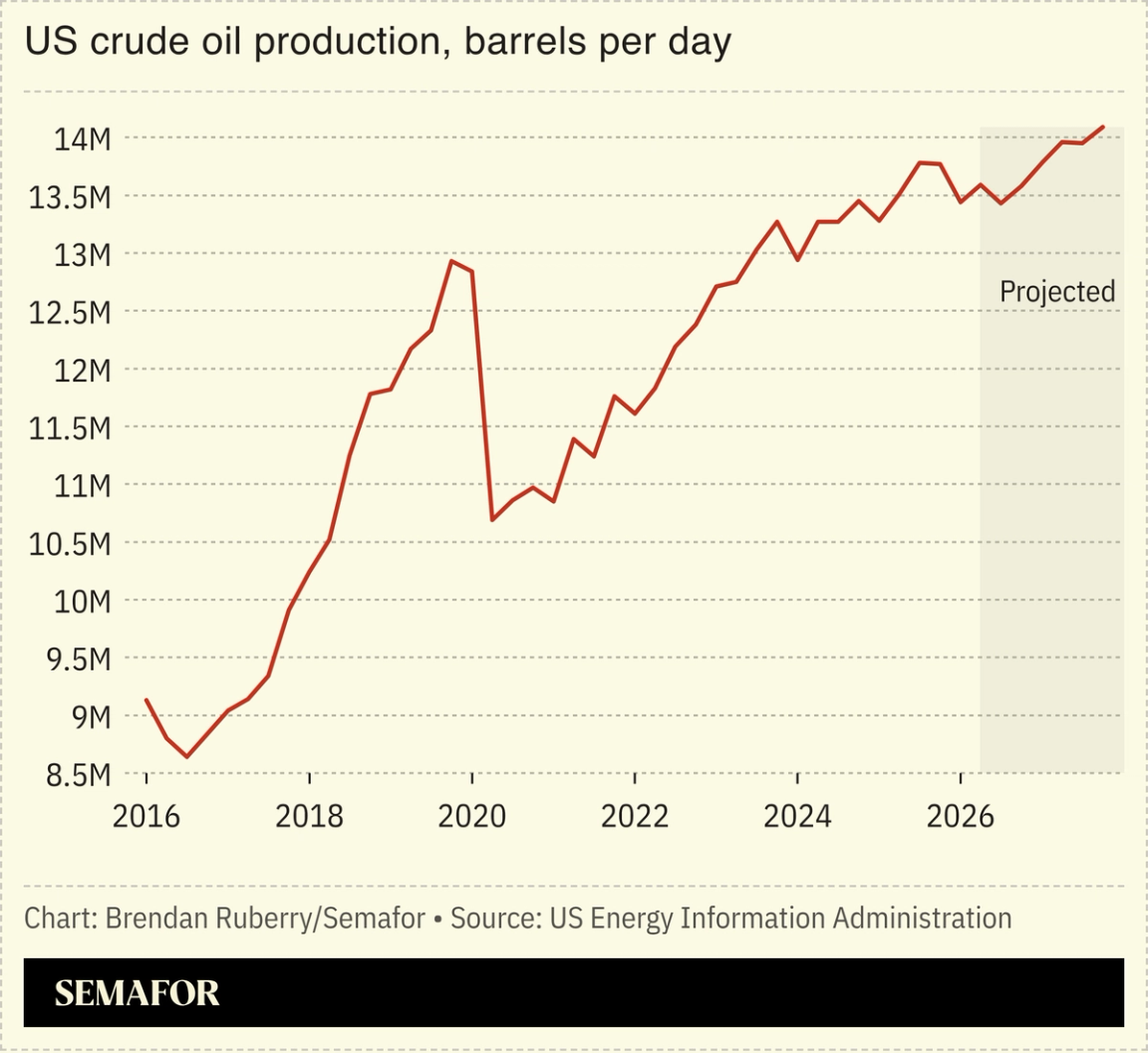 Global energy prices and supplies still have room to get much worse, executives and analysts warned. A “great repricing is underway,” Semafor’s energy editor wrote, as experts raise their forecasts for oil and gas prices — “a sign that the gravity of the situation is finally landing.” Global oil reserves shrank at record speed in April, and supplies of jet fuel and liquefied petroleum gas are poised to plunge in Asia, Africa, and Europe. Even as Washington attempts to safely escort ships through the Strait of Hormuz, many companies are adopting a “wait-and-see” approach as fears of attacks persist, a marine insurance executive told Semafor; shipping insurance rates won’t come down until there’s more evidence the escorts can materially improve safety. |
|
Wall Street remains bullish on AI |
 Brendan McDermid/Reuters Brendan McDermid/ReutersAI is extending its reach on Wall Street as companies exhibit strong demand for the tech and reshape their workforces around it. Anthropic on Tuesday unveiled a new slate of agents aimed at handling financial services tasks like reviewing balance sheets and drafting pitch decks; market intelligence stocks subsequently fell. Top financiers leaders remain optimistic on the demand for AI; the heads of JPMorgan and BlackRock on Tuesday both dismissed concerns of an AI bubble. The boom is also increasingly changing the nature of work. Cryptocurrency exchange Coinbase said it will lay off 14% of its staff, citing AI’s use to pivot toward “one-person teams,” in which a single employee acts as an engineer, designer, and product manager. |
|
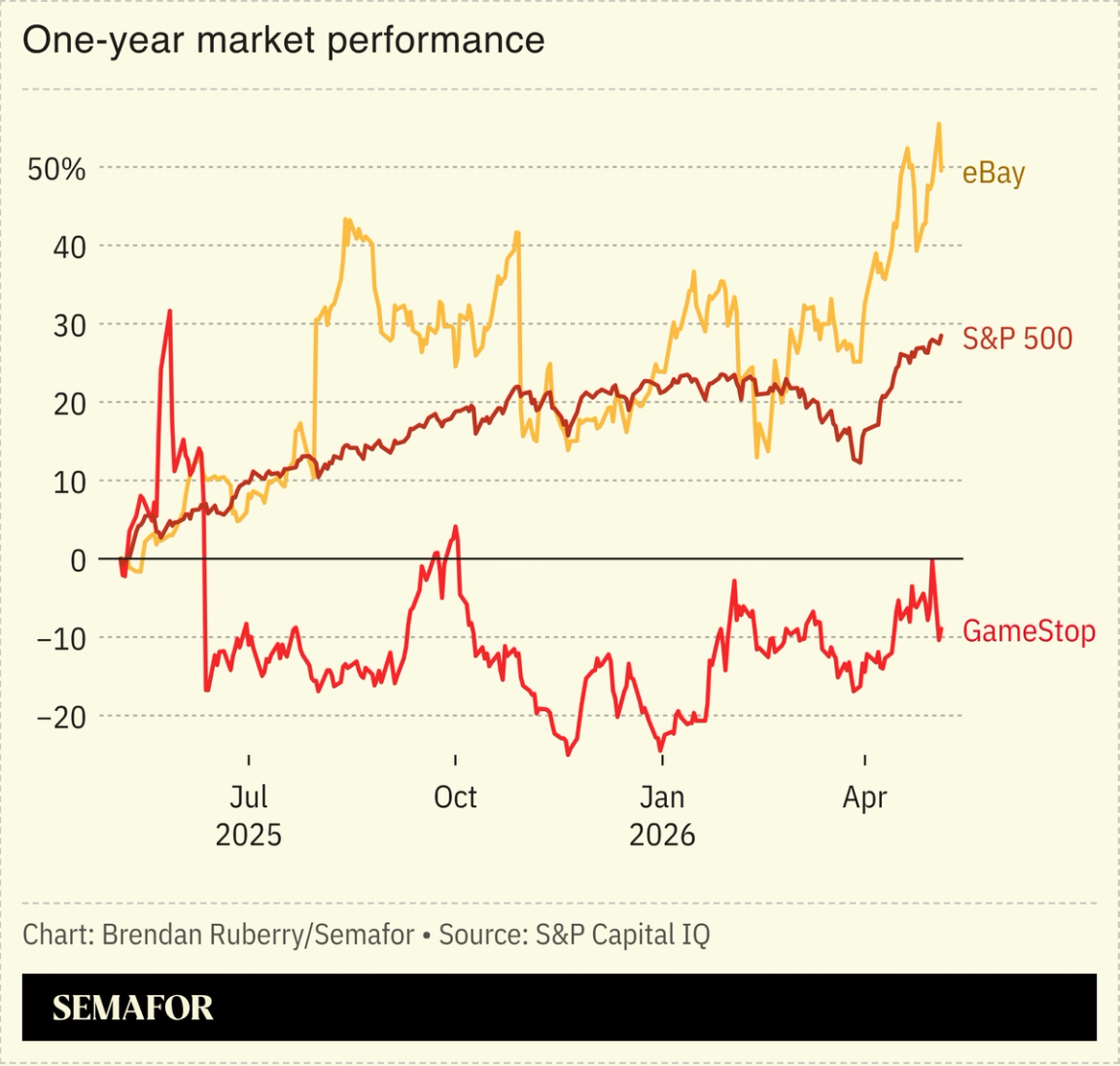 GameStop’s unsolicited bid to buy eBay faces an uphill battle, but it reflects a strain of bravado coursing through the corporate world. GameStop’s pitch — which garnered outsized interest after its CEO made a combative appearance on CNBC — would see the $12 billion company put together $55 billion to buy the e-commerce giant. It’s fitting that the bid was made from the Milken Institute Global Conference, the “annual home of ambition untethered from arithmetic,” Semafor’s Liz Hoffman wrote. At the California summit, “confidence is the product.” The broader economy is following the same mentality, as stock markets keep rising and executives remain bullish on US consumer spending. “The confidence isn’t despite the chaos; it feeds on it.” |
|
UK DeepMind staff vote to unionize |
 Hannah McKay/Reuters Hannah McKay/ReutersThe UK staff of Google DeepMind voted to unionize amid concerns of the company’s deal with the US Department of Defense. The Pentagon reached agreements with seven AI companies, including Google, for “lawful use” of their tech in the military; Anthropic, which feuded with the Pentagon over use of its tools, was not among them. But the deal was unpopular with Google’s employees, hundreds of whom signed an open letter condemning it. One told WIRED that a union would allow staff to demand that Google allow them a say in its products’ uses. UK law, however, limits union influence to things like working conditions, but the union could still be a PR headache and potentially incentivize Google to slow its British investment. |
|
China ramps up AI scrutiny |
 Laurie Chen/Reuters Laurie Chen/ReutersBeijing is expanding its oversight of AI slop. China last week announced a new four-month campaign targeting “disorder” in AI systems, including poor training data, deepfakes, and low-quality “digital swill.” Several popular AI-generated short-form dramas have also been taken down from Chinese social media, suggesting AI content now comes under similar scrutiny as traditional media. New regulations, meanwhile, look to tackle the emotional aspect of AI interactions, setting terms “for how a machine may occupy the role of confidant, companion, and emotional anchor,” Hello China Tech wrote. While Beijing’s approach could throttle some consumer-facing AI uses, like chatbots and AI-made videos, the government is simultaneously pouring resources into what it sees as more strategic AI applications, like robotics. |
|
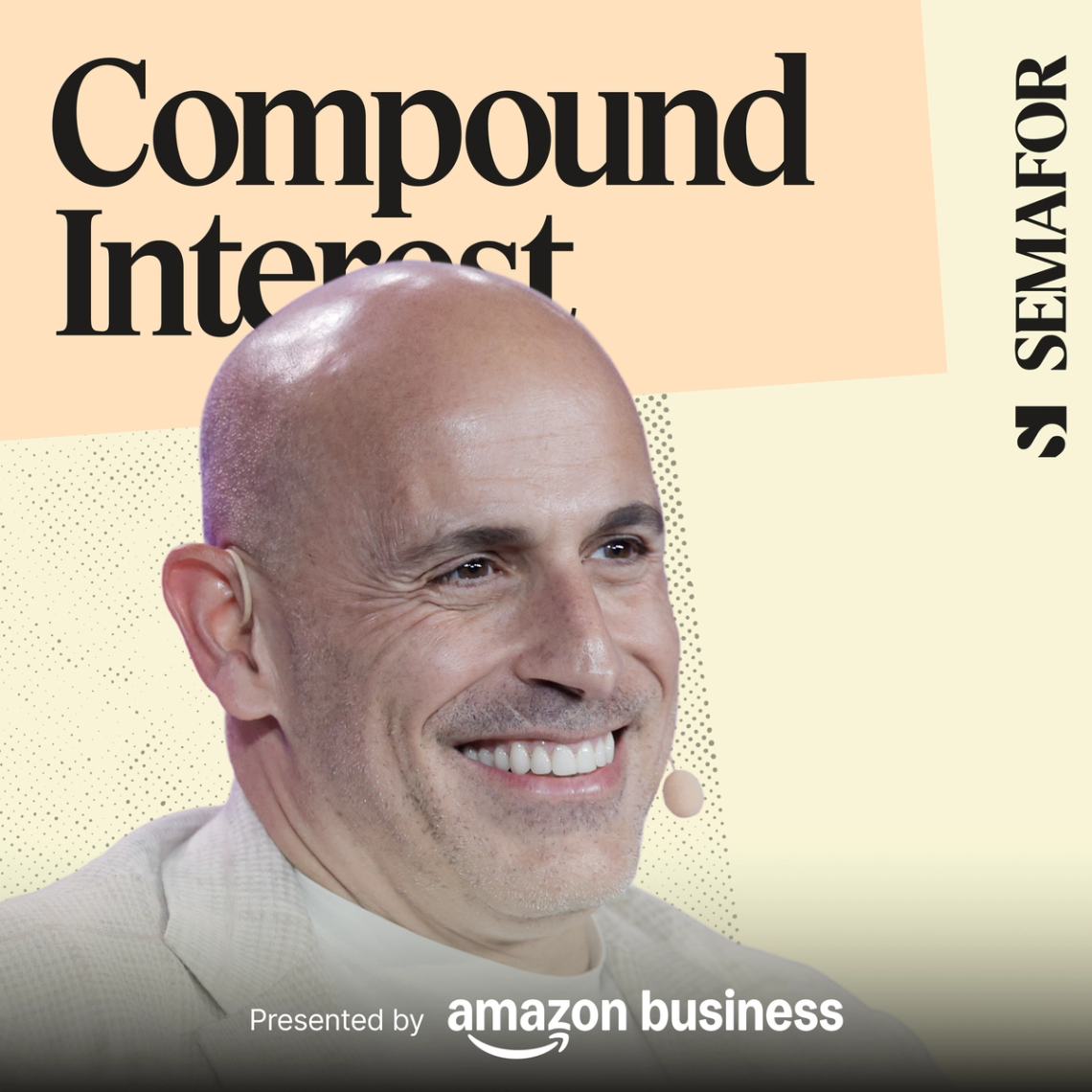 Marc Lore built Diapers.com and sold it to Amazon. Then he built Jet.com and sold it to Walmart. Now he’s trying something different: Taking Wonder — his vertically integrated food-delivery startup — all the way to a public offering. On this week’s Compound Interest, presented by Amazon Business, he joins Liz and Semafor’s Deputy Editor-in-Chief Shelly Banjo to talk about why he’s betting that robots, influencers, and AI-directed meal plans can finally crack the code on profitable food delivery and what e-commerce taught him about attacking fat margins with automation. Plus, why he’s quietly searching for desert land to build a city from scratch. |
|
China’s widespread robot adoption |
 Maxim Shemetov/Reuters Maxim Shemetov/ReutersChina is increasingly embracing AI-powered robots in everyday life. Cleaning robots, traffic police robots, and industrial robots are “beginning to reshape everyday life,” the South China Morning Post reported. Chinese AI companies still lag the US in cutting-edge models, but they have leaned into integration; Beijing aims to embed AI in 90% of the economy. The country already has a large robotics manufacturing base — 90% of the world’s humanoid robots are Chinese-made — and fewer regulatory hurdles than the West, so adoption is easier. By contrast, US industry leader Boston Dynamics pushed out several top executives recently over the board’s concerns about the company’s dwindling advantage over competitors and its ability to mass manufacture working humanoids, Semafor reported. |
|
US goes bananas over mangoes |
 Babu Babu/Reuters Babu Babu/ReutersIndian mangoes are such a delicacy in the US that devotees are paying “lobster prices,” The Wall Street Journal reported. Most US-bought mangoes are Mexican, but connoisseurs insist Indian ones are incomparable; one accused the Mexican fruit of tasting like “a raw potato.” Indian mangoes are delicate, seasonal, and only briefly ripe, so obsessives form WhatsApp groups, track air shipments, and pay five times the Mexican-mango price. Developing a refined palate can be expensive. Real wasabi is 20 times the cost of the green-dyed horseradish used in most Japanese restaurants, and loses flavor quickly once grated, but the cognoscenti insist that it is sweeter and more delicate, while the fake stuff clears your sinuses like smelling salts. |
|
|


