| | Trump pauses US ship escorts on the Strait of Hormuz, France’s Macron eyes a US trade ‘bazooka,’ and͏ ͏ ͏ ͏ ͏ ͏ |
| |  | Flagship |  |
| |
|
The World Today | 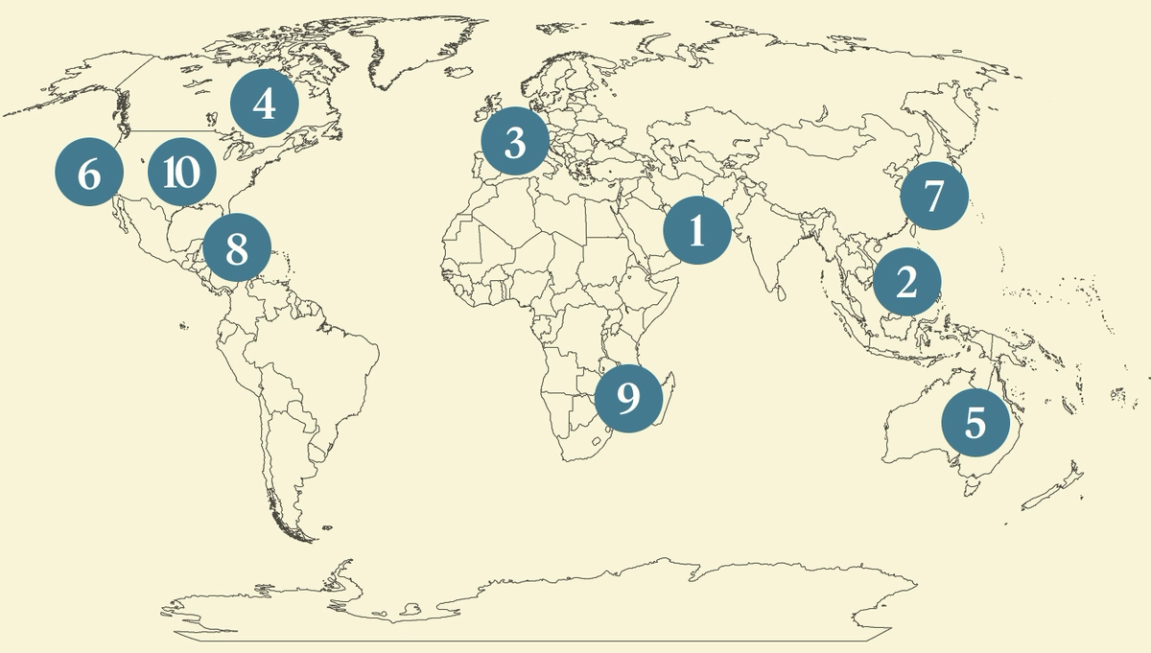 - Trump stops Hormuz escorts
- ‘Angry’ ASEAN summit
- Macron eyes trade ‘bazooka’
- Middle powers unite
- Race to boost fuel reserves
- Anthropic steps up spending
- Investors back AI boom
- China slams US over Cuba
- Yuan up on Africa loans
- ‘Blue dot fever’ hits tours
 A ‘lively, judicious history’ of the Baltic crusades. |
|
Trump pauses Hormuz escorts |
 Majid Asgaripour/WANA via Reuters Majid Asgaripour/WANA via ReutersUS President Donald Trump paused the effort to escort ships through the Strait of Hormuz, a day after it began. “Project Freedom” saw two ships pass through the waterway, while hundreds remain stranded. Trump said the operation was on hold because “Great Progress” had been made towards a deal, and Axios reported that the White House does believe it is close to an agreement, despite several Iranian attacks on US forces and allies. The strait’s 10-week closure is projected to slow global GDP growth and deal a blow to US influence: Washington’s Gulf allies fear that Trump is so intent on extricating himself from the conflict that he is ignoring Tehran’s provocations, The Wall Street Journal’s chief foreign-affairs correspondent wrote. |
|
‘Angry’ ASEAN summit opens |
 Ajeng Dinar Ulfiana/Reuters Ajeng Dinar Ulfiana/ReutersSoutheast Asian leaders, whose countries are among those hardest hit by the economic fallout from the Iran war, gathered for a summit amid growing frustration with the US. Washington has long been the ally of choice for the region, which has seen strong economic growth in previous years thanks largely to the American security umbrella, but various nations have begun hedging their ties to the US. Malaysia has declared a trade deal with Washington “null and void,” the Philippines is mulling joint energy projects with China, and Thailand — which today reported higher-than-expected inflation — is reaching out to Beijing for assistance. The ASEAN talks look set to be an “angry summit,” Foreign Policy said. |
|
Macron eyes US trade ‘bazooka’ |
|
Middle powers chart new alliances |
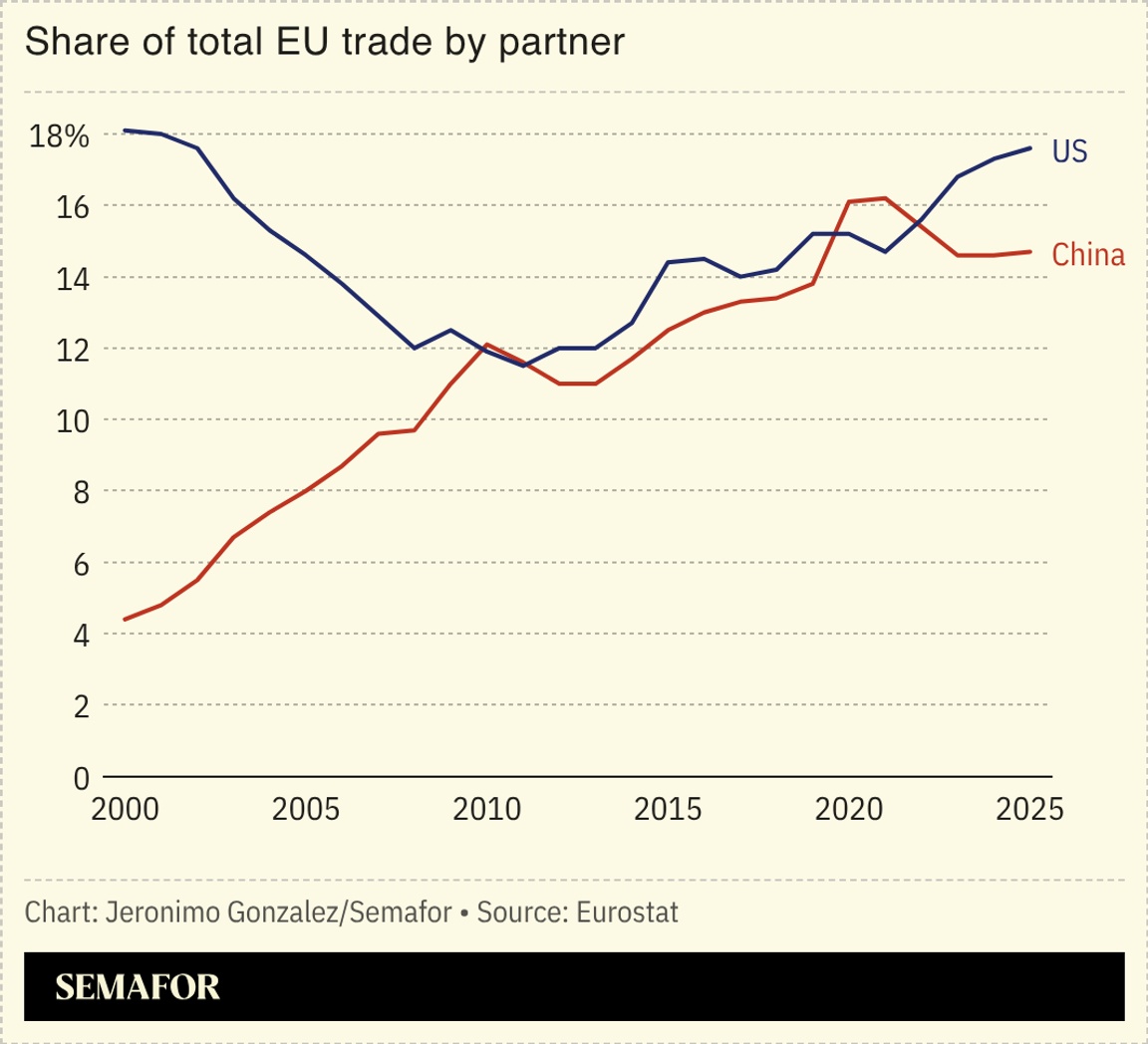 Global middle powers moved to strengthen their alliances in a bid to shield their economies from US unreliability and Chinese aggression. Australia has recently reached trade agreements with nations as far afield as India and Peru as it vies to reduce its reliance on the world’s two biggest economies. And Canada — whose prime minister in Davos this year issued an urgent call for middle powers to band together — has grown closer to Brussels, recently winning concessions for Canadian firms to participate in EU procurement. Still, these medium-sized nations face major hurdles in cutting their exposure to Washington and Beijing: Europe still relies on US security guarantees, while countries globally depend on China for imported goods, and as a key export market. |
|
Global race to boost fuel reserves |
 Amit Dave/Reuters Amit Dave/ReutersCountries globally raced to boost domestic fossil fuel reserves despite US claims that the Iran war was over. Australia said it would spend upwards of $7 billion to bolster fuel security, while Norway started production in a long-forgotten oil field, a major boost for Europe’s energy independence. QatarEnergy, meanwhile, canceled two LNG shipments as it looked to bolster its own domestic capacity. Despite the short-term uptick in fossil fuel spending, though, experts say the war will lead to a long-term shift to renewables as countries vie for energy independence. In a column for Semafor, former US Secretary of State John Kerry said countries that build energy systems with “what they have at home” — citing renewables — will come out the strongest. |
|
Anthropic ups compute spending |
|
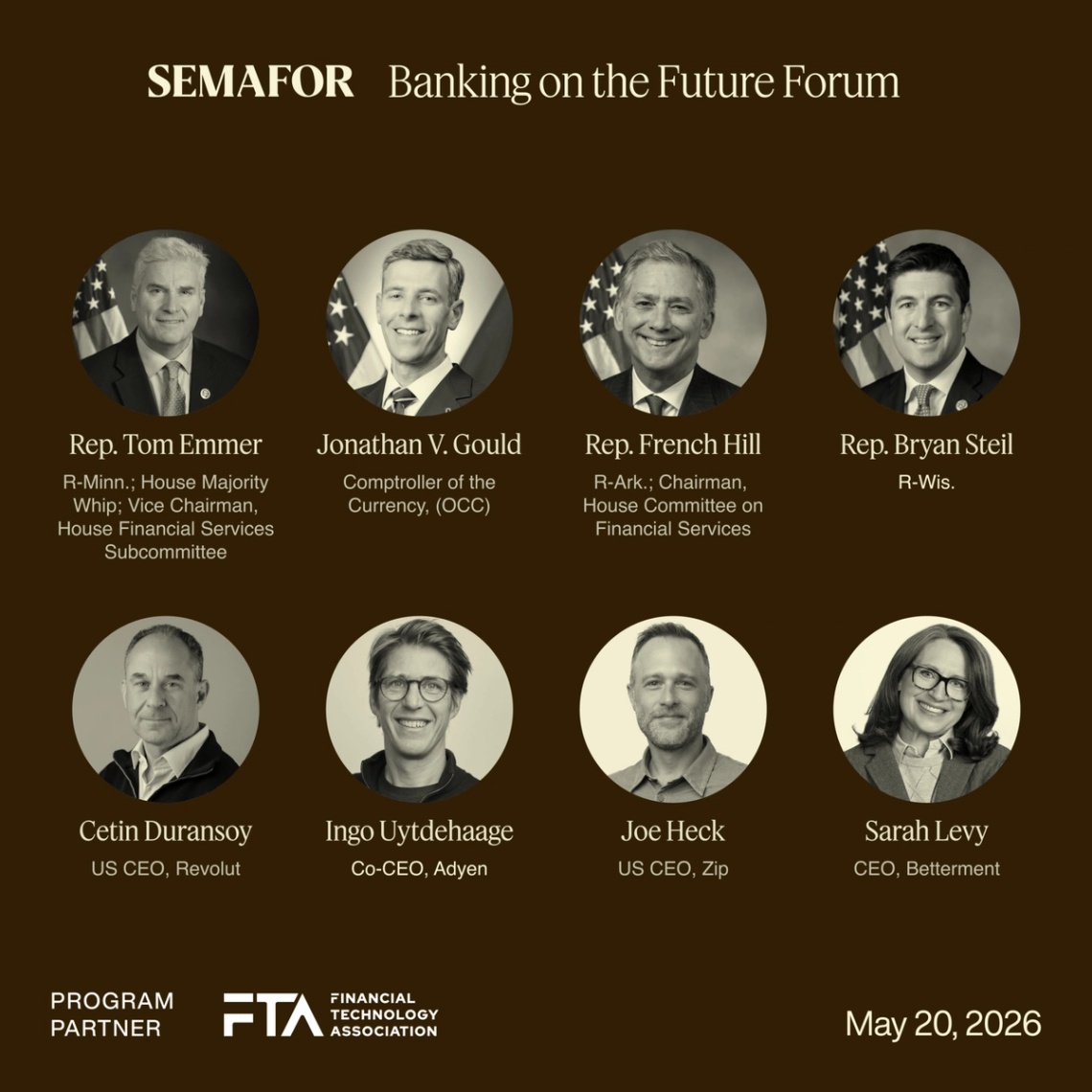 The global financial landscape is evolving at a pace unseen in previous years, propelled by the adoption of new technologies and rapid innovation. As Washington’s regulatory approach evolves, new opportunities are emerging, but questions remain around how these policy shifts will impact the industry and how consumers access services. On Wednesday, May 20, Semafor will convene the Banking on the Future Forum in Washington, DC, with on-the-record conversations featuring Rep. Tom Emmer, R-Minn., House Majority Whip and Vice Chairman of the House Financial Services Subcommittee; Jonathan V. Gould, Comptroller of the Currency; Rep. French Hill, R-Ark., Chairman of the House Financial Services Committee; Rep. Bryan Steil, R-Wis.; Sarah Levy, CEO of Betterment; and other industry leaders, on how policy and technology are steering the industry’s trajectory. Join us as we examine how evolving regulations are shaping innovation and what they signal for the future of financial technology. May 20 | Washington, DC | Request Invitation |
|
Investors increase AI spending |
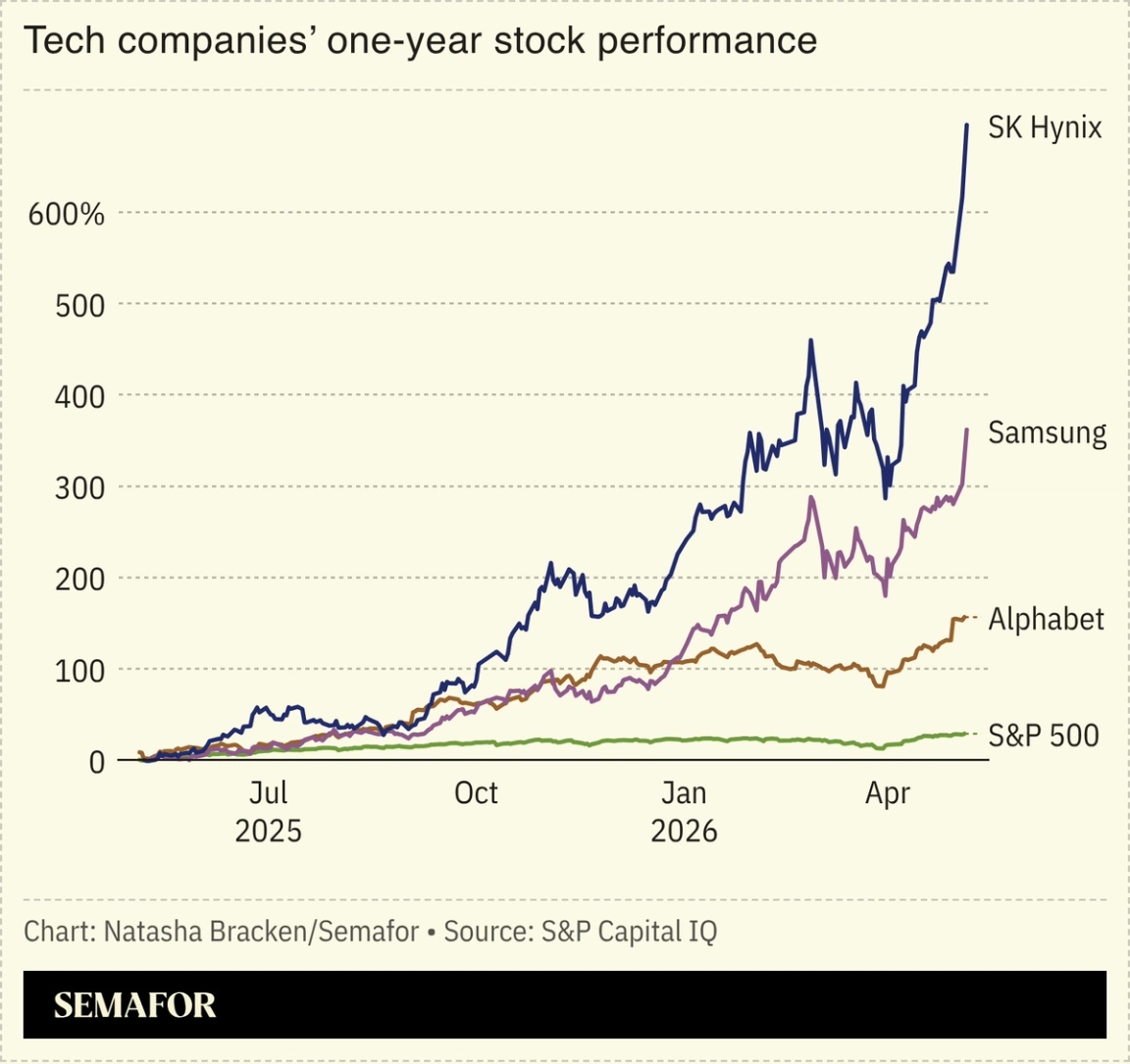 Investors turned increasingly bullish on AI companies across the value chain, and around the world. South Korea’s Samsung saw its market capitalization surpass $1 trillion as demand for semiconductors soared; fellow chipmaker SK Hynix also reached a record high, while Alphabet leapt on news of a $200 billion deal with Anthropic. The AI companies themselves are also seeing cash flow in: DeepSeek, the Chinese market leader, is seeking funding at a $45 billion valuation, while Anthropic is expected to agree a new round at $900 billion, surpassing OpenAI’s March $852 billion figure, which at the time made it the second-most valuable private company in the world. The news came as BlackRock and JPMorgan played down fears of an AI bubble. |
|
 Norlys Perez/Reuters Norlys Perez/ReutersChina called on the US to end its Cuba embargo, calling new restrictions “illegal” in a major escalation of Beijing’s criticism of Washington’s foreign policy ahead of a planned meeting between the superpowers’ leaders. The criticism comes shortly after US President Donald Trump broadened a blockade, imposing new sanctions on any foreign firm working in the Caribbean nation. The new curbs have left numerous companies in a limbo: A Canadian mining firm said it was assessing the future of its operations in Cuba, while a Turkish floating power plant — a key energy source for Havana — may now be forced to leave. Trump has vowed to replace Cuba’s regime, recently promising to take control of the country “almost immediately.” |
|
Africa loans help strengthen yuan |
|
|


