Google goes on the offensive at I/O
 

Artificial Intelligencer

Artificial Intelligencer

What matters in AI this week


By Kenrick Cai, Technology Correspondent

Silicon Valley's biggest drama - the legal battle between Elon Musk and Sam Altman over the future of OpenAI - has been playing out in court in recent weeks. But who was the big star who never showed up? 

Google’s AI czar Demis Hassabis.

Altman and Musk each testified about how they were motivated to start OpenAI more than a decade ago out of fears about how Hassabis and Google might steer humanity were they to reach artificial general intelligence, AGI for short, a hypothetical AI system that surpasses human intelligence.

“Unfortunately, humanity’s future is in the hands of Demis,” Musk wrote to Altman in one 2018 email used as evidence in court. 

On Tuesday, about 40 miles south in Mountain View, the world had a chance to see what Hassabis’ vision for humanity looked like.

“When we look back at this time, I think we will realize that we were standing in the foothills of the singularity. It will be a profound moment for humanity,” Hassabis said during the keynote address for Google’s annual I/O developer conference, referring to the theoretical moment when technology exceeds human control.

CEO Sundar Pichai opened the two-hour address by teasing a flurry of new products centered around the AI being developed by Google DeepMind. They included the new Gemini 3.5 model family, an upgraded coding assistant, and a timeline for its revived smart glasses.

But while Pichai has traditionally delivered closing remarks for the keynote, this year he turned the stage over to Hassabis to sum up our collective future.

Hassabis declared that AGI would be the “most profound and impactful technology ever invented” and that his unit was now on the horizon of inventing it.

“We're in a moment of immense promise, but also enormous responsibility,” Hassabis said.

If Musk’s fears come true, it’ll likely be the result of Google’s ability to finance AI research from its lucrative core products.

Read on to see how Google plans to pull this off.

Share your thoughts by emailing me or following me on LinkedIn. Forward this newsletter to your friend who would benefit from weekly news and insights on AI. They can also subscribe here.


Read our latest reporting in tech and AI: 

  • Exclusive: At Samsung, the global AI boom spurred a looming strike and deep divisions
  • Exclusive: Meta offers AI rival chatbots limited free WhatsApp access, sources say
  • Musk's failed court attack on OpenAI could leave lasting scars on Altman's reputation
  • Google DeepMind hires staff from Contextual AI in licensing deal, source says
  • As chip industry chases AI, U.S. national labs look to newcomers for supercomputers
  • Exclusive: Microsoft eyeing startup deals for life after OpenAI
 

Averting cannibalism

Intel CEO Lip-Bu Tan makes a speech on stage in Taipei, Taiwan May 19, 2025. REUTERS/Ann Wang/File Photo

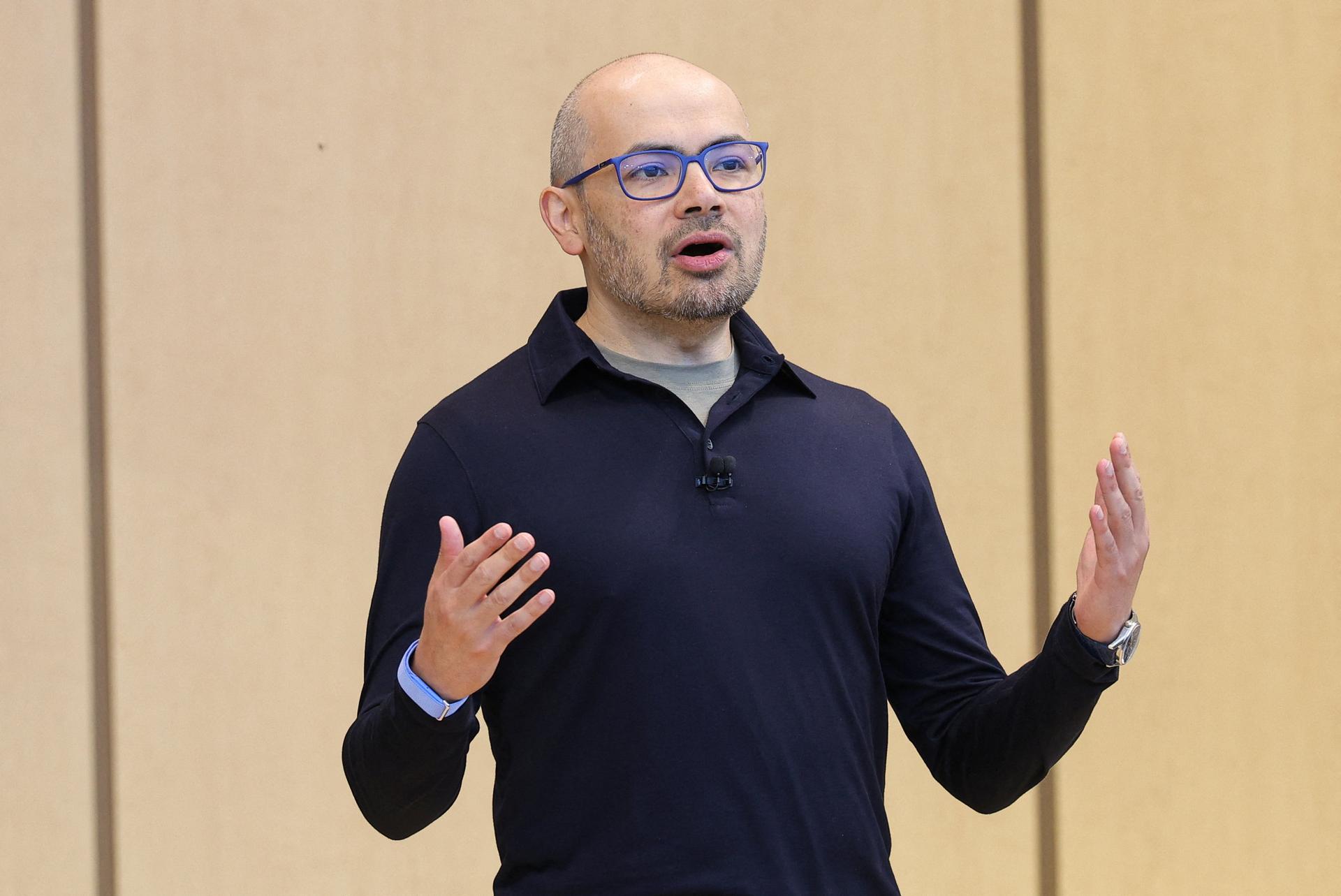
CEO of Google DeepMind Demis Hassabis speaks at Google's I/O 2026 developer conference in Mountain View, California, U.S. May 19, 2026.  REUTERS/Manuel Orbegozo

Google’s ubiquitous search engine is morphing increasingly into an AI chatbot in both cosmetics and function. Starting this week, the search bar will expand into a larger box if a user makes a lengthy query, executives said at I/O. Answers can come in the form of visuals that explain abstract scientific concepts or code that whips up a fitness tracker, all generated on the spot by Gemini.

By combining AI’s computational skills, Search’s giant index of webpages, and an individual user’s personal data and preferences, Google is looking to create an experience so attuned to users’ needs that they never need to click out to an external website.

Google is only able to make such changes to the product because its ad revenue continues to flow. Search advertising made up the majority of parent company Alphabet’s $402.8 billion in revenue in 2025, and it remains a growing part of the business. 

More importantly, the business is growing thanks to AI usage. The more people used the search engine’s AI features, the more they searched, Pichai said. Executives on stage said that AI Mode’s queries had doubled every quarter since launch and that it now had more than 1 billion monthly users.

On Wednesday, the company also revealed new advertising formats for AI Mode, further allaying fears that AI usage would hurt the lucrative ad business.

Taken together, the product launches represent a definitive attempt by Google to put to bed past concerns that AI could cannibalize the core, a significant milestone as it is taking the fight to both big frontier model makers and chip giant Nvidia.

Its profit engine has allowed Google to continue bankrolling projects beyond the core business, even as Google’s AI rivals are pulling back on endeavors this year. OpenAI discontinued its Sora video app and disbanded its science division.

Hassabis wrapped I/O with one final announcement: Gemini for Science, a platform tailored for performing scientific research and computation.

"Stepping back, the whole reason I've worked on AI my entire career was because I saw it as the ultimate tool to advance science and our understanding of the world,” Hassabis said.


This newsletter was edited by Ken Li and Rosalba O'Brien and produced by Rawan Yaghi.


Sponsors are not involved in the creation of newsletters or other Reuters news content. Advertise in this newsletter or on Reuters' website

LiveIntent Logo
AdChoices Logo
 

Reuters Artificial Intelligencer is sent once a week. Think your friend or colleague should know about us? Forward this newsletter to them. They can also sign up here.

Want to stop receiving this email? Unsubscribe here. To manage which newsletters you're signed up for, click here.

This email includes limited tracking for Reuters to understand whether you’ve engaged with its contents. For more information on how we process your personal information and your rights, please see our Privacy Statement.