
|
 |
If you enjoy this preview, I hope you’ll consider upgrading to a paid subscription.
For those who don’t have or want a Substack account, you can keep Off Message going with a donation. All support is appreciated, and donations of $75 or larger come with a comped annual subscription—all content unlocked and emailed to the address provided.
They Think They're Winning For All Time
Inside the mailbag: Sam Alito ... Chris Van Hollen ... John Fetterman
|

| |||||||||||||||


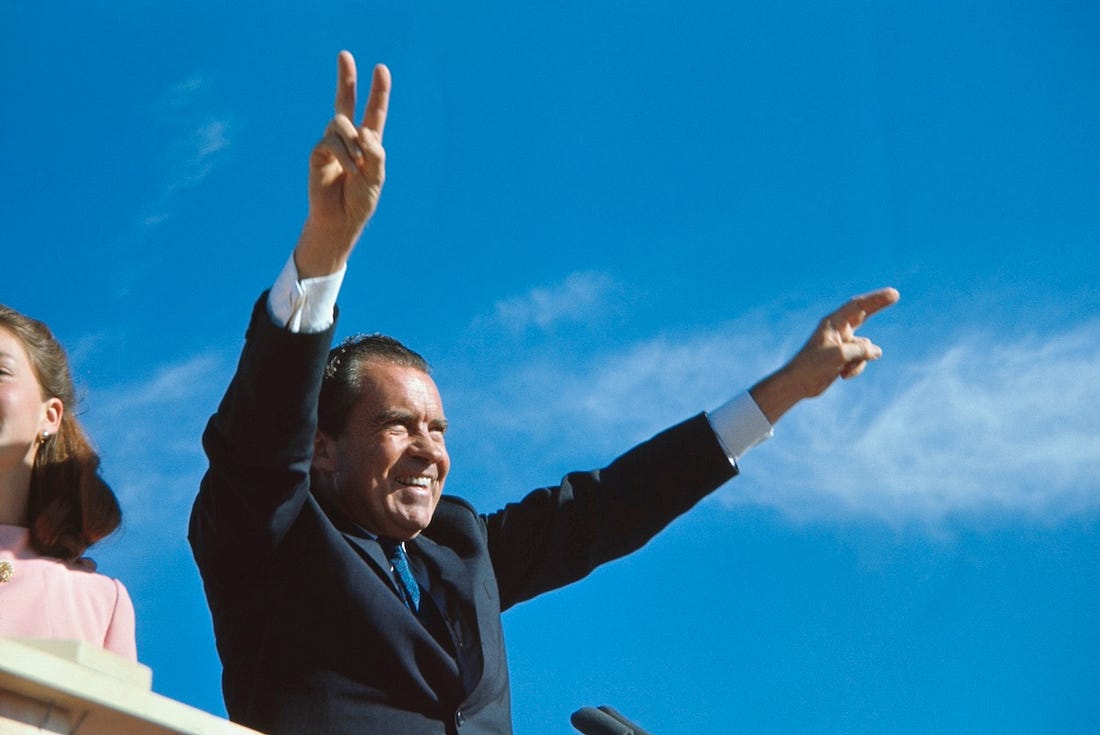 |
Ian: Thinking about the downfall of Cassidy in the LA primary last night, and the way he groveled for his job by voting to confirm Kennedy even after once showing the courage to vote for impeachment. And then lost anyway (as he surely should have known he would, no matter what lies the Trump people told him to keep him on side until the time came to shank him). Perhaps the mists of time have blurred my recollection (both of personal experience and academic history), but it seems there was a time when legacy mattered. That how one will be remembered by history ought to be a consideration of high import. The saga that led to the downfall of Nixon would seem to provide at least some evidence for that idea. Yet, it seems that the notion is now entirely dead, at least amongst conservatives and Republicans….
I’m left to wonder, do they believe they will somehow bend history such that they will no longer be viewed with the ignominy every rational person knows they will be viewed with? Are they in such a rush of thirst for power they cannot even consider their legacies? Do they somehow not realize how they will be viewed despite the voluminous, all-caps-on-neon-cardstock paper trail of degeneracy and malignancy they have left behind? I would be curious to hear your take on that and on whether there is any way to wrestle that particular genie back into the bottle.
I’m glad you used Nixon as a reference point, because in important ways the history we’re living through today starts with his demise.
Over a decade before Francis Fukuyama coined the term, many people in both parties seemed to operate with an end-of-history mindset. The world would evolve inexorably toward liberal democracy and open society. Dead-enders who conspired against those values might win some battles, but they’d lose the war for historical memory. They’d be remembered as villains, latter-day Jefferson Davises or Adolf Hitlers, or one of their hangers-on.
The Republicans who eventually turned on Nixon benefit from an afterglow effect, where we remember their actions as principled and heroic in order to set a moral example for future generations. But it’s usually wrong in politics to presume people are motivated primarily by principle when self-interest suffices as an explanation. Nixon was going down, and these practical men could either go down with him, or throw him under the bus¹.
They didn’t fully appreciate the fanaticism of their copartisans. Many seeds of Trumpism were planted by a small number of degenerates in the post-Nixon Republican rump who believed the end-of-history consensus was wrong. That the only thing Nixon and his allies needed to prevail was greater will to power.
They built multibillion-dollar institutions to ensure Republicans never faced accountability again. Certainly not from their fellow Republicans, but ideally from anyone.
By the Trump era, their grip on the American institutional right was so tight that they barely had to pipe up for Republicans in Congress to know that trying to apply rules and laws to a Republican president would end their careers. Within days of the insurrection, they’d imposed discipline on a fully revolted Republican conference, and kept defections down to 10.
Now they openly discuss politics as a contest for all-time victory. Sam Alito, who just openly helped Trump rig the midterm, is on tape here, in what he thought was an off-the-record setting, saying the end game of American politics is one faction’s dominance over the other.
“One side or the other is going to win,” he said. “I don’t know. I mean, there can be a way of working—a way of living together peacefully, but it’s difficult, you know, because there are differences on fundamental things that really can’t be compromised. They really can’t be compromised. So it’s not like you are going to split the difference.”
It’s no mystery which side he’s on.
When Bill Barr mused to CBS News reporter Catherine Herridge about how his conduct vis a vis the Russia investigation would be remembered, he responded, “History is written by the winners, so it largely depends on who’s writing the history.”
Barr knew of what he spoke. He wrote an alternate history of Russian election interference, contradicting the Mueller report his own department produced, and it basically stuck.
All to say: Today’s Republicans have decent reason to believe that whole societies can carry on believing fictional versions of events. They think they’re winning a great clash within American civilization, and that they will fabricate the history of it.