“RINO”-free Republicans Party's first midterm
 

Politics U.S.

Politics U.S.


By Jacob Bogage, White House Correspondent 

Donald Trump’s MAGA machine eliminated more of the U.S. president’s Republican rivals in primary elections this week. But can his favored candidates win in general elections? 


Latest U.S. politics headlines

  • Special Report: Inside the unraveling of U.S. diplomacy under Trump 
  • Vance or Rubio for 2028? The White House briefing room edition 
  • US Health Secretary Kennedy fires heads of key preventive health panel 
  • US Supreme Court's uneven approach to election-map rulings boosts Republicans 
  • 'I'm not greedy': January 6 rioters and Trump allies eye $1.8 billion 'weaponization' fund 
 

MAGA’s moment

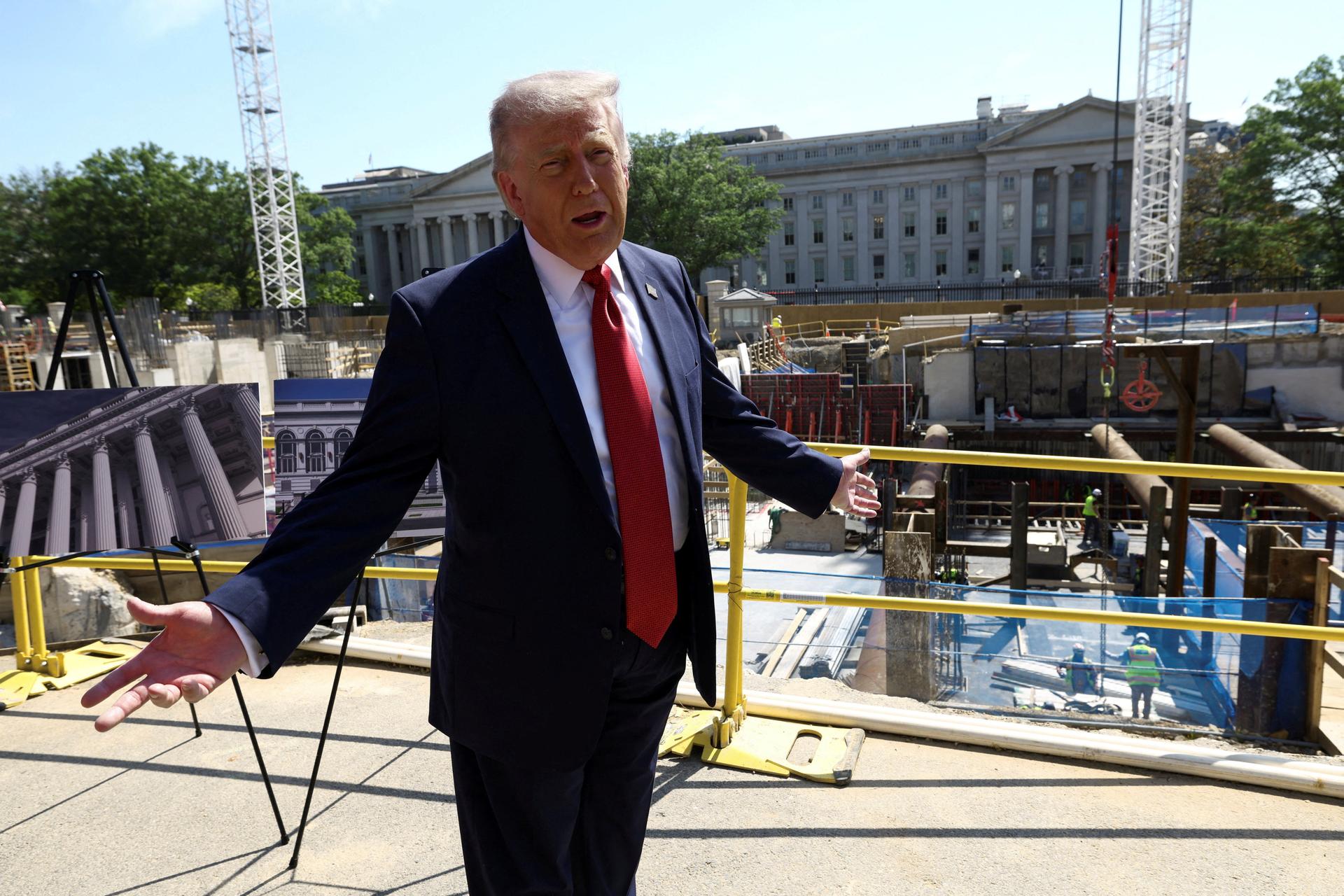
Trump on Tuesday stood beside what will soon become six stories of underground steel and concrete and declared the death of a species. 

“The RINOs are gone to a large extent,” Trump said, referring to “Republicans In Name Only,” or those disobedient to his Make America Great Again ethos. 

In the background, heavy machinery thrummed as construction workers erected Trump’s White House ballroom and underground security suite – a legacy project that’s also become a litmus test for his Republican Party. 

Later that day, a Trump-backed challenger picked off Republican Representative Thomas Massie in a Kentucky primary election, and the president backed another far-right challenger to Senator John Cornyn, himself a pronounced MAGA adherent, in Texas. 

“Do not ever doubt President Trump and his political power,” Steven Cheung, the White House communications director, wrote that night on social media. 

I’m Jacob Bogage, a White House correspondent at Reuters and a new author of this newsletter with colleague Trevor Hunnicutt. Based on our reporting, count me as one of the doubters.

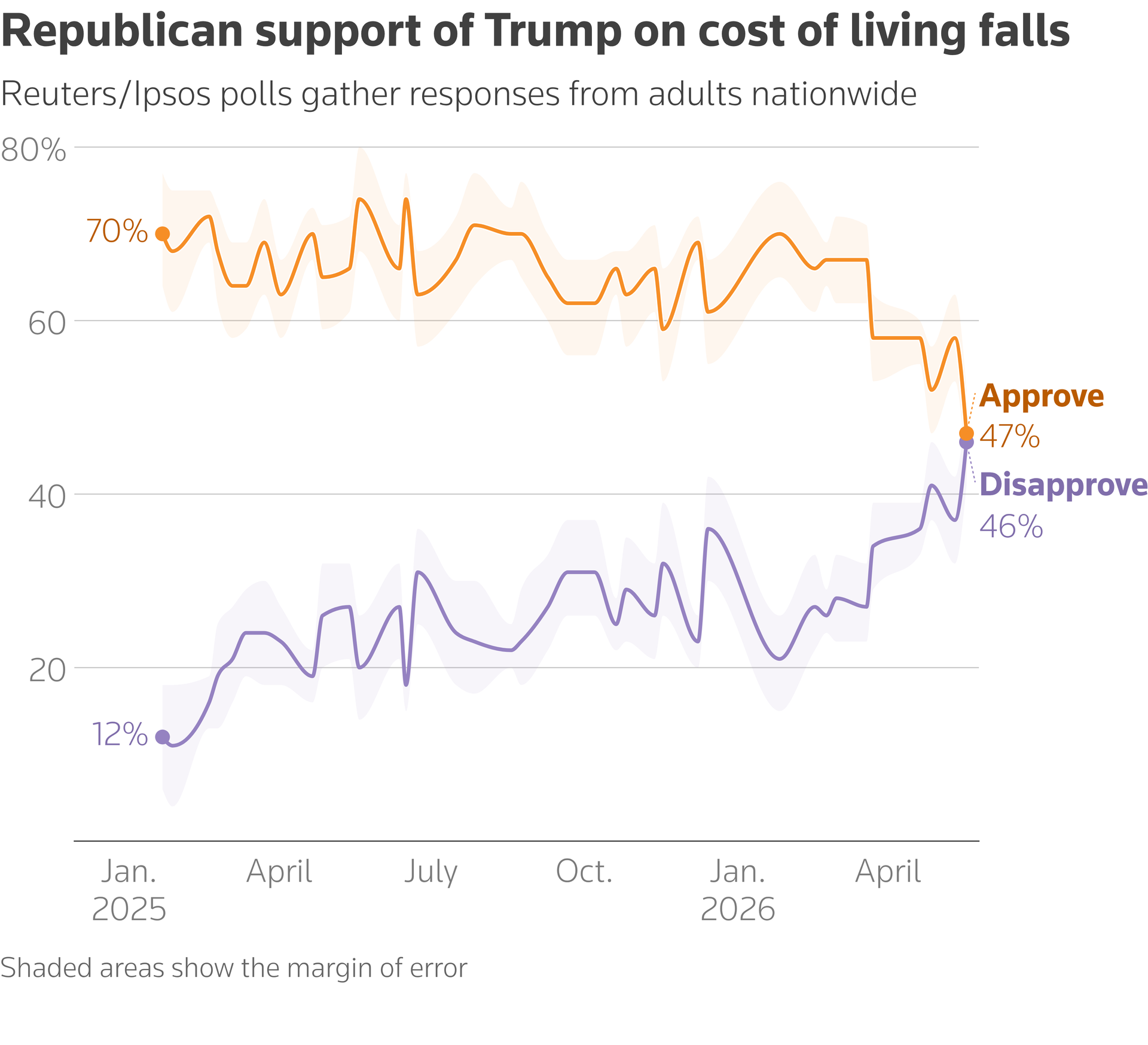
Trump is as wounded politically as he has been since coming back to office. Gas prices are up, and so is inflation, because of the war in Iran that he launched. Most Americans disapprove of the conflict, as well as Trump’s performance on hallmark issues of immigration and crime, according to a recent Reuters/Ipsos poll. 

The string of Republicans that Trump helped oust in recent weeks during his springtime revenge tour showed his grip on his core base of MAGA voters remains strong. But general elections are a different story. 

The very candidates that Trump has elevated or pushed to the right – in Texas, Georgia, Ohio and Alaska – are the ones who could be the most vulnerable in November’s midterm elections. 

Trump’s personal brand is vulnerable, too. Almost immediately after Louisiana U.S. Senator Bill Cassidy lost his reelection bid to a Trump-backed primary challenger, Cassidy supported a Democratic measure to halt the Iran war.  

And swing-district Republicans have expressed public queasiness over Trump’s deal with the Justice Department for a nearly $1.8 billion fund for supposed victims of “government weaponization.”  

Those issues might be popular with diehard Republican primary voters but risk alienating the broader coalition conservatives need in general elections. And that’s what makes Trump’s legacy issues, like the ballroom and Iran war, so politically damaging.  

Staging a press conference beside the construction crater where the White House’s East Wing once stopod, Trump said the immediate damage to the U.S. from the Iran war was “peanuts” and that “I appreciate everybody putting up with it for a little while.” That comment drew criticism from Democrats, much like Trump’s statement last week that “I don’t think about Americans’ financial situation” when considering how to prevent Iran from building a nuclear weapon. 

The $400 million ballroom, he said, would be paid for by wealthy individuals and corporations, but needed another $1 billion from Congress to fund additional security for the facility.  

Senate Republicans have since stripped ballroom funding from the party-line bill conservatives are advancing to fund the Department of Homeland Security, worried about the political risks the issue could present when cost-of-living issues are front and center. 

Trump is trying to cast his legacy issues as existential: nuclear nonproliferation, presidential security. But many Americans are unconvinced, and Trump’s party could pay the price. 


Poll of the week


Follow Reuters/Ipsos polling on the president's approval ratings here.


The view from Tehran

Iranian Supreme Leader Ayatollah Mojtaba Khamenei issued a directive that the country's near-weapons-grade uranium should not be sent abroad, our Reuters colleagues in the Middle East scooped this week. That could frustrate peace talks between the Islamic Republic and U.S. Trump has demanded the U.S. take possession of Iran’s “nuclear dust” as part of an end to the now nearly three-month-long conflict. 


Photo of the week


U..S. President Donald Trump gestures at the site of ongoing construction of the planned White House ballroom in Washington, D.C., U.S., May 19, 2026. REUTERS/Kevin Lamarque


What to watch for

  • May 22: Trump swears in Kevin Warsh as chair of the Federal Reserve 
  • May 22: Trump visits New York suburb to rally support for Representative Mike Lawler 
  • June 15: Trump attends G7 meeting in Evian-les-Bains, France