By Ross Kerber, U.S. Sustainable Business Correspondent |
|
|
|
Hello Switchies – Ross Kerber here with you today stepping in for Sharon Kimathi, who's on a deserved break this week and next. I'm a Reuters correspondent, based in Boston covering sustainable business news and trends. Here's hoping I can meet Sharon's high bar focusing on climate-related topics. I've already fallen short of her three-newsletters a week output in case you wondered why you didn't receive a Tuesday or Thursday edition this week; next week's newsletter will also be Friday-only. But then it’s back to normal.
As I read our stories to prepare for this newsletter, it struck me how the Iran-U.S. war dominates the world's energy agenda and, in turn, climate investment trends. I've put these war stories in the main section since the price of oil will have a major impact on the adoption of renewable energy. Plus, you'll find some perspectives on a recent carbon pricing deal in Canada.
You can follow me on LinkedIn. You can reach me via ross.kerber@thomsonreuters.com Here are some of the top tech and ESG stories on my radar: |
|
|
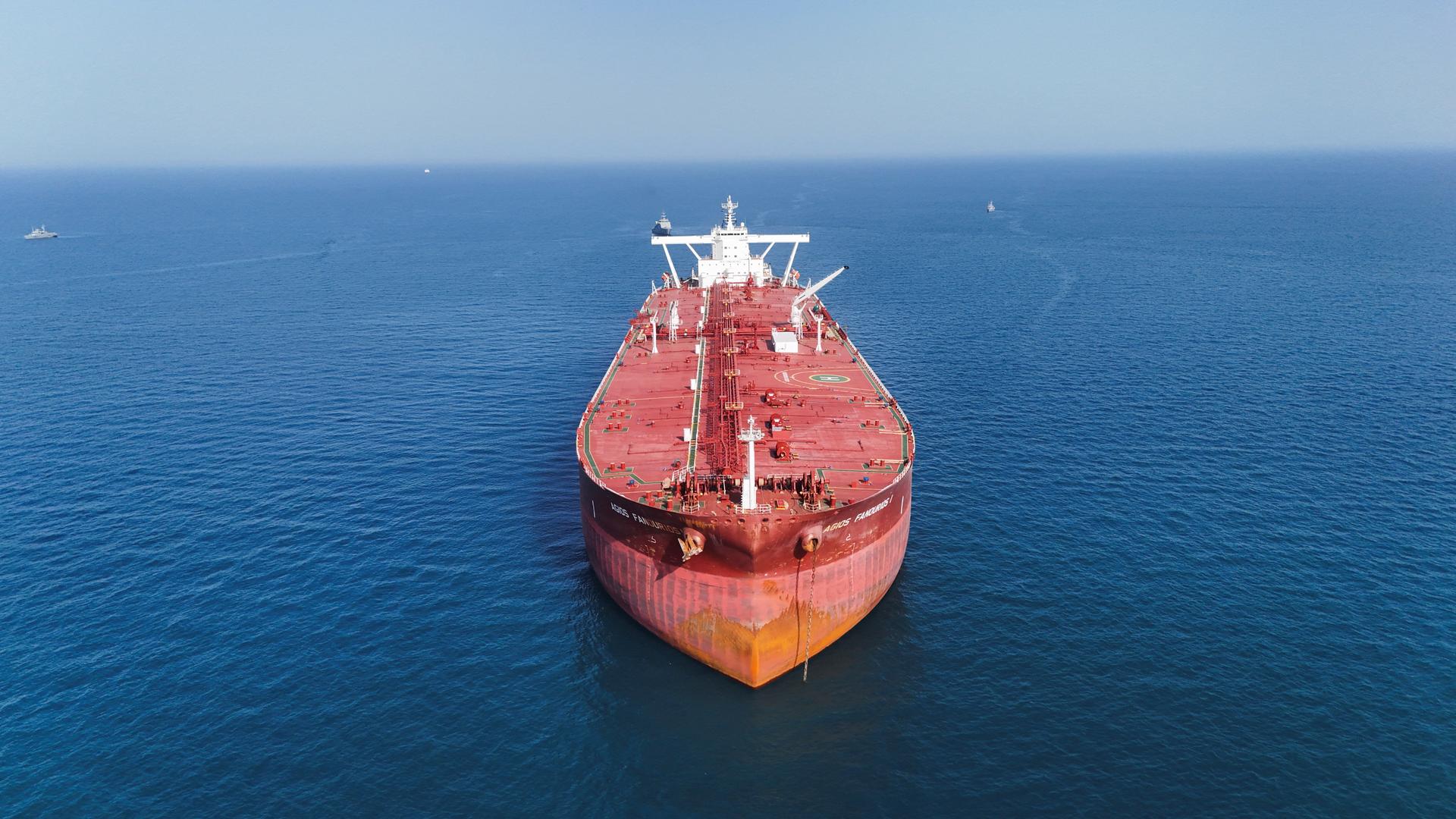
Malta-flagged tanker Agios Fanourios I, an oil tanker that sailed through the Strait of Hormuz, arriving in Iraq’s territorial waters off Basra, April 17, 2026. REUTERS/Mohammed Aty |
A 'red zone' looms for global oil supplies |
As this special report on oil shipments shows, Iran's grip on the Strait of Hormuz, the conduit for about a fifth of global oil supply, has thrown the world economy into turmoil. The story reveals how Iran has been consolidating control over this strategic chokepoint based on interviews, document reviews, and analysis of ship movements.
A new Iranian mechanism of control includes a tiered system giving preference to ships linked to its allies Russia and China, followed by countries such as India and Pakistan with close ties to Tehran, and then government-to-government agreements that let few vessels pass, Reuters found.
But control does not mean that oil transport is anywhere close to normal, with the U.S. Navy imposing its own blockade of Iranian ships and cargo with a cordon outside the strait.
With summer's peak fuel demand starting, the lack of exports and depleting fuel stocks could push the world's oil market into the "red zone" by July-August, the head of the International Energy Agency said.
Or as our Breakingviews columnist Ron Bousso said about oil: "Barring a breakthrough in peace talks, the global market may be only months away from a breaking point."
One prediction that feels safe to make is that higher oil prices should mean more interest in renewable energy sources. A sign of that is how China's solar exports to African and Southeast Asian countries surged. You can read our story about the trend here along with some technical caveats it contains. |
|
|
|
It has been a week since Canada's Prime Minister Mark Carney signed a deal on industrial carbon pricing with Alberta's premier, with oil and gas executives offering measured praise for the agreement.
That's easy to see, from their point of view: it ends some environmental rules and pledges to speed up regulatory approvals. It also sets terms for a new industrial carbon pricing policy. Economists love such plans as an efficient way to reduce emissions; many companies are skeptical they will be applied fairly.
Carney's deal ensures Alberta raises its carbon price over time, creating an incentive for heavy emitters to invest in pollution-reducing technology and satisfying a condition Carney set before his government would consider fast-tracking a new crude export pipeline. |
An environmental activist holds a flyer during a protest at the United Nations Climate Change Conference (COP29), in Baku, Azerbaijan November 16, 2024. REUTERS/Maxim Shemetov |
- Green funds: Global sustainable investment funds attracted a net $3.5 billion in new money in the first quarter, though U.S. funds chalked up their 14th straight quarter of outflows, data from industry tracker Morningstar showed.
- Transition support: Developed countries provided a record $136.7 billion to help poorer countries cope with climate change in 2024, the OECD said.
-
Save the Colorado: The U.S. government proposed a new water-sharing plan for the drought-stricken Colorado River that could cut up to 40% of current supplies to Arizona, California and Nevada, according to a senior Arizona official.
|
|
|
|
An employee poses with a cup of water at a Starbucks coffeehouse in Austin, Texas, U.S., February 10, 2017. REUTERS/Mohammad Khursheed/File Photo |
Poor returns: Starbucks' plastic single-use cups are not as recyclable as the company claims, said Vermont-based Beyond Plastics. The group attached location trackers to 36 single-use polypropylene cups and placed them in recycling bins inside Starbucks' cafes across the country. None of the cups were tracked to a recycling facility, the group said. Instead, 33 ended up in landfills, incinerators, or on their way to either. Three were last seen in sorting facilities.
|
|
|
|
|