
|
 |
xAI's Grok 4.5 Challenges GPT-5.5 at Flash Speeds
Plus: Meta launches Muse Image, Google unveils Nano Banana Lite & Omni Flash, Anthropic upgrades Claude Sonnet 5 and more.
|

| |||||||||||||||


Hello Engineering Leaders and AI Enthusiasts!
This newsletter brings you the latest AI updates in just 4 minutes! Dive in for a quick summary of everything important that happened in AI over the last week.
And a huge shoutout to our amazing readers. We appreciate you😊
In today’s edition:
🤖 xAI gives Grok its biggest upgrade yet
🖼️ Meta debuts new in-house AI image model
⚡ Google Launches Nano Banana Lite, Omni Flash models
🧠 Anthropic upgrades AI with Sonnet 5
💡 Knowledge Nugget: The State of AI in the SDLC: A Roadmap for Scaling by Jason Davenport
Let’s go!
xAI gives Grok its biggest upgrade yet
xAI has launched Grok 4.5, its first model developed alongside Cursor following the acquisition, bringing notable gains in coding, reasoning, and agentic tasks. The company says it delivers performance comparable to Claude Opus 4.8 and GPT-5.5 while running at flash-model speeds of up to 80 tokens per second.
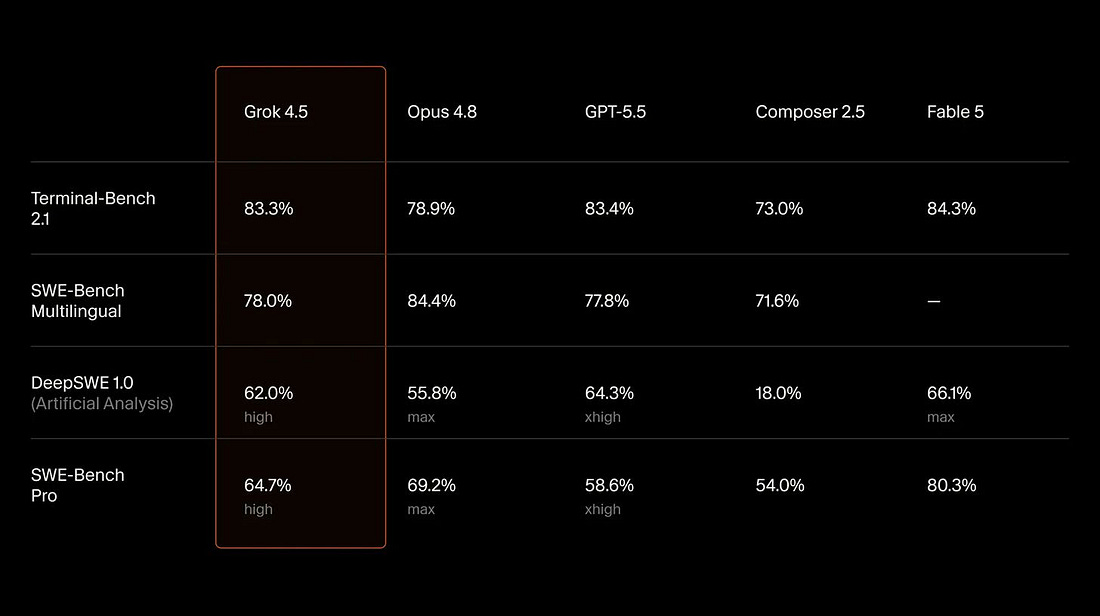 |
The bigger differentiator is pricing. Grok 4.5 costs significantly less than other frontier models, with temporary free access in Cursor and Grok Build, positioning it as a high-performance option for developers looking to balance capability, speed, and cost.
Why does it matter?
Grok has spent much of the last year trailing the frontier conversation, but 4.5 feels like a genuine comeback. Pairing near-flagship performance with aggressive pricing gives xAI a far stronger position, while the Cursor integration suggests the acquisition is already paying dividends.
Meta debuts new in-house AI image model
Meta has unveiled Muse Image, the first image generation model from its Superintelligence Labs, and is rolling it out across Meta AI. Beyond generating images, the model works with Muse Spark to search the web, use tools, and even refine its own outputs, giving it more agentic capabilities than a traditional image generator.
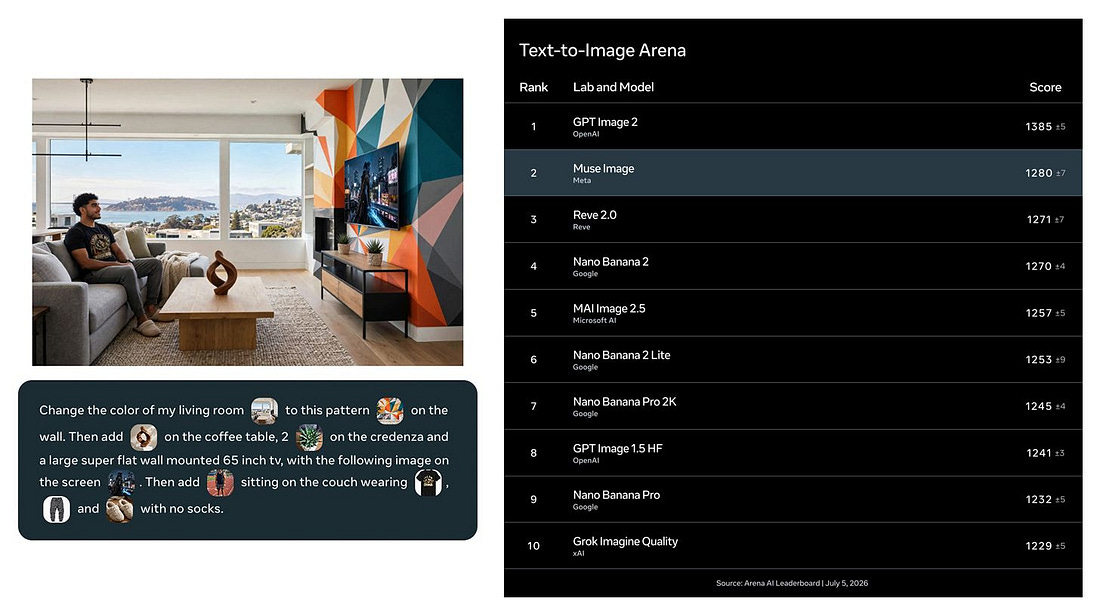 |
Muse Image also enters the market as one of the strongest-performing image models, ranking second on Arena's text-to-image and editing leaderboards behind OpenAI's GPT Image 2. It's available for free in Meta AI and is expanding across Instagram and WhatsApp, with Facebook, Messenger, and Meta's ads platform set to follow.
Why does it matter?
Meta has long relied on external image models to power parts of its AI experiences, but Muse Image signals a shift toward owning that stack. With billions of users across Instagram, WhatsApp, and Facebook, an in-house model gives Meta far more control over how AI creativity evolves across its ecosystem.
Google launches Nano Banana Lite, Omni Flash models
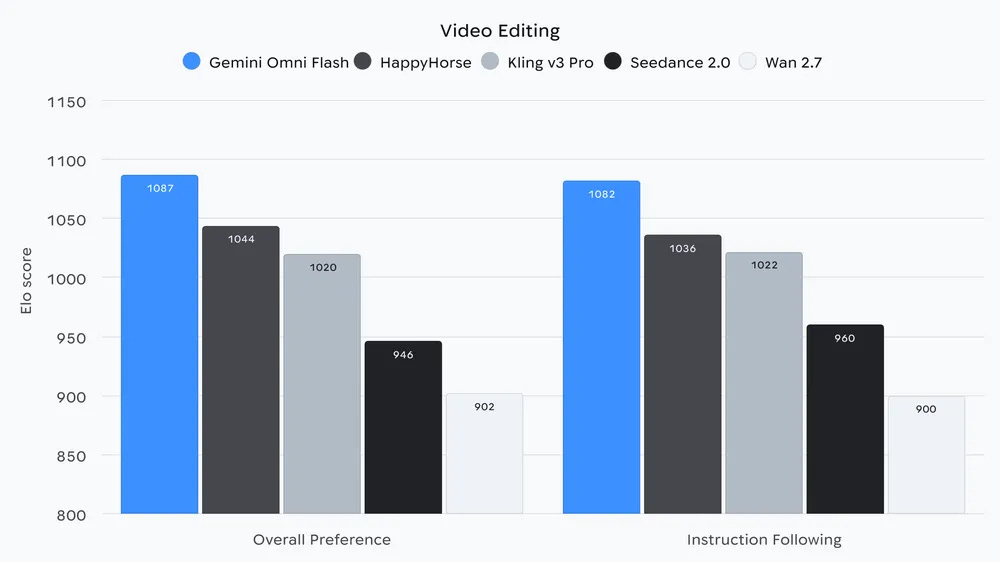
Google has introduced two new media models for developers: Nano Banana 2 Lite for fast, low-cost image generation and Gemini Omni Flash for high-quality video generation and editing. Lite can generate images in about four seconds at a fraction of the cost of frontier models, while Omni Flash produces and edits 10-second videos with strong performance on industry benchmarks.
 |
The bigger play is connecting both models into a single workflow. Developers can generate an image with Lite and seamlessly pass it to Omni Flash to animate it into a video, bringing image and video creation together in one AI-powered pipeline.
Why does it matter?
Some may have expected Google to unveil another frontier model, but this launch is about making AI media faster and cheaper to use. With products like Workspace, Gemini, and YouTube relying on generative AI, efficient models like Lite and Omni Flash are what help Google scale those experiences across millions of users.
Anthropic upgrades AI with Sonnet 5
Anthropic has launched Claude Sonnet 5, calling it its most agentic Sonnet model yet. The upgraded model delivers significant improvements in coding, reasoning, and knowledge work, even surpassing the larger Opus 4.8 on several knowledge-focused tasks. It also inherits more advanced agent capabilities, allowing it to use a browser, operate a terminal, and handle longer-running tasks autonomously.