Hi there,
Putting "AI skills" on your resume is close to meaningless now. Every profile says it, every applicant claims it, the signal is gone.
And yet the market keeps paying more, a lot more, wherever those same words show up in a job posting. The money is real, and the deeper a posting's AI ask goes, the bigger the number gets.
So the same words are worthless when you claim them and expensive when a company asks for them. That mismatch is where your leverage lives.
It's also exactly what next Tuesday's live session is about, how strong developers stay visible now that everyone's working with the same tools. It's free, and one click saves your seat. Now let me show you. Now let me show you.
Let's start with the money...
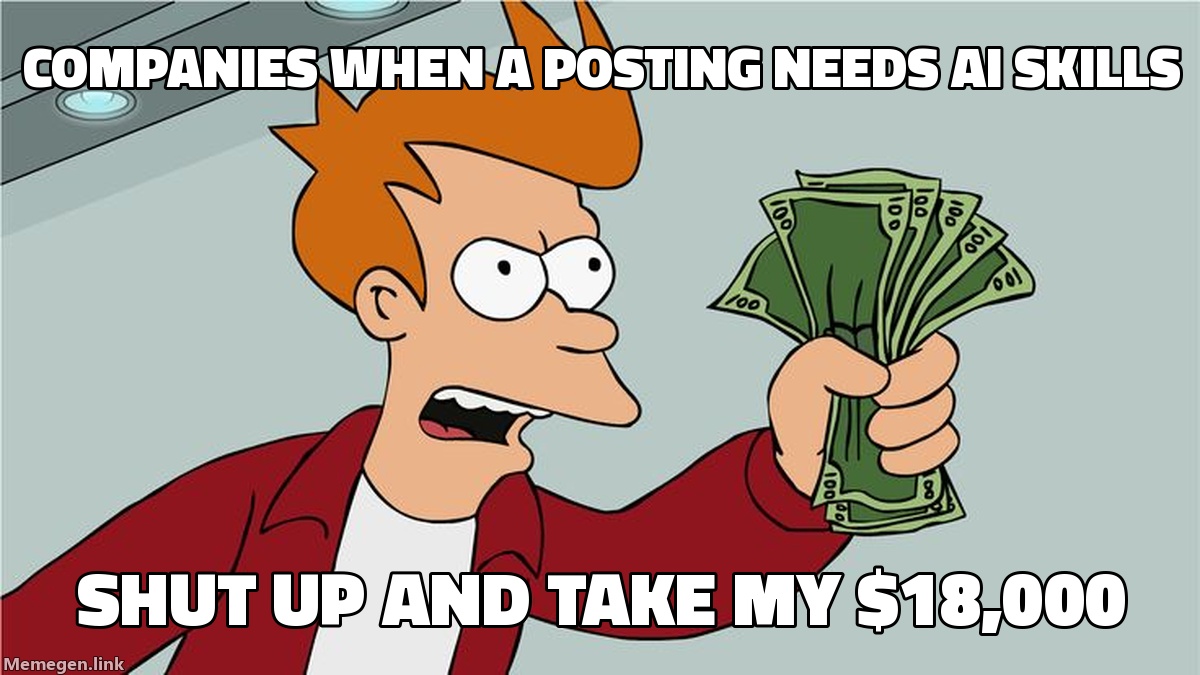
Lightcast, one of the labor-market data firms economists actually cite, analyzed 1.3 billion job postings. The ones asking for AI skills offer 28% higher salaries than the ones that don't. On the average posting, that's about $18,000 a year.
That gap has a name. Economists call it a pay premium, which means the extra salary a skill adds on top of what the same role pays without it. It's worth keeping the term, because the rest of this email is about who it actually goes to.
One more thing before you file this under job hunting. Postings are where pay becomes public, and the salary band at your company, the case for your next raise, the rate a client will accept, all of it traces back to what the open market says your skills are worth.
And that was only the smaller number.
Most write-ups stopped at the 28%. The more interesting number is the second one. When a posting asks for two or more AI skills, the premium jumps to 43%.
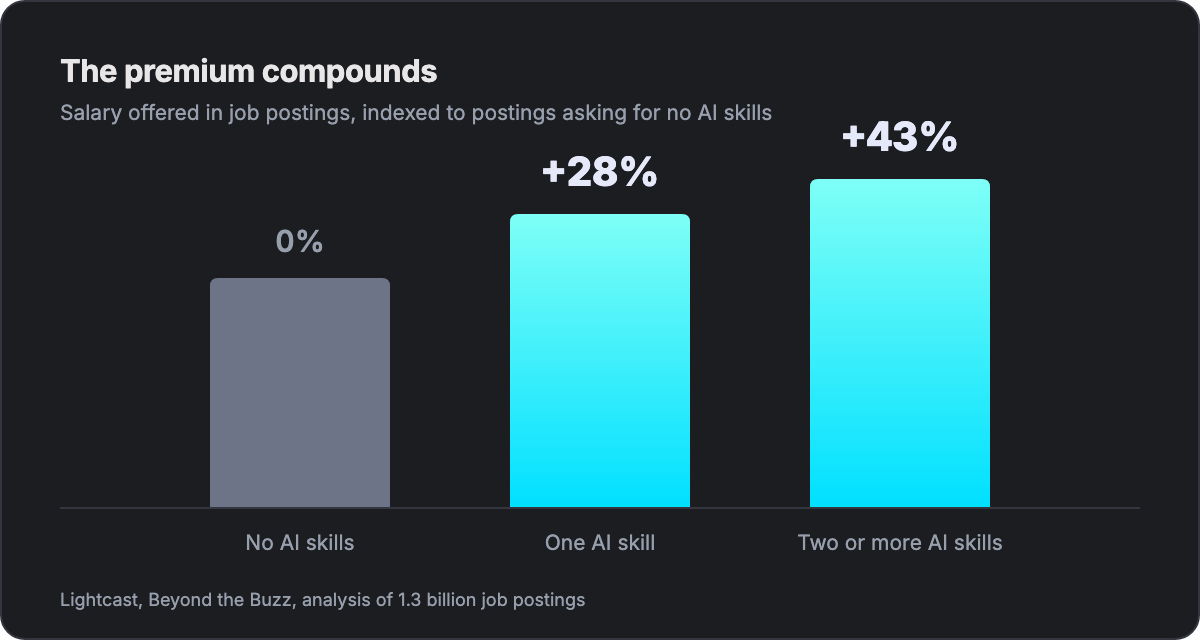
From the hiring side, that jump makes sense. One AI skill in a posting is asking for tool familiarity, and tools are cheap now, everyone has the same ones installed. Two or more is describing a different person entirely, someone who takes a fuzzy goal, picks the approach, runs the whole workflow, and owns whatever comes out the other side.
Companies aren't paying a premium for autocomplete users, they're paying for the person the autocomplete answers to.
Now, the part nobody wants to hear.
Last summer METR, an independent AI research group, published a study that made a lot of people mad. Sixteen experienced open-source developers, working in their own mature repos, tasks randomized with and without AI tools.
The developers estimated AI made them about 20% faster. The clock said they were 19% slower.
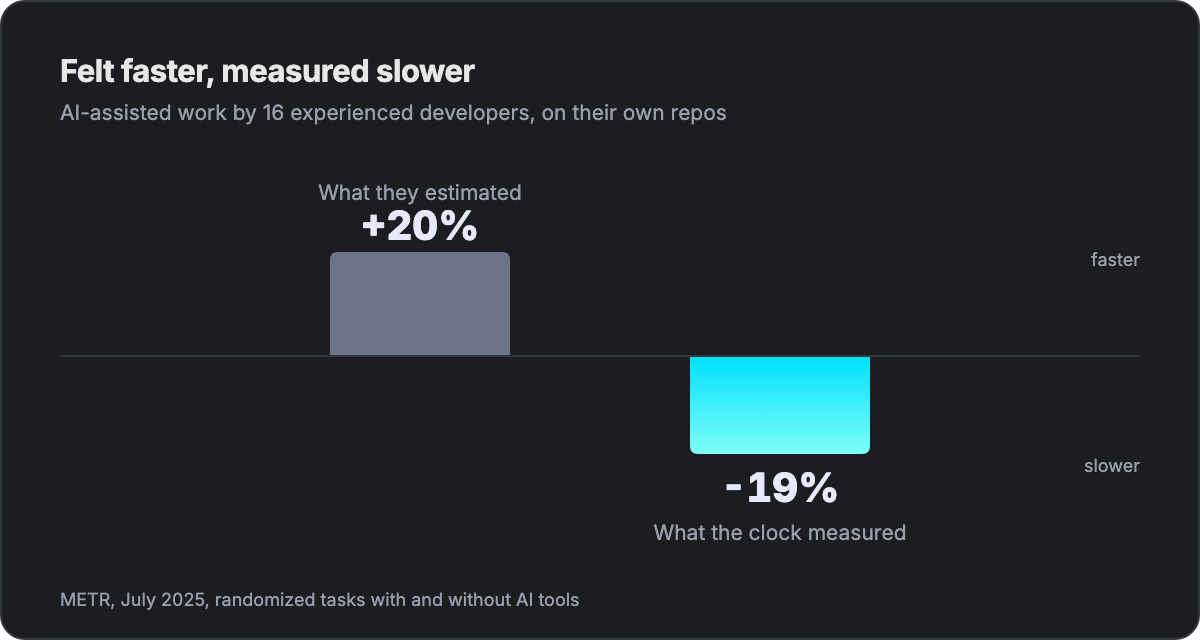
Before you object, yes, sixteen developers. And yes, that's the setup that matters, experienced people inside codebases they know deeply, which is where most real engineering happens.
I don't read that study as "AI slows you down", I read it as the answer to what companies are actually buying. If AI handed everyone automatic speed, a 43% premium would make no sense, because nobody pays extra for what the tool gives away for free. The premium only makes sense if it's buying the part the tool can't give you, directing the work, owning the result, knowing what to build and what to trust.
And the shift isn't staying inside the postings.
You've seen the other headlines too. Layoff announcements with AI in the first paragraph, entry-level hiring getting thinner, a lot of noise about fewer jobs, and I'm not going to pretend they aren't happening.
They're the same shift, seen from its rough side. AI made producing code cheap, so work priced purely on production is getting squeezed. The premium goes to the developers who point all that cheap output in the right direction, the ones directing several agents at once and shipping what used to take a team.
The World Economic Forum reported in January that 65% of developers expect their role to be redefined toward architecture, integration, and AI-enabled decision-making. Not "might", expect.
I keep a pinned tab of AI-role postings open while we build the exam for the AI Developer Certification. It started as research, and by now it reads like a preview of everyone's next job description.
So here's the catch.
All that extra pay lands on the very skill that stopped showing from the outside. A clean pull request looks the same whether a senior directed it or a prompt got lucky. Your judgment got more valuable and less visible over the same two years that AI tools went mainstream, and the market is paying for the thing it can't see.
The value is there, and what's missing is the proof. That's exactly what we're building the certification to be. Not proof you can use the tools, but proof you can direct them, design with them, and stand behind what ships.
That's what Tuesday's live session is really about, how the best developers stand out when everyone's shipping with the same tools. Live, we'll get into:
- What this judgment looks like in real work, concrete enough to use the next morning.
- The live round. Real AI-written code on screen, you call ship or don't ship in the chat, then we run the reveal together.
- The moves that make your work show, on your resume, your profile, your GitHub.
- A Q&A where career questions get straight answers.
How the Best Developers Grow With AI
Tuesday, July 21, 15:00 CEST, free, two hours
Everyone who shows up keeps The AI-Era Developer Playbook.
See you there,
Alex G
Technical Education Lead, certificates.dev
--
You're getting this because you signed up at unlearn.dev.
Unsubscribe | Manage preferences
Unlearn, part of BitterBrains · 2093 Philadelphia Pike #9442, Claymont, DE 19703, United States