| | Trump slams oil majors over Iran war windfalls, the EU demands tighter borders, and the US turns awa͏ ͏ ͏ ͏ ͏ ͏ |
| |  | Flagship |  |
| |
|
The World Today | 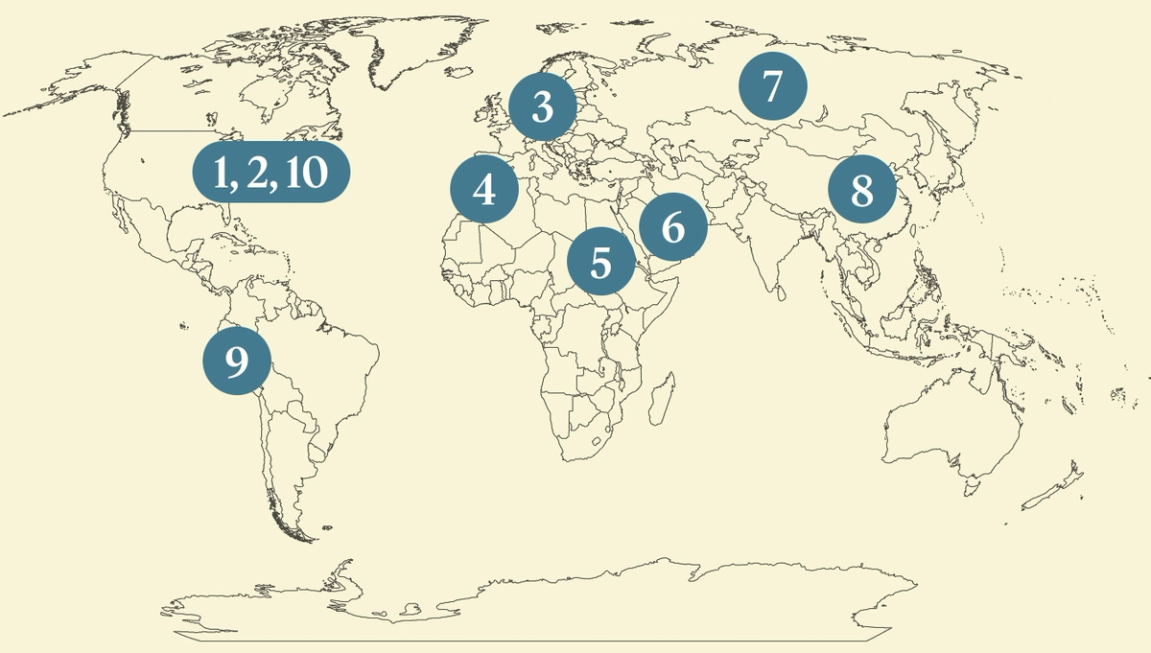 - Trump slams oil profits
- States sue over tariffs
- US loses allies’ trust
- EU demands tighter borders
- UAE’s bloody gold rush
- Israel and UAE draw closer
- Drones’ civilian impacts
- China’s air strike AI tool
- LatAm’s military security
- Fusion industry frustrated
 A book commemorating a near-forgotten Louis Armstrong musical. |
|
Trump lashes out at oil profits |
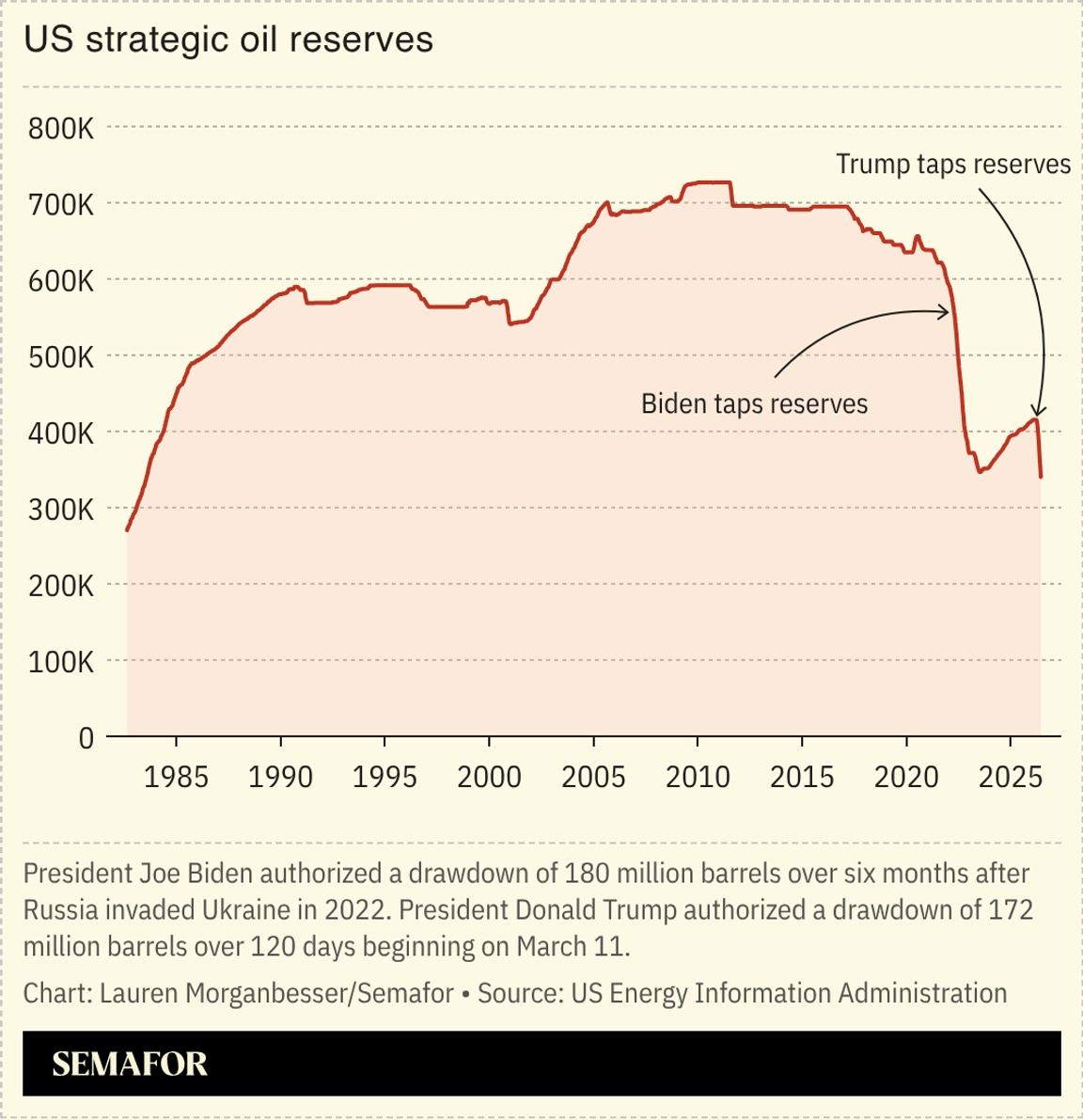 US President Donald Trump accused oil majors of “making too much money” after they reported windfalls from the Iran war, saying they should “give some back to the public.” ExxonMobil’s second-quarter profits doubled year-on-year, Chevron had its highest earnings on record and Aramco, BP, and Shell declared blockbuster earnings. Oil prices breached $100/barrel in May and average US pump prices hit $4.55 as the conflict disrupted shipping. The surging cost of gas is proving a major headwind for Trump’s Republican Party, which is underwater in the polls ahead of November’s midterms. But the president has little room for maneuver: The US Strategic Petroleum Reserve is already at its lowest level since the early 1980s, The Wall Street Journal reported. |
|
States sue over Trump tariffs |
 Tony Gentile/File Photo/Reuters Tony Gentile/File Photo/ReutersTwenty-five US states sued President Donald Trump’s administration over the latest wave of tariffs. The previous round of duties were struck down by the Supreme Court; Washington says the new ones, imposed last month, are in response to trading partners’ failure to tackle forced labor, which experts say is a more legally robust tactic. The lawsuit reveals the partisan divide over Trump’s trade strategy: All 25 signatory states are Democrat-led. Though the impacts of Trump’s tariffs remain disputed, experts say they have driven up prices. A Tax Foundation analysis found they amounted to an average $1,000 tax increase per household in 2025, and the Dallas Fed suggested they were behind almost all core-goods inflation in the first quarter of this year. |
|
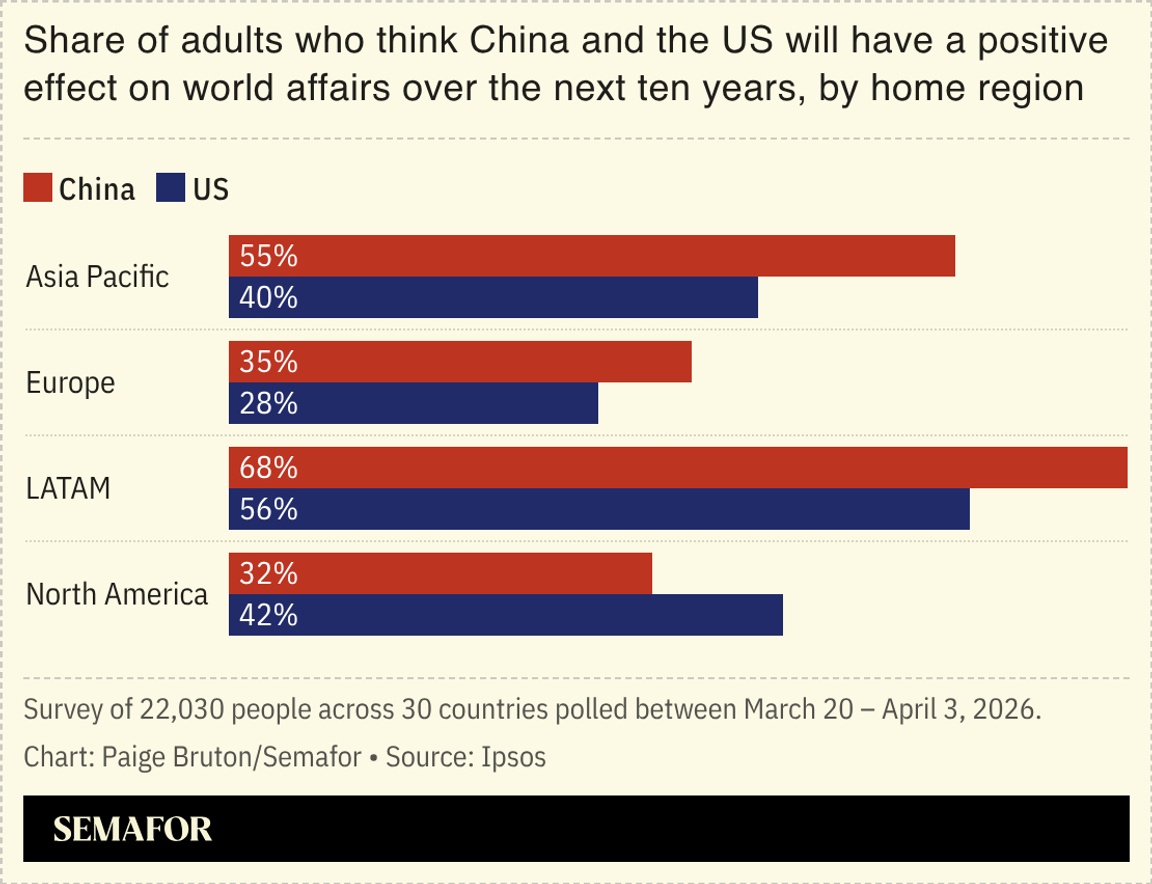 The US is losing military credibility and trust as it heads to a strategic defeat in Iran, analysts warned. Middle Eastern allies that have had their security undermined are hedging bets by looking for closer ties elsewhere, The New York Times reported. Ties with Europe have been damaged by US President Donald Trump’s threats to leave NATO and seize Greenland from Denmark: In a geopolitically pointed move, Copenhagen, which has expanded conscription, will send some recruits to serve in Greenland. Officials in Iran, meanwhile, doubt that Trump would stick to any deal to end the war and are increasingly confident in Tehran’s ability to control the Strait of Hormuz, experts told the Times, regardless of Washington’s intentions. |
|
EU calls for stronger borders |
 Violeta Santos Moura/Reuters Violeta Santos Moura/ReutersThe EU called for stronger borders after nearly 70,000 people entered the Spanish African enclave of Ceuta from Morocco. The chaos caused 83 deaths and strained relations among EU members: Italy halted its Schengen open-border agreement, and the Czech prime minister called for Spain to be temporarily suspended from the passport-free zone. Ceuta, across the narrow Strait of Gibraltar from the Spanish mainland, is not part of Schengen, but the European Commission president said the episode required “a common European response.” Morocco does not recognize Spanish sovereignty over Ceuta, which has been ruled from Madrid for nearly 500 years; the presence of the enclave on its border makes migration “a powerful bargaining chip” for Rabat, the Financial Times reported. |
|
 Sudanese Rapid Support Forces display gold bars seized from a plane that landed at Khartoum Airport in 2019. Mohamed Nureldin Abdallah/Reuters. Sudanese Rapid Support Forces display gold bars seized from a plane that landed at Khartoum Airport in 2019. Mohamed Nureldin Abdallah/Reuters.The UAE received more than $100 million worth of gold bullion that was stolen by paramilitary forces from the Sudanese central bank and its state refinery, according to the Financial Times. Sudan’s civil war has fuelled the flow of gold — both legal and illegal — between the two countries; an Emirati official said the trade had reached just over $1 billion in 2025. Nearly $30 billion of undeclared artisanal gold is exported from Africa to Dubai each year, according to charity Swissaid. Sudan’s gold is fuelling one of the world’s most brutal civil wars: Militias, accused of ethnic cleansing and genocide against non-Arab communities, now use advanced drones, air defense systems and fleets of armored personnel carriers thanks to the UAE. |
|
Israel and UAE draw closer |
 Florion Goga/Reuters Florion Goga/ReutersElbit Systems, Israel’s largest defense contractor, discussed selling the UAE more than $1 billion of gear, as military ties between the two countries warm. Abu Dhabi requested drones worth $180 million after Houthi missiles killed three in January 2022, Haaretz reported, based on leaked documents. The UAE then explored 45 more aircraft, worth roughly $1.3 billion. A previous investigation revealed Elbit’s $2.3 billion contract last November — one of Israel’s largest ever — was with the UAE. Ties have improved since the 2020 Abraham Accords: Several Israeli defence companies have opened Emirati offices or joint ventures, while Israel sent equipment and crews to the UAE during the Iran war. The US called it a “benefit” of the deal. |
|
Drone kills 7 on Russian beach |
 Barriers to prevent Russian ships from landing at a beach in Ukraine. Nina Liashonok/Reuters. Barriers to prevent Russian ships from landing at a beach in Ukraine. Nina Liashonok/Reuters.A Ukrainian drone exploded on a tourist beach in Russia, killing seven and injuring dozens, Moscow said. The Kremlin accused Kyiv of deliberately attacking civilians, although Ukrainian Telegram accounts suggested Russia’s air defenses downed the drone. Either way, Ukrainian strikes are increasingly bringing the war home to Russians: Drones have struck dozens of e-commerce giant Wildberries’ warehouses, destroying around 10% of its inventory, and forcing it to look for storage in neighboring Kazakhstan to avoid further disruption. Attacks on refineries and other oil infrastructure have caused a major fuel shortage and long lines at fuel stations. Ukrainian civilians are suffering too: At least 19 have died in Russian ballistic missile strikes in the last week, the BBC reported. |
|
 It’s a new day in global politics. In a GZERO world, no single power — or coalition like the G7 or G20 — sets the international agenda or acts as a global policeman. Instead, it’s every nation for itself. The GZERO Daily newsletter gives you a foothold in this chaotic new world order through insightful weekday news briefs and analyses. Subscribe for free. |
|
China’s military unveils AI |
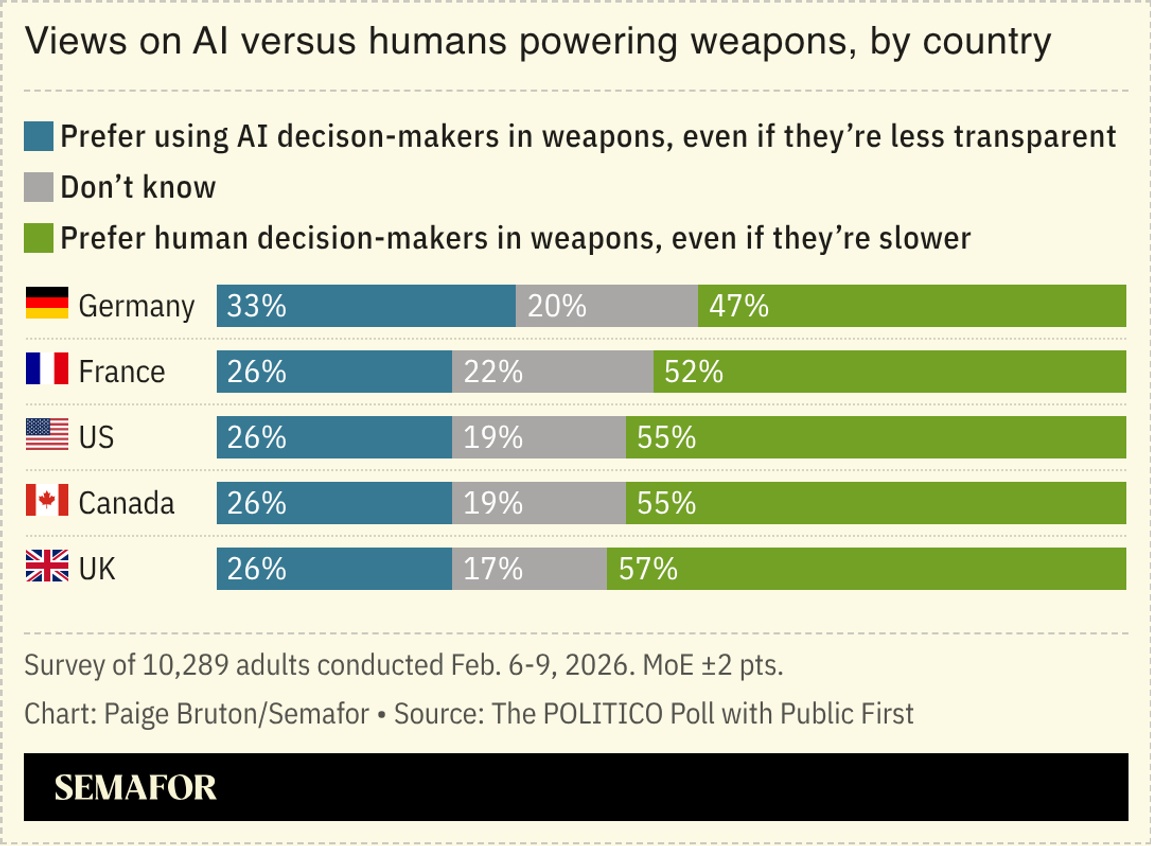 China unveiled an AI system for coordinating mass air strikes as part of a growing race to incorporate the technology into military systems. The “intelligent strike planning system” helps commanders and pilots prioritize targets and allocate resources, the South China Morning Post reported. The move comes after Chinese leader Xi Jinping called for the People’s Liberation Army to strengthen its use of “unmanned intelligent technologies.” And China is not the only country embedding AI in its military: The US recently revealed “loyal wingman” drones designed to accompany crewed helicopters into battle, while Ukraine and Russia are in an arms race to develop autonomous systems that can fight independently on land, sea, and air. |
|
LatAm turns to military for security |
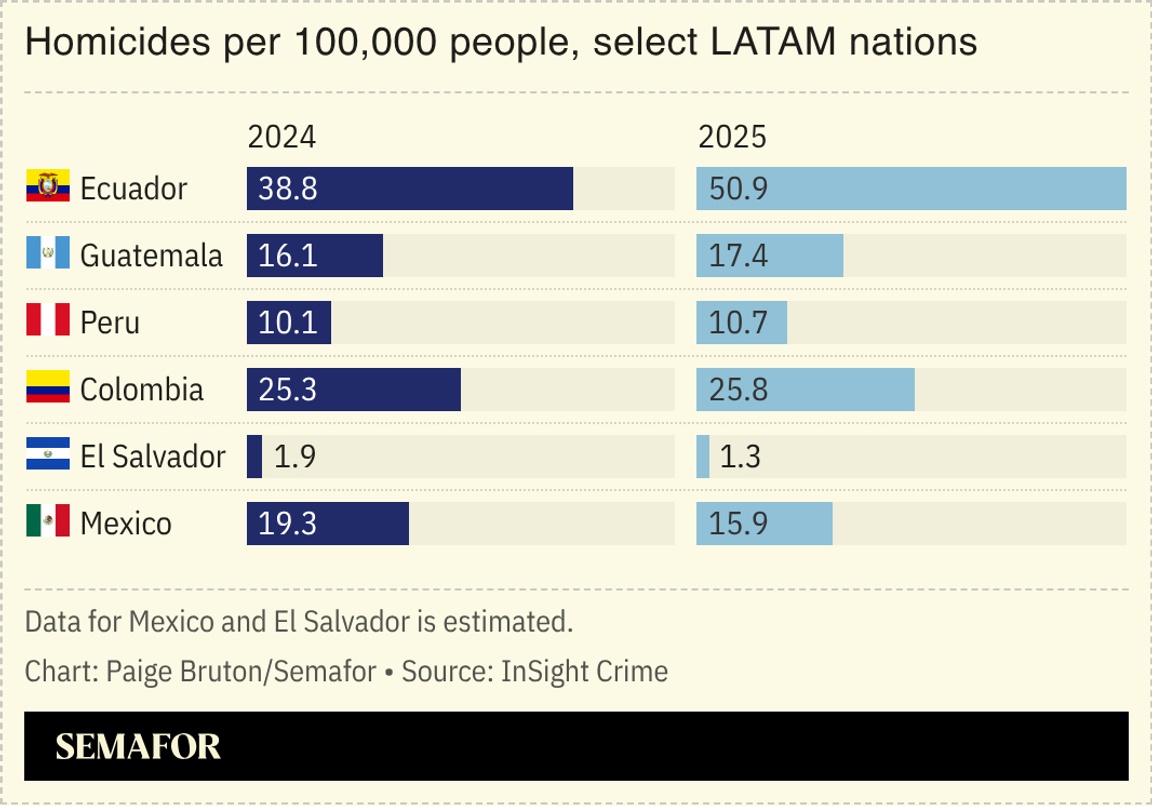 Latin American countries are turning to their militaries for public security in the face of growing unrest, with potentially dangerous consequences. The region has seen an “alarming rise of extortion, drug trafficking and contract killings,” El País noted, as Ecuador, El Salvador, Mexico, and others, have deployed the armed forces to maintain order. The recently appointed government in Perú is following suit, seeking to give armed forces control over prisons. But soldiers, trained for conflict, do not necessarily bring down crime, experts said: Ecuador and Mexico have seen rising disappearances and human rights abuses, and Mexico’s armed forces have grown in political influence. Chile and Argentina, by contrast, have resisted using the military in policing. |
|
|


