|
|
|
|
|
|
|
|
|
Home of the Week, 105 Park Cres., Richmond Hill, Ont. Riley Snelling/Riley Snelling
|
|
|
|
|
This week: As a changing real estate market is pushing more Canadians to rent, we take a look at the best cities in the country for renters. Plus, the culture shift in the cottage industry, and one home worth a look. |
|
|
|
|
|
|
|
|
|
|
|
|
|
|
|
|
Canada’s 100 best cities for renters in 2026 |
|
|
|
|
|
|
|
|
|
|
|
|
|
Illustration by Pete Ryan
|
|
|
|
|
Summer is one of the busiest times of the year for Canadian renters of all ages. And this year is an especially interesting one, as current housing trends have given renters more choice and bargaining power than they’ve had for years. |
|
|
|
|
Slower population growth, economic uncertainty, high mortgage rates and modest income growth are keeping many buyers from entering the market, making renting a long-term reality for more Canadians. |
|
|
|
|
|
|
|
|
|
|
“As it gets harder to buy a home, many Canadians are renting for the long term,” writer Mahima Singh told me. “We created this tool to help people find cities and neighbourhoods that match their budget and lifestyle. By looking at data from spring and summer, the busiest rental season, we aim to give renters the most accurate picture of the market.” |
|
|
|
|
|
|
|
|
|
The Globe and Mail
|
|
|
|
|
|
|
|
|
|
|
“A great place to live means more than just low housing costs,” Singh said. “Things like transit, amenities, green spaces, and a sense of community matter too. That’s why livability is a key part of the city rankings. We also know that there isn’t a single answer for everyone. That’s why we made the data as interactive as we could, so readers can explore the rankings and find the communities that fit their own needs.” |
|
|
|
|
|
|
|
|
|
|
|
|
|
|
|
|
More buyers see ownership in cottage country as an investment, not a lifestyle |
|
|
|
|
|
|
|
|
|
Boathouses along the waterfront on Lake Muskoka near Port Carling, in July, 2025. Fred Lum/The Globe and Mail
|
|
|
|
|
Industry experts are saying there’s a shift going on in cottage country. A growing number of buyers are entering the market with plans to own for only a short period, rather than settling into the community for the long haul. |
|
|
|
|
As Salmaan Farooqui writes, major increases in the price of cottages mean purchasers are forced to approach ownership as an investment, rather than a lifestyle, and often choose to cash in on that investment earlier. At the same time, higher running costs are also making it difficult for adult children to justify holding on to a cottage they inherit. |
|
|
|
|
One realtor said before the mid-2010s, middle-class buyers could purchase a year-round cottage in the area for as little as $250,000, and they would keep it for life. Now, as the value is around $1-million or more, new buyers are only holding on to these cottages for a little more than a decade, and selling at a profit when their kids grow up. Read the full story. |
|
|
|
|
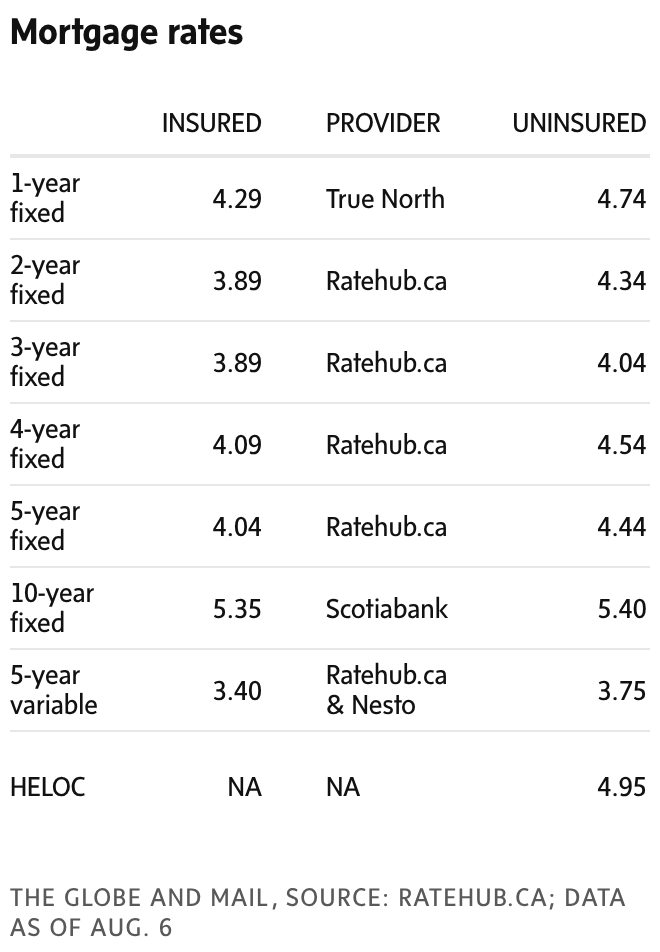
This week’s lowest fixed and variable mortgage rates in Canada |
|
|
|
|
|
|
|
|
|
|
|
|
|
|
|
|
|
|
This chef had a $500,000 budget for a one-bedroom condo in Vancouver. What did he get? |
|
|
|
|
|
|
|
|
|
Parm Bains was on the hunt for a condominium in Vancouver. Jimmy Jeong/The Globe and Mail
|
|
|
|
|
Parm Bains grew up in Victoria and moved to Vancouver when he was 19, in 2012, to pursue a career as a chef. He’d been living in shared apartments with roommates since, while working in restaurants across the city. At 33, he was ready to start looking for a place of his own. |