US tightens economic screws on Iran
 

Power Up

Power Up

A Reuters Open Interest newsletter

By Ron Bousso, ROI Energy Columnist


Data refreshes every time you open this email. For more energy news, click here. Please send any feedback to powerup@thomsonreuters.com.

Hello Power Up readers,

Nearly six months into the Iran war, U.S. President Donald Trump's administration is tightening the economic screws on Tehran in an effort to resolve the conflict. In a social media post, Trump promised "Economic Warfare and Isolation on an unprecedented scale," although details were scant.

The U.S. Navy has already imposed a blockade on Iranian oil exports, choking off a vital source of revenue for months.

Importantly, Trump also warned of economic consequences against countries providing "any type of lifeline to Iran." This was after the United Arab Emirates, which accounts for 30% of Iran's imports, on Tuesday suspended all trade activities, commercial exchanges and financial transactions with Tehran until further notice.

Iran, naturally, reacted with defiance to the latest U.S. initiative, though there are increasing signs that the war and the oil embargo are having a severe impact on Iran's economy and currency. It's also worth noting, however, that Iran has weathered punishing economic sanctions for nearly 50 years since the Islamic Revolution of 1979.

How these measures will impact the war is anyone's guess. For now, though, there are no signs that the warring sides are willing to return to the negotiating table.

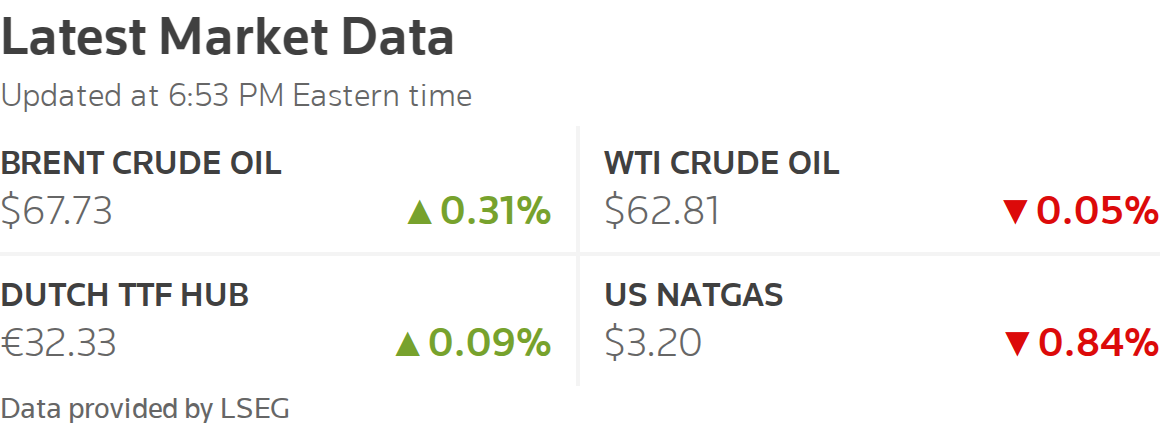
In the meanwhile, Brent oil prices continued to climb, rising above $94 a barrel today, as the market comes to terms with a realisation that the conflict and the disruption to shipping through the Strait of Hormuz may not be resolved quickly.

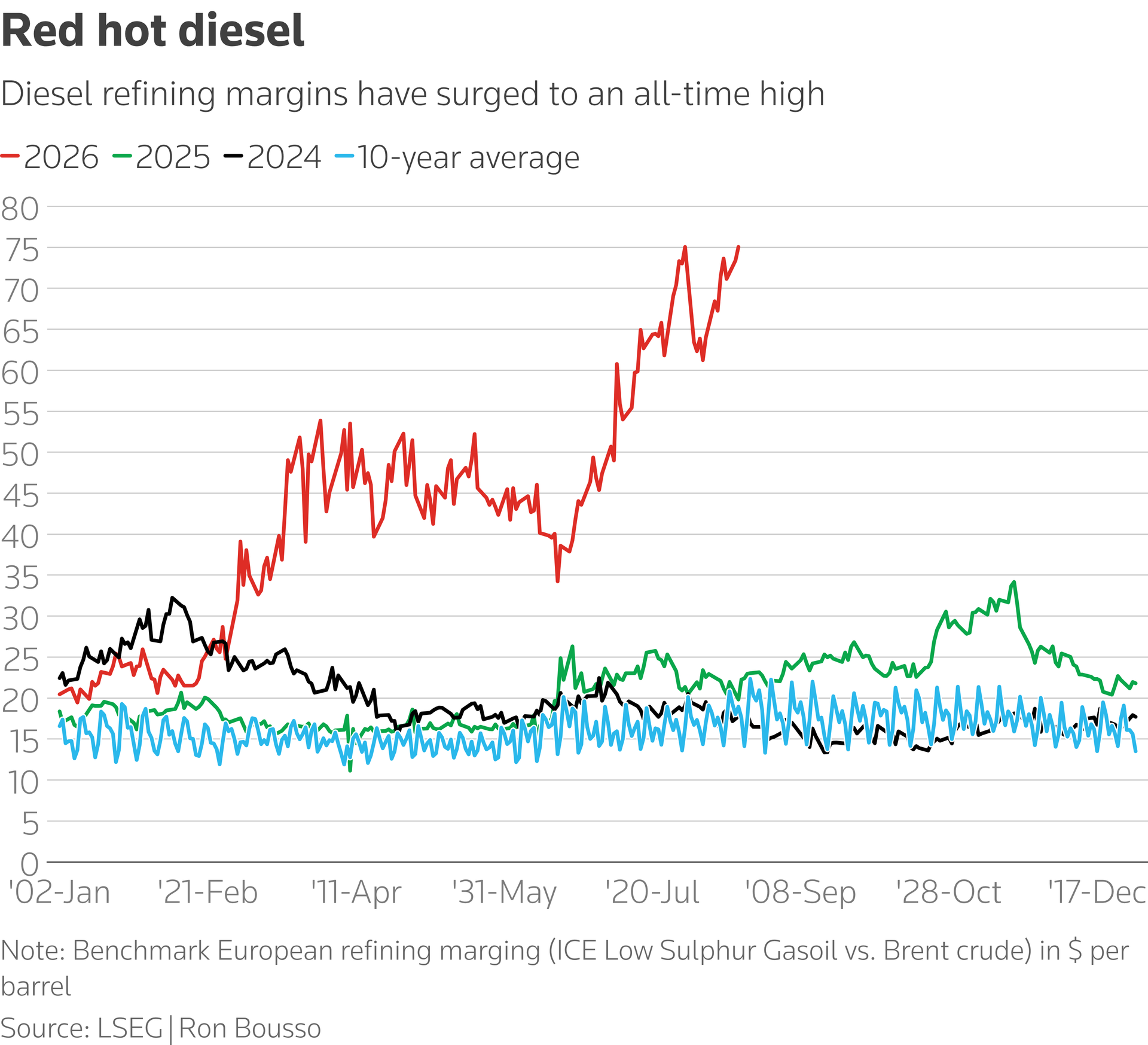
But the true stress point in energy markets today is not really crude, but a global oil refining industry that has been pushed to the brink. This could signal that diesel and gasoline prices may remain elevated for years. Deal or no deal, the global energy inflation shock is far from over.

More on this below.

Here are a few more headlines:

  • One of the dynamics that has prevented crude oil prices from spiking higher during the Iran war has been India’s increasing reliance on Russian crude. But it's getting more challenging for the world's third-biggest crude importer as top-ranked China has now resumed buying more volumes from Russia. ROI Asia Commodities Columnist Clyde Russell breaks down the situation.
  • And ROI Energy Transition Columnist Gavin Maguire looks at how small modular reactors (SMRs) may increasingly play a major role in the U.S. race to build enough clean, reliable electricity.

Before you go, give us your thoughts on how long the U.S.-Iran conflict might last in ROI's latest LinkedIn poll.

And as always, don't hesitate to contact me at ron.bousso@thomsonreuters.com or follow me on LinkedIn with any questions or thoughts.


Top energy headlines

  • Trump threatens to isolate Iran. Who are its trading partners?
  • Trump administration to back US minerals projects with $500 million in grants
  • Mauritius signs agreements to import oil products from India
  • Oil hits over 3-week high on Middle East supply concerns amid war impasse
  • US, Indian fuel exporters profiting from supply uncertainty during wars


We're just getting started

While oil markets adapted remarkably well to the abrupt loss of a fifth of global crude supplies from the Middle East during the conflict, workarounds for the refining industry have been far more limited.

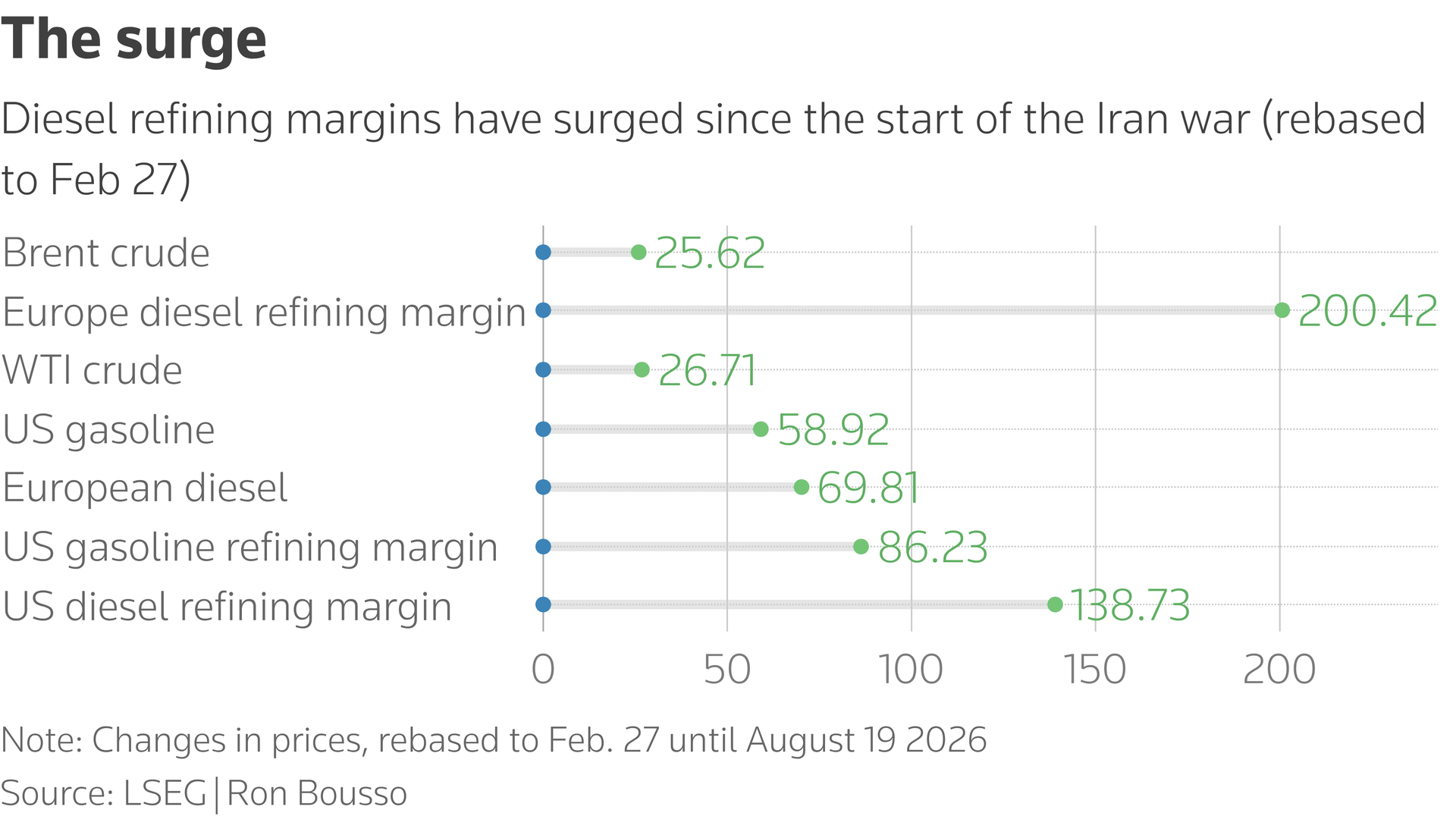
The divergence between crude and fuel prices tells the story. Benchmark Brent crude oil is currently around $90 a barrel. Even though that is ‌up about 25% from levels at the outbreak of the conflict on February 28, it is a significant retreat from the wartime peak at $118.

Refined products have not enjoyed the same relief. European diesel prices have surged more than 70% since the war began, while U.S. gasoline prices have climbed around 60%.

This reflects a dramatic decline in refining output. The war knocked out more than 20% of the Middle East's 9.6 million barrels per day of refining capacity, according to the International Energy Agency, while fuel exports remain suppressed due to the closure of the Strait of Hormuz. The loss of Gulf crude, in turn, led many refiners, particularly in Asia, to curtail operations.

Taken together, the disruptions have created a hole in global fuel production that the industry is struggling to fill.

Read the full column
 

Sponsors are not involved in the creation of newsletters or other Reuters news content. Advertise in this newsletter or on Reuters' website

LiveIntent Logo