|
Hi There,
September has a way of bringing structure back.
The summer haze starts to lift, calendars fill up again, and students, parents, teams, and businesses return to more regular routines. People start thinking seriously about what they want to learn, improve, launch, fix, or finish before the end of the year.
For course creators, that makes September a useful moment to look beyond the course itself. Not just the lessons, videos, checkout page, workbook, certificate, or the one email you keep meaning to rewrite, but the bigger system that sits behind all of it.
In other words:
What is the operating system behind your course?
Every course business has one.
It might be carefully designed, documented, and repeatable, or it might live almost entirely in your head. You remember when to check student progress, which lesson needs updating, who asked for support, whether the certificate needs testing, and when the next live session should probably be announced.
Technically, that is a system. It’s just not a very kind one.
A stronger course operating system gives your business a rhythm. It helps the right things happen repeatedly without relying on you to remember everything at exactly the right moment. That might mean a monthly check of student progress, a review of common support questions, a recurring live Q&A, a simple process for asking successful students for testimonials, or a regular review of access plans, pricing, and enrollment options.
LifterLMS gives you several ways to build those rhythms into your course business, including Reports, Engagements, Notifications, Access Plans, Memberships, Groups, Certificates, and Events.
You don’t need to systemize everything at once. That way lies color-coded spreadsheets, mysterious automations, and a Friday afternoon where someone says, “Should we just rebuild the whole thing in Notion?”
Start smaller. Choose one part of your course business that currently depends on memory, guesswork, or last-minute effort, then turn it into something visible and repeatable. It could be a monthly reporting check, a standard review request after course completion, a recurring support session, a short course maintenance checklist, or a regular reminder to review stalled students.
The goal is not to make your course business feel more complicated. It’s to make it less fragile because a good course isn’t built just once. It’s maintained, improved, supported, and strengthened over time.
So this month, ask:
What should happen in my course business every month, even when I am busy?
That answer might be the first part of your course operating system.
With that in mind, let’s get into September’s roundup of LifterLMS news, product updates, creator stories, podcasts, videos, and community events. |
|
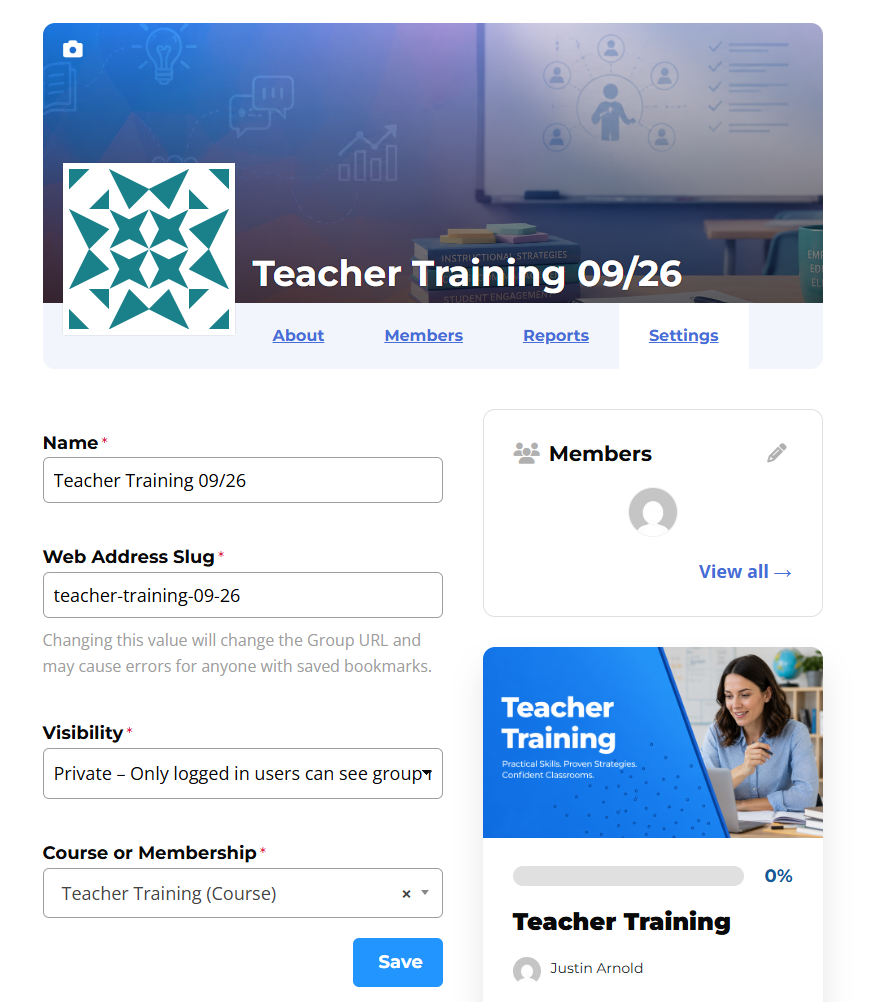
The useful twist is that the group is not just a list of learners. It can become the operating layer for that relationship.
Depending on your setup, a group can help you manage seats, invite members, assign group leaders, organize access, and give the right people a clearer view of their learners. Group leaders can also manage members and view reports from the front end, which means a client, manager, teacher, or team lead may not need access to the WordPress dashboard just to see how their group is doing.
For example, instead of selling “20 seats” and then managing every learner manually, you could create a group for Acme Leadership Training, assign a group leader, and let that person invite learners, monitor progress, and keep their own team organized.
It’s a small shift in how you think about Groups.
Not just bulk enrollment. A lightweight portal for each real-world group you serve.
Learn more about LifterLMS Groups → |