| | Germany blames Russia for an attempted airport attack, Xi Jinping’s charm offensive, and the new wav͏ ͏ ͏ ͏ ͏ ͏ |
| |  | Flagship |  |
| |
|
The World Today | 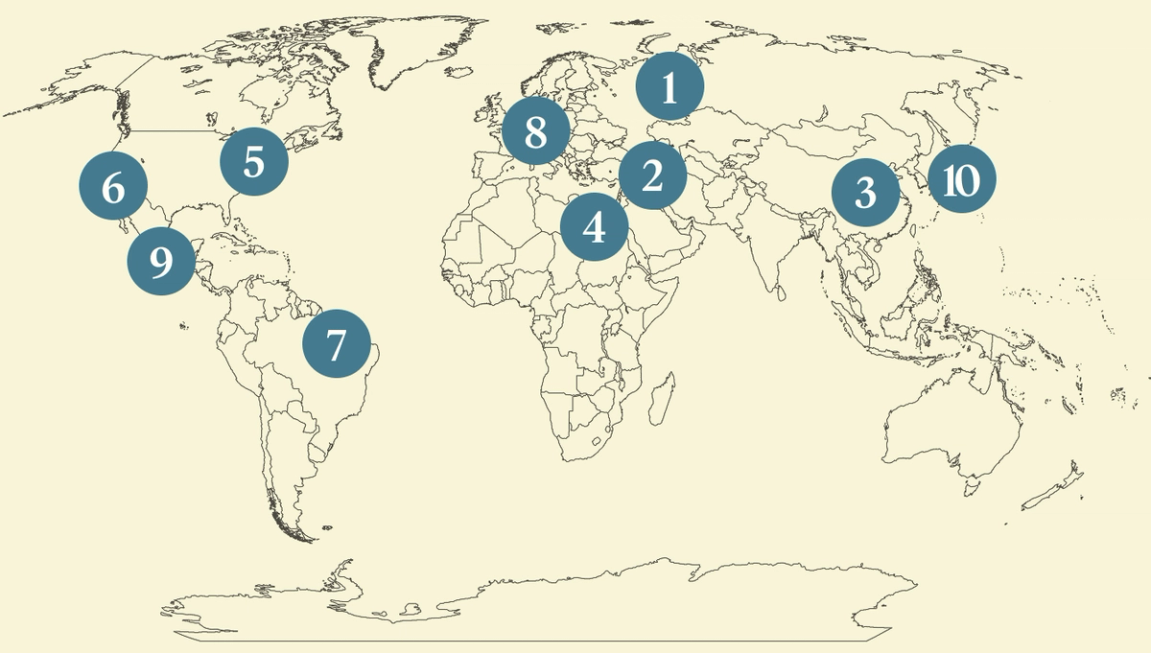 - Germany accuses Russia
- Oil jumps on US strikes
- Global order under strain
- China woos US ally Egypt
- US bond yields climbing
- AI slop floods US politics
- Cubans flee to Brazil
- Germany eyes longer hours
- Lasers shoot down drones
- Hint of dark matter
 2Pac’s only ‘truly great album,’ 30 years after his death. |
|
Berlin blames Russia for drone attack |
 Axel Schmidt/File Photo/Reuters Axel Schmidt/File Photo/ReutersGermany blamed Russia for an attempted drone attack on a Leipzig airport last month, in a significant escalation of tensions between Europe and its eastern neighbor. Three explosive-laden drones were found around the airport, one near a Ukrainian plane transporting munitions. Berlin’s interior minister said Moscow was treating Europe with “open hostility” and announced countermeasures. EU leaders supported the move, and announced an initiative to boost defense cooperation with Ukraine and the UK. It is the first time Berlin has openly accused Russia of an attempted attack within German borders, Die Zeit’s foreign affairs editor said, describing it as a smart and “half-courageous” move that liberates the security forces, but also commits Germany to more direct clashes with Russia. |
|
 Majid Asgaripour/WANA/Reuters Majid Asgaripour/WANA/ReutersIran attacked US military bases in Bahrain, Iraq, and Jordan in retaliation for overnight US strikes that Tehran said killed at least 18 people, roiling global markets. Oil jumped by more than 5% to $95 a barrel, while Asian stocks slid over worries the latest attacks point to protracted hostilities. Meanwhile, new reports compounded fears that the conflict is fast metastasizing beyond the Middle East: A Financial Times investigation revealed that Russia has been secretly helping Tehran develop supersonic cruise missiles. The resignation of the US Army chief added to a sense of crisis. “The Armed Forces appear to be fracturing… [when] a unified vision of the future is most needed,” a former US Army officer argued. |
|
World unprepared for new order |
 Gleb Garanich/Reuters Gleb Garanich/ReutersThe global order is under strain from US belligerence, Chinese expansionism, and environmental and technological changes, analysts warned. US President Donald Trump’s aggression towards onetime friends and assaults on Iran and Venezuela reveal “a world in which the US does not have allies but satellites” and can do “whatever it wants, whenever it wants, to whomever it wants,” a Financial Times commentator wrote. A former Australian prime minister agreed: US-led post-World War II institutions are collapsing, AI and climate change are upending the playing field, and China is building an alternative paradigm. The world is not ready for this new order, a historian wrote in The New York Times, and must “embark on the laborious process of building something afresh.” |
|
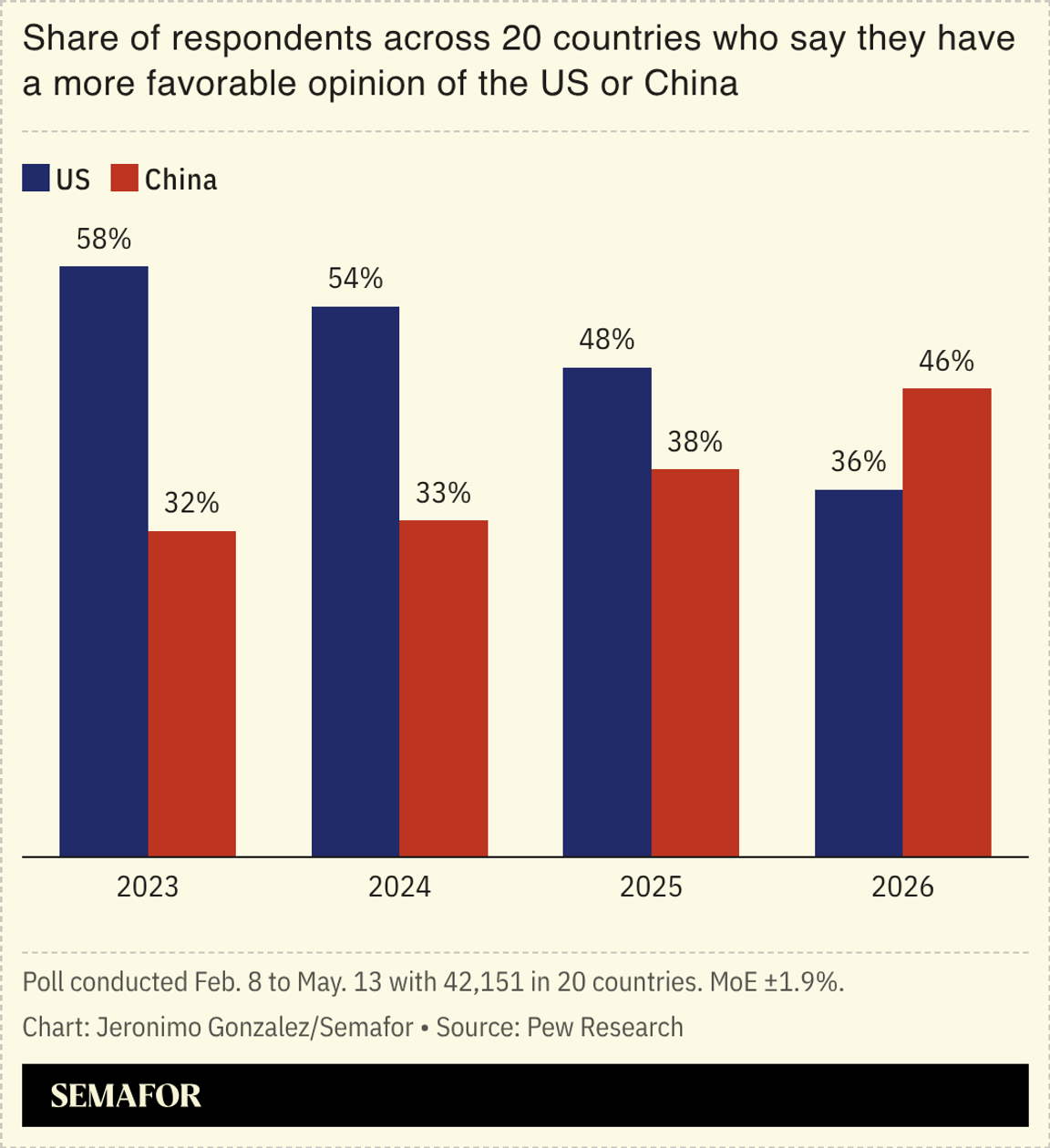 Chinese leader Xi Jinping arrived in Egypt seeking to build closer ties with the key US ally as instability spreads across the Gulf. Relations between Beijing and Cairo — the recipient of billions of dollars in military aid from Washington — have improved as China takes a more assertive role in the Middle East, analysts noted. Xi’s overseas trips, including a recent meeting with the leaders of Russia and India and next week’s BRICS summit, come as he looks to project China’s geopolitical heft ahead of planned talks with US President Donald Trump. “The decline in overall US strength … [has] prompted Middle Eastern countries to look further east towards China,” an expert told the Financial Times. |
|
US bond yields still climbing |
 Sam Wolfe/Reuters Sam Wolfe/ReutersUS 30-year bond yields climbed to levels last seen before Washington began buybacks aimed at curbing borrowing costs, an effort economists warned was unlikely to succeed. The rebound sends “a clear message,” Bloomberg wrote: “It’ll take more than an out-of-schedule tweak … to soothe investors.” Most experts have attributed the increase to worries about debt levels and inflation, though The Wall Street Journal’s chief economics commentator noted the US was not alone in being a source of bond-market worry, and several major countries were also “struggling with energy-induced inflation and gargantuan debts, without the benefit of American tech-led growth.” One leading commentator, meanwhile, argued that, if anything, rising yields indicate “traders are becoming increasingly confident” about US economic growth. |
|
AI slop floods US politics |
 A wave of sensationalized, low-quality, often AI-generated YouTube content is flooding US politics, Semafor reported. The nearly identical videos look like news recaps, but are read by actors combining misleading claims with outright falsehoods about progressive politicians such as Zohran Mamdani and Alexandria Ocasio-Cortez. They are wildly popular: A single network has garnered 45 million views so far. Attacks on California’s Democratic governor led to speculation that they were run by foreign powers or political opponents, Semafor’s media editor wrote, but the truth is “both more familiar and stranger”. They appear to be created by financially motivated “engagement junkies” who are riding online trends and finding traction with a growing audience of older, highly politicized users. |
|
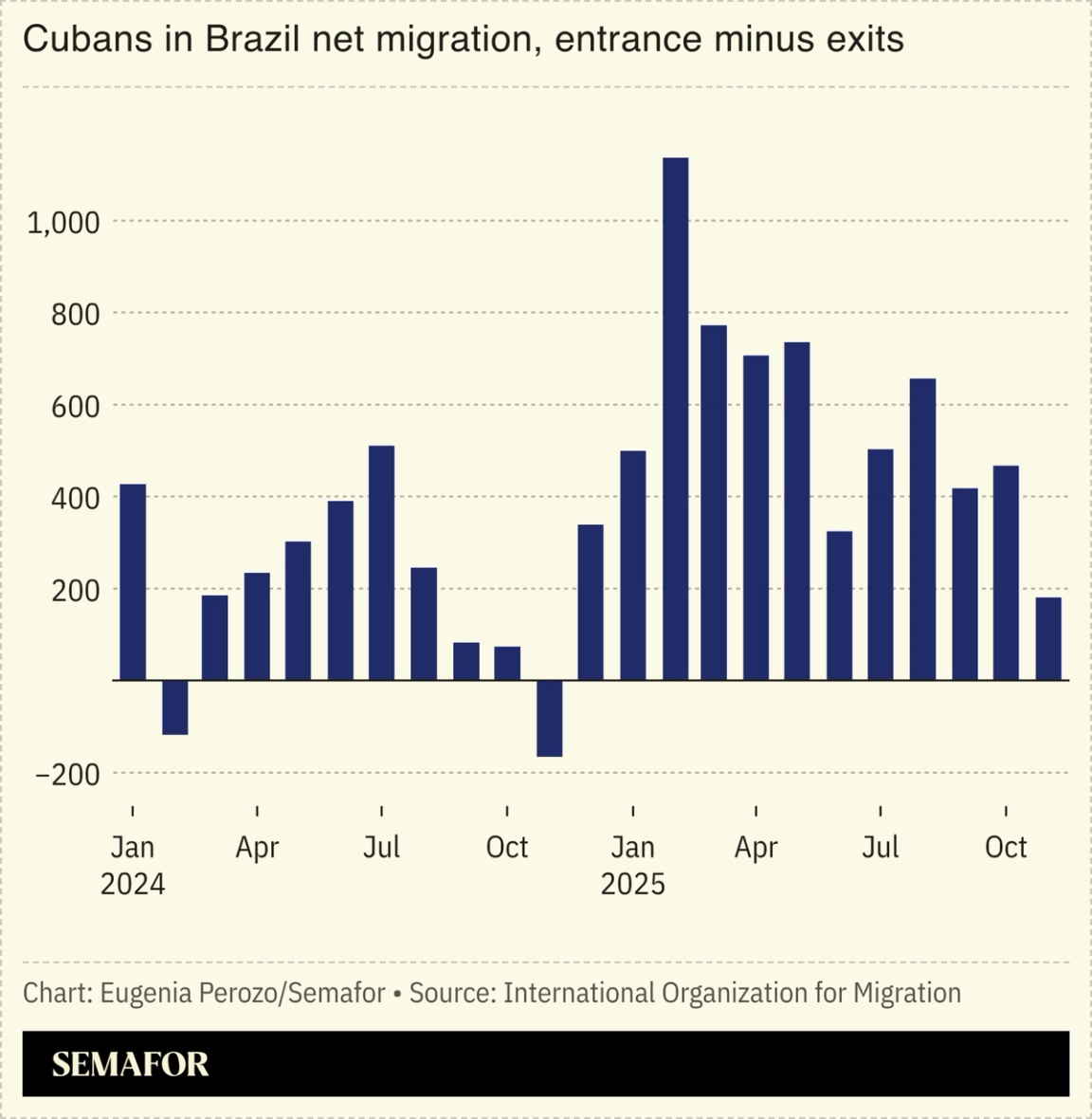 Cuban immigration to Brazil has soared since last year as tens of thousands of people try to escape the harrowing situation in the Caribbean nation. Cuba’s economic crisis has spiralled as the Trump administration resists calls from Havana for a settlement that could allow the island country to receive fuel imports again. Brazil’s harboring of Cubans could further test already strained ties with Washington ahead of key elections in both countries. Brazilian President Luiz Inácio Lula da Silva is seeking reelection next month in a vote that observers say is being increasingly defined by meddling from Washington, recalling for some a 1960s CIA intervention that led to a rightist dictatorship taking power. |
|
 Prediction markets have rapidly evolved from a niche novelty into a mainstream consumer product, with billions in daily volume across sports, elections, Fed decisions, and corporate earnings. Their growth is prompting new questions about how these markets should operate, be regulated, and fit into the broader financial landscape. On Tuesday, September 15, Semafor’s Hedges and Bets: The Future of Prediction Markets will convene Rep. Dusty Johnson, R-S.D., Chairman, House Agriculture Subcommittee on Commodity Markets, Digital Assets, Rural Development; Rep. Joe Morelle, D-N.Y., Ranking Member, Committee on House Administration; and additional key leaders to unpack what’s next for this rapidly evolving industry. Washington, DC | September 15 | Request Invite |
|
Germany eyes longer workday |
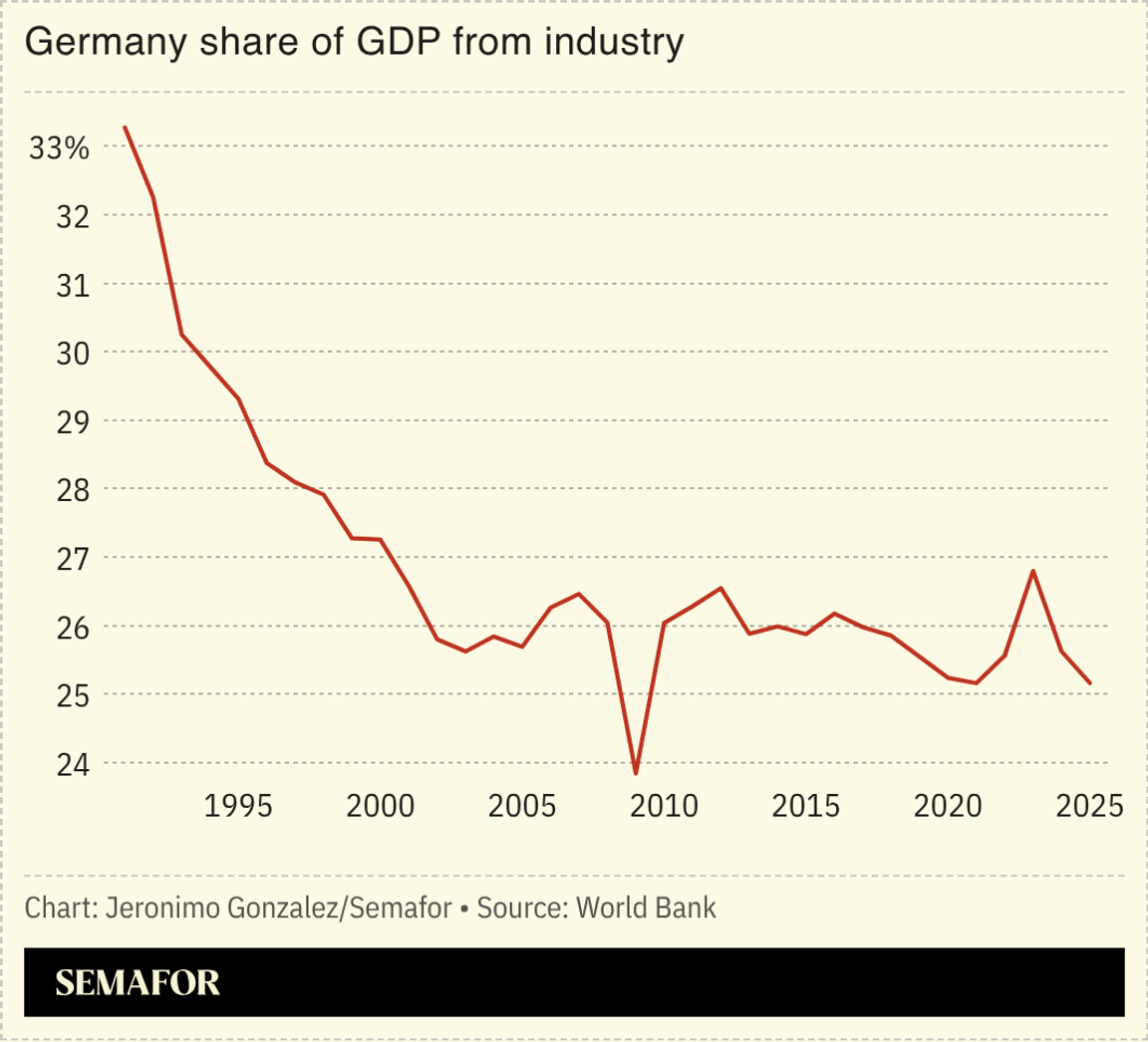 German business leaders are pushing for an extension of the country’s working week as a way to revive the country’s industrial might in the face of increased competition from China. Four decades after unions secured a 35-hour working week, bosses of firms including Mercedes-Benz and Stihl are pushing for an increase to 40 hours without extra pay, arguing that high labor costs are eroding the country’s competitiveness. In a sign of the times, Volkswagen — which faces a stern test from an influx of cheap, high-quality Chinese vehicles — could slash its workforce by 100,000 people, a proposal that has roiled German politics. “Tariffs, new competitors and geopolitical risks: The entire automotive industry is under enormous pressure,” the carmaker’s boss said. |
|
US lasers drones on border |
 US Army/Venetia Gonzales/Handout/Reuters US Army/Venetia Gonzales/Handout/Reuters |
|
|


