| | In this edition:In this edition: Nigeria’s economy grows at fastest rate in five years, IMF agrees S͏ ͏ ͏ ͏ ͏ ͏ |
| |  | Africa |  |
| |
|
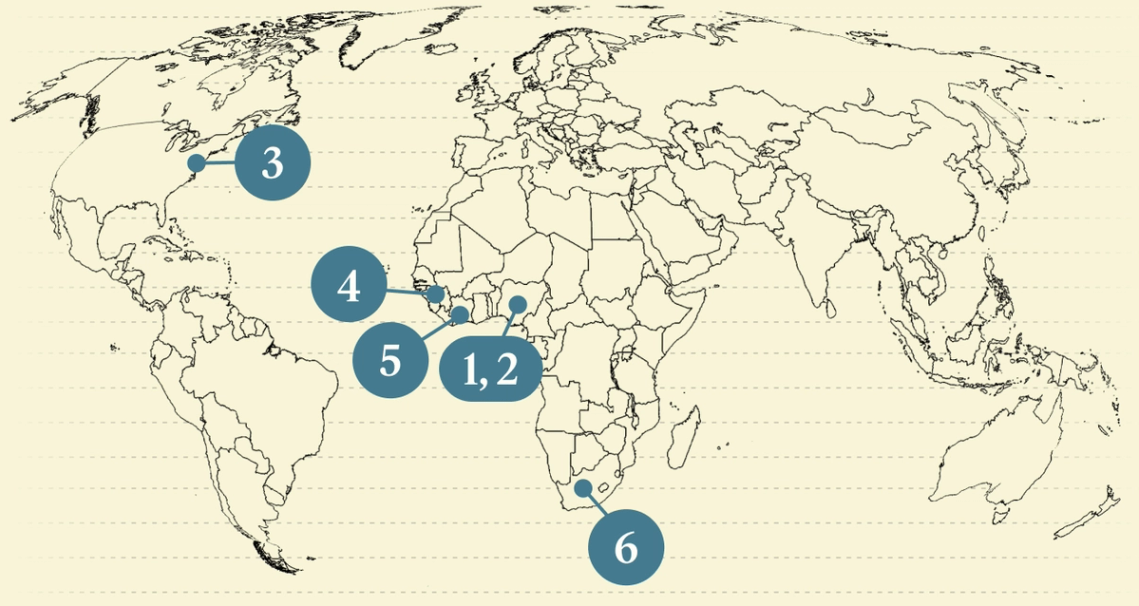 - Nigeria’s economy booms…
- … as fuel subsidy debate rages
- US to extend AGOA
- IMF agrees Senegal loan
- El Niño’s cocoa threat
- Sasol pollution scrutinized
 New sports to feature at Dakar Youth Olympic Games. |
|
Nigeria growth at 5-year high |
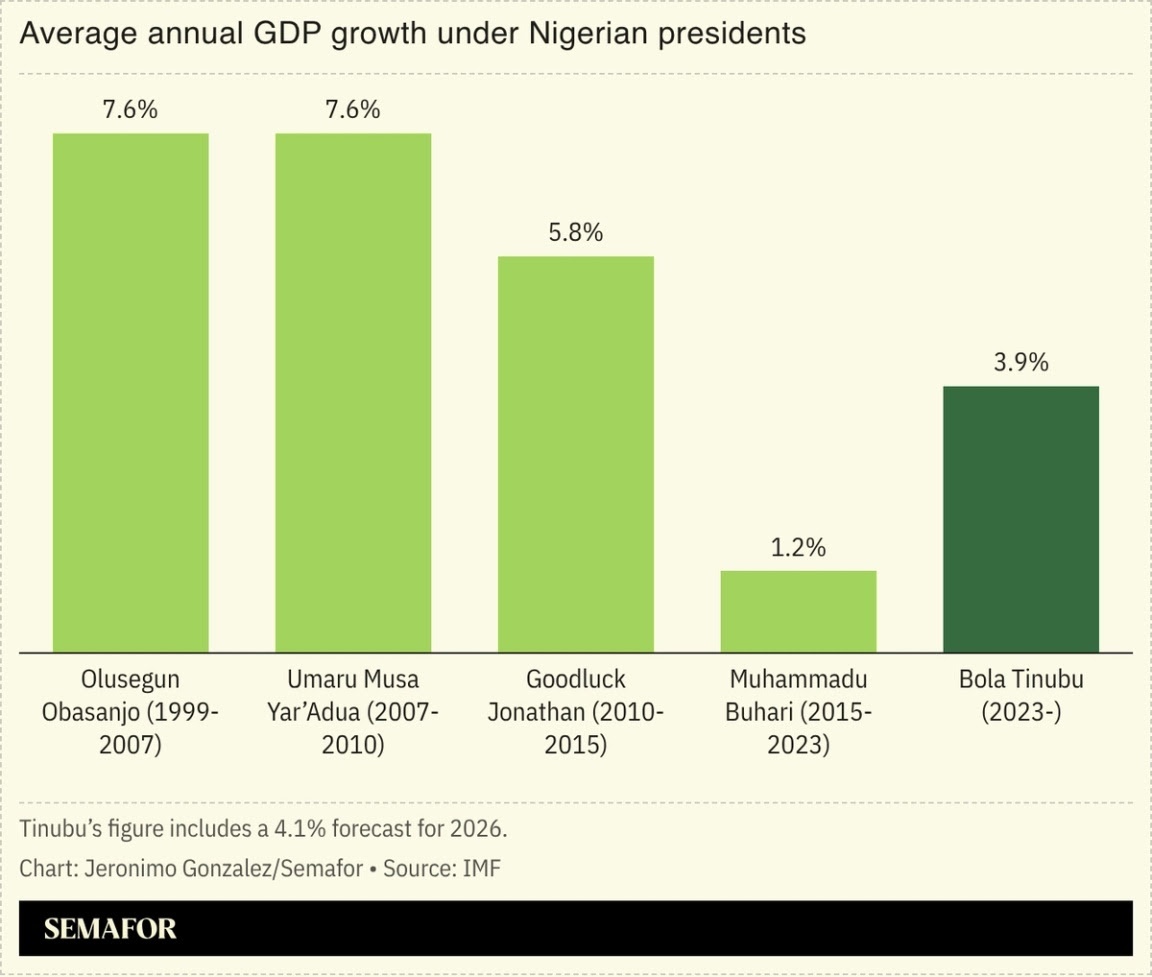 Nigeria’s GDP expanded at the fastest pace in five years, boosting President Bola Tinubu’s reelection pitch that his policies have stabilized a once-ailing economy. Though growth remains below official targets, Tinubu has nonetheless overseen a turnaround of the continent’s third-largest economy since coming to office in 2023. The second quarter’s 4.43% growth was led by the manufacturing, agriculture and services sectors, as well as an oil sector that has benefited from higher crude prices sparked by the Iran war. Nigeria’s naira currency, which weakened sharply under Tinubu following devaluations, has appreciated 12% in the twelve months to June. Nigeria’s net direct investment inflows have improved significantly under Tinubu and the oil industry is booming. However, insecurity remains a notable weak point, testing his reelection odds ahead of an election in January. Despite building security ties with the US, armed conflict and kidnappings remain rampant in much of Nigeria: The three months to June were the most violent in decades. — Alexander Onukwue |
|
Nigeria fuel subsidy becomes vote issue |
 Francis Kokoroko/Reuters Francis Kokoroko/ReutersThe scrapping of Nigeria’s fuel subsidy by President Bola Tinubu’s administration has emerged as a key battleground ahead of the country’s elections. The opposition African Democratic Congress said it will anchor its campaign on a promise to reinstate the multibillion-dollar programme, whose removal three years ago drove up food and transportation prices to create a cost-of-living crisis that still persists in Africa’s most populous country. ADC is the party of Atiku Abubakar, a former Nigerian vice president who is one of two leading challengers to Tinubu in the presidential poll to be held in four months. He has pledged to restore a “targeted subsidy” that would differ from the one Tinubu removed, a move his party said is justified “because Nigerians are too poor not to be subsidised.” Abuja argues that the removal of the fuel subsidy, which cost $10 billion in 2022 — the year before Tinubu took office — was needed to reduce the country’s yawning budget deficit and that shelving it has led to a higher amount of revenue distributed monthly to states. The IMF last year credited the subsidy removal as one reason for Nigeria’s “improved macroeconomic stability and enhanced resilience.” — Alexander Onukwue |
|
US to extend Africa trade pact |
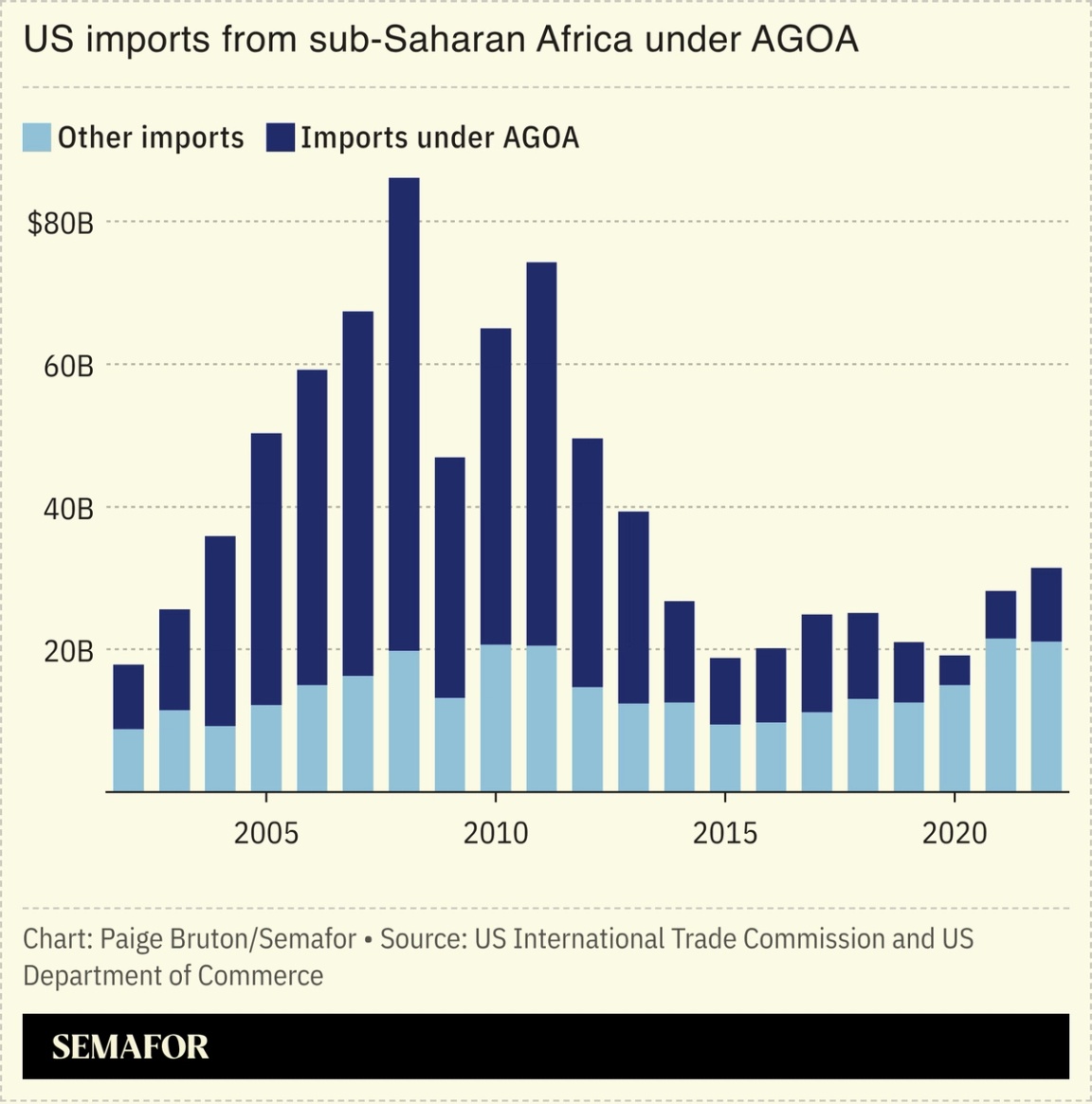 The African Growth and Opportunity Act, a key US-Africa trade program, will be extended for two years when US President Donald Trump signs a government funding bill passed by lawmakers. AGOA has been a key force in driving duty-free African exports to the US since it was first implemented in 2000. However, it is at odds with the Trump administration’s high-profile push for tariffs. The extension represents an interim win for African governments worried about trade relations with the US under the Trump administration. However, it “does not provide the certainty” that African businesses and governments need for long-term investment and planning, said Oge Onubogu, director of the Center for Strategic and International Studies’ Africa Program. “I think the bigger question that African governments and businesses that benefit from AGOA have is: Regardless of what administration is in office, what is the US’ long-term economic vision for Africa?” — Adrian Elimian |
|
IMF agrees $2.2B Senegal loan |
 Misper Apawu/Reuters Misper Apawu/ReutersThe IMF and Senegal agreed on a $2.2 billion loan package, with the West African country announcing a plan to restore “debt sustainability.” The developments mark key steps in tackling an economic crisis sparked by the discovery of previously unreported debt. The IMF suspended an earlier program after the government said it had uncovered billions of dollars in undisclosed debt left by the previous administration, causing the West African nation’s debt bill to soar to more than 130% of its GDP. Disagreements over how to resolve the debt problem spawned a political crisis that tore up an alliance between leading figures in the government that came to power two years ago. President Bassirou Diomaye Faye suggested he was open to restructuring, which his previous Prime Minister Ousmane Sonko opposed. The disagreement prompted Faye to fire Sonko and dissolve his government before appointing new ministers. |
|
El Niño threatens cocoa producers |
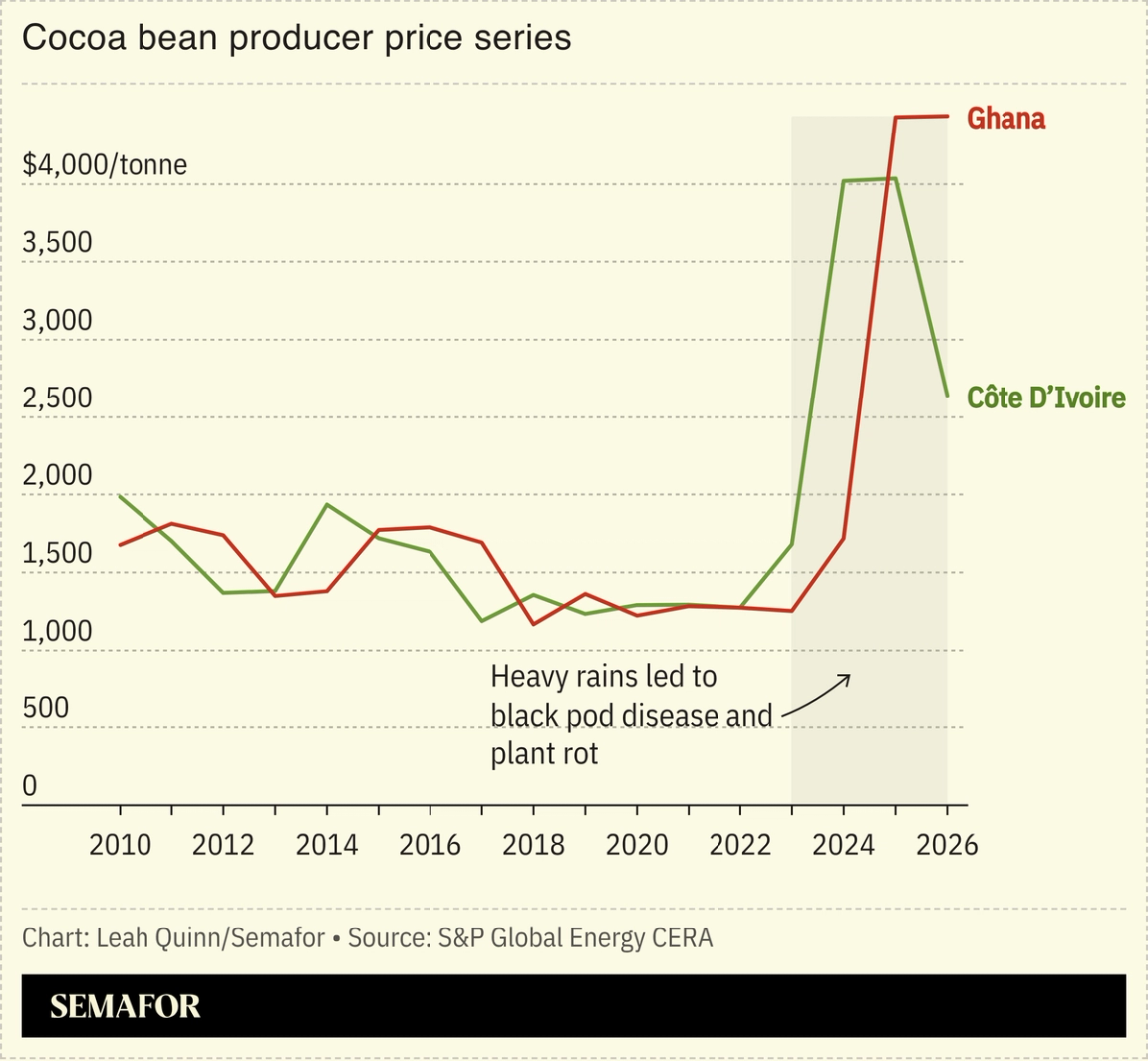 West Africa’s cocoa producers are under threat from this year’s El Niño, which threatens to be the worst on record. The weather phenomenon has been known to intensify the yearly Harmattan winds, which dry out topsoil and cause pods to fall. Côte d’Ivoire — the world’s top producer — is expected to see its output slump by around a fifth, Bloomberg reported. El Niño is likely to exacerbate the impact of torrential rains in neighboring Ghana that have damaged crops and increased the prevalence of the plant-killing black pod disease. The Institute of International Finance warned that cocoa is not the only food product at risk from El Niño, which forecasts suggest will affect Africa’s agricultural sector across the board, through either flooding or drought. Projections suggest the extreme weather patterns will drive food inflation across much of the continent. Many African economies are in a much weaker economic position compared to the strong 2015-2016 El Niño, the IIF report said, largely due to higher oil prices, which have driven up transport costs, and a strong US dollar. — Paige Bruton |
|
Sasol pollution impact scrutinized |
 Siphiwe Sibeko/Reuters Siphiwe Sibeko/ReutersSouth African energy company Sasol faces mounting climate scrutiny after researchers tied emissions from its flagship Secunda plant to about 1,000 premature deaths annually. A study by the Centre for Research on Energy and Clean Air, a Finland-based nonprofit, found emissions from the plant had an overall health cost of nearly $1 billion. The findings underscore the tension in Africa’s biggest economy between its climate commitments and its reliance on Sasol — widely recognized as the world’s largest single-site emitter of greenhouse gases — for macroeconomic stability. Last month, regulators said they were preparing to reinstate criminal charges against Sasol after alleged unlawful discharges of chemical waste into a river. Sasol denies wrongdoing. A separate study from the University of Cape Town, meanwhile, warned that a rushed closure of the Secunda as part of the green energy transition could wipe $550 million off South Africa’s $400 billion economy. South Africa remains locked into coal, which provides more than 80% of its power, making Secunda and the wider coal-fired power station fleet both national economic assets and global climate liabilities. — Tiisetso Motsoeneng |
|
 As AI and emerging technologies reshape the global economy, three billion people remain offline, disconnected from the digital opportunities transforming our world. On Tuesday, September 22 in New York City, The Next 3 Billion will bring together leaders including David Miliband, President and CEO of International Rescue Committee; Dr. Jean Kaseya, Director-General of Africa CDC; Jumoke Oduwole, Minister of Industry, Trade and Investment of Nigeria; Josh Parker, Head of Sustainability, Nvidia; Kara Hurst, Chief Sustainability Officer of Amazon, and more to explore how AI, energy, and global development can expand access, unlock opportunity, and drive inclusive growth across the world’s fastest-growing regions. September 22 | New York City | Delegate Application |
|
 Business & Macro
|
|
|


