UKG's CIO bets big on AI for HR tech — and says it's already saving workers 8,500 hours a month
 ͏  ͏  ͏  ͏  ͏  ͏  ͏  ͏  ͏  ͏  ͏  ͏  ͏  ͏  ͏  ͏  ͏  ͏  ͏  ͏  ͏  ͏  ͏  ͏  ͏  ͏  ͏  ͏  ͏  ͏  ͏  ͏  ͏  ͏  ͏  ͏  ͏  ͏  ͏  ͏  ͏  ͏  ͏  ͏  ͏  ͏  ͏  ͏  ͏  ͏  ͏  ͏  ͏  ͏  ͏  ͏  ͏  ͏  ͏  ͏  ͏  ͏  ͏  ͏  ͏  ͏  ͏  ͏  ͏  ͏  ͏  ͏  ͏  ͏  ͏  ͏  ͏  ͏  ͏  ͏  ͏  ͏  ͏  ͏  ͏  ͏  ͏  ͏  ͏  ͏  ͏  ͏  ͏  ͏  ͏  ͏  ͏  ͏  ͏  ͏  ͏  ͏  ͏  ͏  ͏  ͏  ͏  ͏  ͏  ͏  ͏  ͏  ͏  ͏  ͏  ͏  ͏  ͏  ͏  ͏  ͏  ͏  ͏  ͏  ͏  ͏  ͏  ͏  ͏  ͏  ͏  ͏  ͏  ͏  ͏  ͏  ͏  ͏ ­ ­ ­ ­ ­ ­ ­ ­ ­ ­ ­ ­ ­ ­ ­ ­ ­ ­ ­ ­ ­ ­ ­ ­ ­ ­ ­ ­ ­ ­ ­ ­ ­ ­ ­ ­ ­ ­ ­ ­ ­ ­ ­ ­ ­ ­ ­ ­ ­ ­ ­ ­ ­ ­ ­ ­ ­ ­ ­ ­ ­ ­ ­ ­ ­ ­ ­ ­ ­ ­ ­ ­ ­ ­ ­ ­ ­ ­ ­ ­ ­ ­ ­ ­ ­ ­ ­ ­ ­ ­ ­ ­ ­ ­ ­ ­ ­ ­ ­ ­ ­ ­ ­ ­ ­ ­ ­ ­ ­ ­ ­ ­ ­ ­ ­ ­ ­ ­ ­ ­ ­ ­ ­ ­ ­ ­ ­ ­ ­ ­ ­ ­ ­ ­ ­ ­ ­ ­  
Wednesday, September 2, 2026
UKG’s CIO says HR tech is AI’s next big bet. The software firm’s employees have already launched 387 AI tools and over 12,000 agents

After a 20-year career at design software company Autodesk, Prakash “PK” Kota felt an urge for a career change, in part because he didn’t want to end his career having worked for only one employer. 

Upon ending his time at Autodesk with a seven-year stint as chief information officer, Kota made the leap to human resources software company UKG, where he has held the same role since April 2025. He quickly consolidated software vendors, oversaw the launch of 387 internal AI applications from more than 1,400 employee-submitted ideas, and spearheaded the internal creation of more than 12,000 AI agents across Microsoft, Google’s Gemini, and OpenAI’s ChatGPT.

“In the AI era, everyone is talking about how work will be reshaped; how do employees and workers coexist?,” says Kota. “HR tech is going to be a huge area of investment in every company.” 

AI’s ability to automate workplace tasks ranging from coding to customer service to marketing, while increasingly taking on more complex tasks via agentic AI, has put more pressure on businesses and their HR teams to envision a more collaborative workforce that blends humans and machines. There’s also far more demand for prospects who have AI skills at their fingertips: job listings that mention AI are growing almost eight times faster than the total employment market, according to consulting giant PwC.

And yet, studies consistently show that the workforce’s youngest cohort, Gen Z, is more worried about their prospects in an AI era than older workers. This is partly driven by the difficulty many are facing in landing their first entry-level job, and swirling headlines of massive job cuts at major employers including Meta Platforms, Verizon, and Oracle, oftentimes with internal AI adoption attributed as a root cause.

Even as major employers are overhauling their teams and quickly pivoting on the skills they desire from new recruits, a vast majority of HR leaders say they haven’t yet established a firm grasp on what their internal future workforce needs will be in the AI era. Only 11% of HR professionals reported having established strategic, long-term workforce plans that extend beyond a three-year window, according to a study of about 1,300 HR industry pros across ten countries published by consultancy McKinsey in June.

While AI was certainly high on Kota’s agenda when he joined UKG, he said his first major project was addressing the long-delayed IT integration projects that hadn’t yet been completed following the pandemic-era merger between Kronos and Ultimate Software. Those two companies united to form the then-newly created, privately held UKG in October 2020.

Within his first 90 days as CIO, Kota centralized the technology department to handle all systems, data, and AI across both legacy businesses. After just six months, UKG consolidated the company’s enterprise resource planning and customer relationship management software to Microsoft and Salesforce, respectively. Multiple data warehouses were also merged.

As UKG leans into AI, the company has made ChatGPT Enterprise and Google’s Gemini Enterprise widely available to all 14,000 employees, while the product and engineering team is also using Anthropic’s Claude Code tool. Kota says he’s mostly avoiding multi-year contracts, because the technology is evolving so quickly.

One of the more impactful internal applications of AI is UKG’s utilization of AI-enabled voice and chat agents to handle customer inquiries, with an estimated 27% of those calls now being addressed autonomously. Autonomous agents are also drafting customer materials to make it easier for human representatives to handle the calls they do have with customers, helping workers handle issues at a speedier pace while also giving them time to upsell UKG’s products.

This system is also continuously learning, says Kota, as the AI tool has created around 300 “case studies” that summarize a customer service issue that it newly learned to handle and explain how to address the problem. These case studies are then used by both the AI tool and human workers. Propensity AI models, meanwhile, rely on 300 unique signals to predict the probability that a customer may be willing to buy more from UKG and share those insights with the sales and marketing teams.

Kota says he looks at multiple metrics to gauge the success of an AI internal deployment. For coding, value is determined by not just the quantity that’s produced, but also by what product features are actually bought by customers. Within customer service, UKG is monitoring both overall productivity and also upselling and customer sentiment scores.

And while AI-enabled efficiency isn’t measured equally for every employee, Kota and UKG says they have measured that AI has added 8,500 hours in productivity each month.

UKG’s C-suite leadership is also encouraged to think about AI adoption through a so-called “T3” concept: talent, tools, and tokens. Business leaders need to allocate spending to all three, and Kota says they are best suited to determine what’s the right mix. 

“I don’t want to have a standard rule across the company about what the divisional token spend should be,” says Kota. “We should have an open mind with this concept.”

John Kell

NEWS PACKETS
Tech giants warn there’s little time to fortify defenses against AI attacks. More than 100 major tech companies in a letter posted by OpenAI collectively are warning that AI-enabled cyber attacks will become more widespread and put critical infrastructure—including hospitals, water treatment plants, and the technology that powers the internet—at increased risk. The fears are so high that they have prompted rare industry collaboration from OpenAI’s top rivals Anthropic and Google, as well as Microsoft, Amazon Web Services, IBM, and CrowdStrike. The group advocates for more coordinated cyber defense at the local, national, and international level. And for cyber leaders, the letter advises that enterprises should raise their security standards with stronger access controls and fix the highest-risk weaknesses first.

AI firms are finally getting serious about new pricing strategies. With AI giants pouring hundreds of billions annually into supporting their ambitions for the technology, they’re increasingly facing pressure from enterprise customers who are balking at the bill that just keeps getting exponentially higher. The latest reports on this front come from the Information, which published two stories this week focused on how Salesforce and OpenAI are now charging customers only when AI works as intended. Today, only about 10% of AI-native companies and software-as-a-service (SaaS) vendors rely on outcome-based meters, according to a report published by Bain & Co in August, which the consulting giant defines as charging only for a business result. Bain says outcome-based pricing has become especially prolific for customer support, where the outcome is easily observable and can be clearly attributed to an AI system.

Federal judge sides with Anthropic in case against Pentagon. Last week, the Pentagon’s decision to label Anthropic a “supply chain risk” earlier this year was ruled to be unlawful by U.S. District Judge Rita Lin, who wrote that the federal government acted illegally by punishing and retaliating against an AI giant for its criticisms of the Department of Defense’s AI viewpoint. Anthropic sued the Pentagon back in March, alleging the government had enacted an “unlawful campaign of retaliation” over the AI company’s refusal to allow unrestricted military use of its technology. The Associated Press reports that the government is expected to fight the ruling. Anthropic is the defendant in another case: on Friday, music publishers Sony and Warner Music filed a lawsuit alleging “blatant ongoing thefts” of their intellectual property.

EY to pay bonuses for employees for human skills in an increasingly AI world. After years of employers across all sectors persuading employees to increasingly use AI to boost efficiency and change their workflows, a truly wild story this week focused on how consulting giant EY is paying workers extra to flaunt their human judgment. EY announced that it will spend $100 million to reward employees that develop “future-focused skills,” which include “business acumen, judgment and adaptability.” Notably, the press release never mentions “artificial intelligence” nor “AI.” As the Wall Street Journal first reported, EY is offering individuals spot awards up to $500 and cash awards of up to $25,000 to people and teams that “make a material difference to the firm.”
ADOPTION CURVE
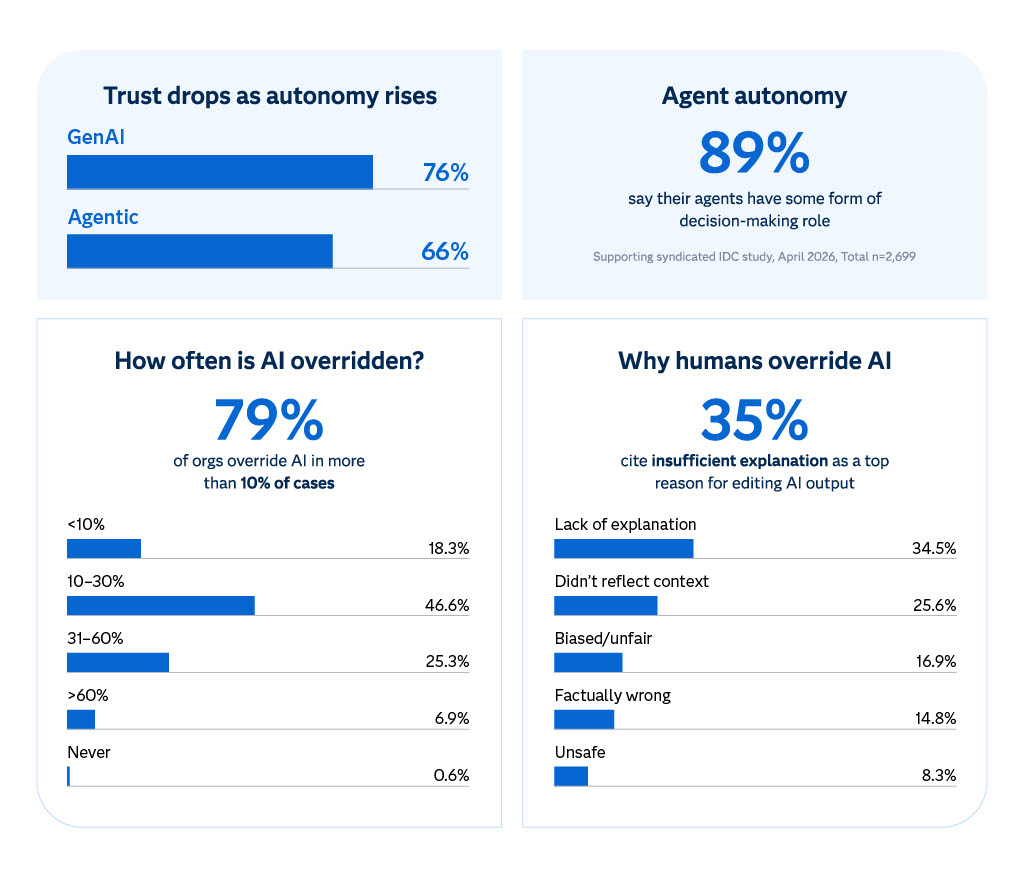
Why trust may be the key to unlocking AI’s ROI. As CIOs and CTOs continue to hunt for a meaningful return on investment from their AI bets, establishing greater trustworthiness in the outputs—which includes data quality and model governance, responsible AI policies, and explainability and accountability—may be a secret, key ingredient some organizations are overlooking. Businesses that apply these trustworthy practices were 15 times more likely to report strong ROI from their AI projects, according to a new survey of 2,699 decision-makers across 28 countries, published this week by market intelligence and research firm IDC and software provider SAS.

The survey found that agentic AI is trusted by 66% of respondents, trailing generative AI by 10 percentage points, even as these same leaders say that 89% of their agents act with some form of autonomous decision making. Further complicating matters is that 79% of organizations report that employees override AI in more than 10% of cases, due to a lack of explanation, biased or unfair outputs, and factual inaccuracies.

Bryan Harris, CTO at SAS, tells Fortune that technology leaders need to establish a “trustworthy” set of practices that make clear what criteria are in place when data is used by AI, more clarity about the models that are being used for each project and how they are trained and validated, and explainability about the decisions that those models make. He says workplace training also plays a critical role in bolstering the trustworthiness of AI.

“Training that focuses on what agents and gen AI can do and its deficiencies is really important,” says Harris. “It's just another technology—it is disruptive, no question—but we need to know its strengths and know its weaknesses.”

Courtesy of SAS
JOBS RADAR
Hiring:

- Ovative Group is seeking a CTO, based in Chicago. Posted salary range: $385K-$476K/year.

- US Mobile is seeking a CTO, based in New York. Posted salary range: $275K-$315K/