| | Uber announces its biggest layoffs since the pandemic, Chinese tech firms strike AI deals in Saudi A͏ ͏ ͏ ͏ ͏ ͏ |
| |  London London |  Riyadh Riyadh |  Kuala Lumpur Kuala Lumpur |
 | Flagship |  |
| |
|
The World Today |  - G20 leaders bicker
- Huge layoffs at Uber
- China tech in Saudi
- Beijing’s BCI push
- Asia data center boom
- Smart glasses scrutiny
- AI detection debate
- Roboplanes for crops
- London tube gets 5G
- ‘Big Mac Index’ is 40
 Colm Tóibín’s new short novel is an ‘ageless study of loss, betrayal, and survival.’ |
|
G20 wraps without consensus |
 Jonathan Drake/Reuters Jonathan Drake/ReutersThe US-hosted G20 meeting, beset by trade and diplomatic squabbles, wrapped Tuesday after failing to ease investors’ concerns over a global bond market sell-off. As global bond yields hit multi-decade highs, the gathering of finance ministers ended without a consensus after China objected to language used in the communiqué about eliminating “non-market policies” driving global imbalances. The Europeans, meanwhile, refused to take the “family photo” with their Russian counterpart, whose presence galled US allies already put out by the Iran conflict, along with Washington’s trade war and bond market interventions. For anyone hoping the G20 summit “suggested an end to the deficits, inflation and geopolitical disruptions… roiling investors,” The Wall Street Journal’s chief economics commentator wrote, “you’ve been disappointed.” |
|
Uber’s biggest layoffs since COVID |
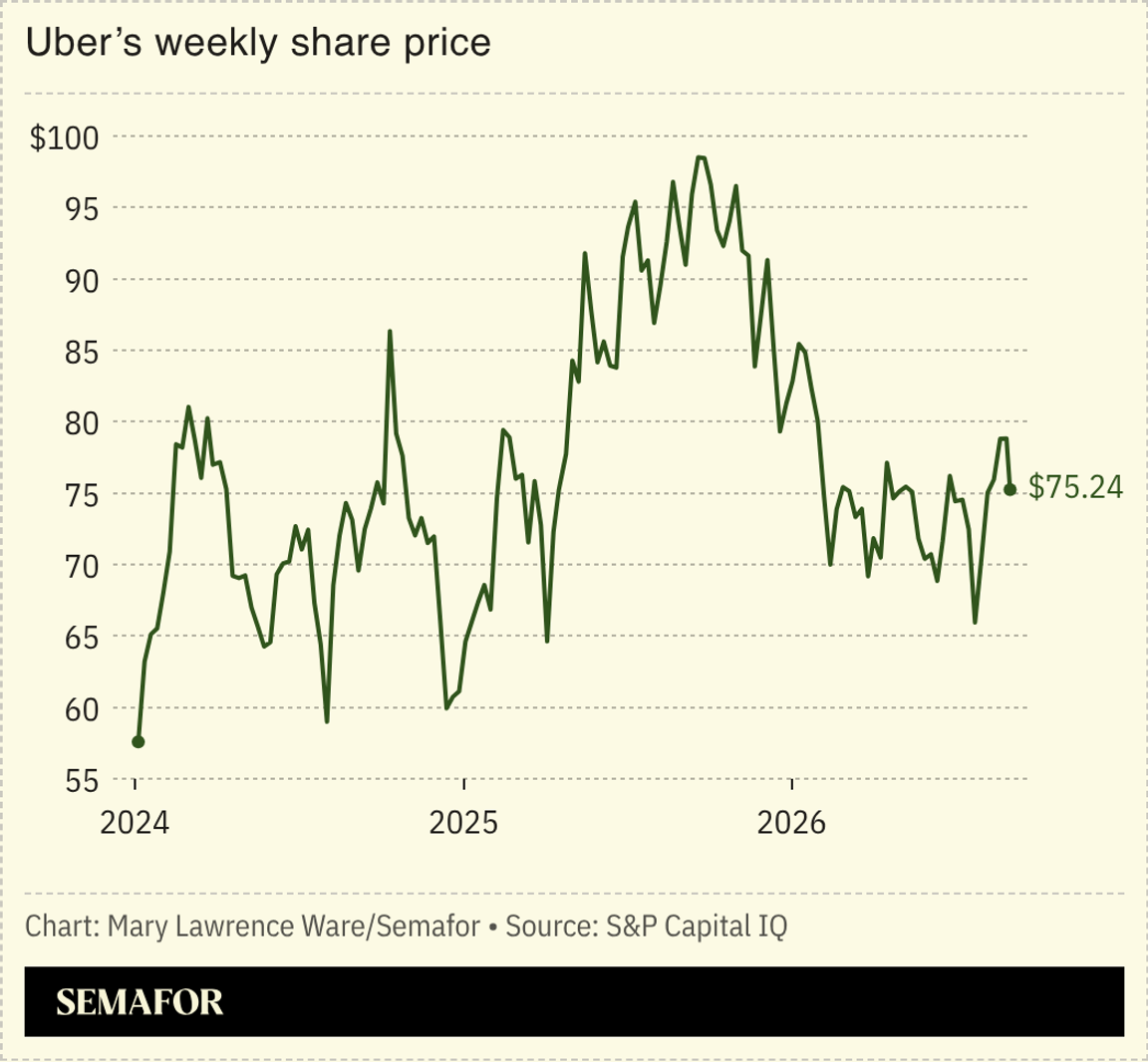 Uber announced Wednesday that it will axe 10% of its global corporate workforce in its biggest cuts since the pandemic, as the ride-sharing firm contends with the threat from robotaxis. The bid to become “simpler and faster” will generate more savings to plough into Uber’s autonomous driving push, CEO Dara Khosrowshahi said. The company’s shares have fallen 8% this year on perceptions it’s lagging Alphabet’s Waymo in the self-driving race. Waymo announced last month that it’s looking to exit its partnership with Uber, as the two become increasingly direct competitors. But the Uber selloff has “gone too far,” an Information columnist argued: Its existing network offers a “massive advantage,” allowing it to line up more partnerships with Waymo’s competitors. |
|
China tech firms strike deals in Riyadh |
 Hamad I Mohammed/Reuters Hamad I Mohammed/ReutersChinese tech firms are planting deeper roots in Saudi Arabia, as Beijing and Washington compete for AI dominance in the region. ByteDance and Tencent struck AI infrastructure deals at this week’s LEAP technology conference in Riyadh; Tencent has already invested $150 million so far in the kingdom. And Lenovo is set to begin mass production of its new laptop in Riyadh by the end of the year. The deals may perk up ears in Washington, Semafor’s Kelsey Warner wrote. The Trump administration has dangled advanced chips to the Gulf, in part on terms aimed at keeping Chinese tech firms out. Still, Big Tech is circling: Elon Musk’s xAI plans to build its first non-US data center in Saudi Arabia. |
|
China ramps up brain computer push |
 Florence Lo/Reuters Florence Lo/ReutersChina has approved a slew of brain-computer interface devices this year, showering domestic startups with state subsidies in a bid to compete with Elon Musk’s Neuralink. China has identified BCIs, which promise to restore motor functions and cognitive capacity in patients, as one of six “industries of the future” for driving growth — a push made more urgent by the country’s aging population: Cases of age-related neurological disorders have jumped 42% since 1990, reaching 468 million in 2021. Beijing has notched recent breakthroughs. In July, a Chinese firm completed the world’s first commercial BCI implant. Still, one leading state-backed firm acknowledged this year that its tech was still “about three years” behind Neuralink. |
|
Asia data center boom faces backlash |
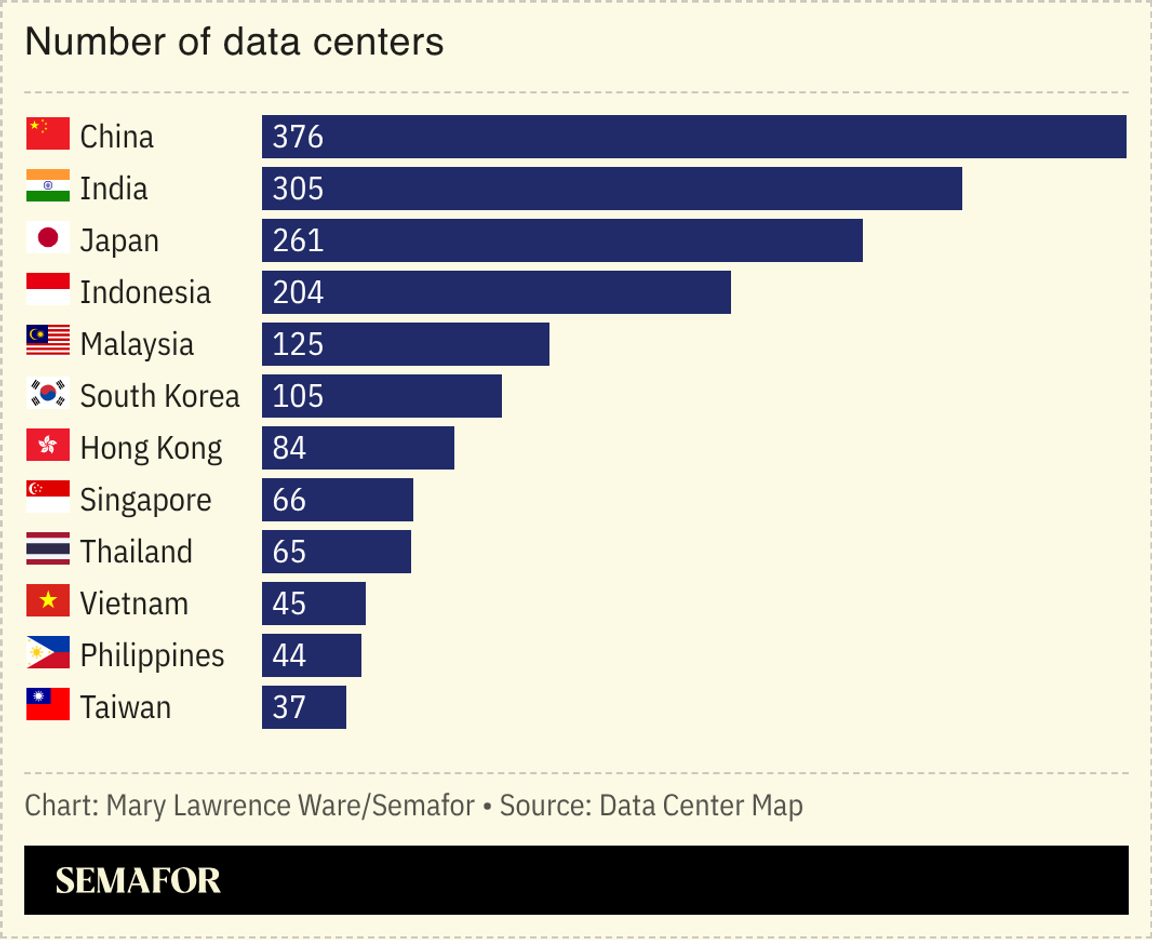 Asia’s rapid data center buildout is sparking local pushback, as governments’ urge to capture value in the AI investment boom runs into constituents’ environmental and health concerns. Backlash is growing from India to Australia, Nikkei reported, leading not to less demand overall but redirected investments, as companies shift to areas with less opposition. “Demand is still red-hot across pretty much every market in the region,” one analyst said. “Where you’ll find issues is where [developers] don’t engage with the community.” The buildout in Asia is running into financial limits as well: Lenders have dished out nearly $29 billion to fund data centers since the start of the year, but are now starting to grow more selective, Barclays bankers told Bloomberg. |
|
Meta disables cameras on tampered glasses |
 Carlos Barria/Reuters Carlos Barria/ReutersMeta is disabling the cameras on its smart glasses in instances where the company can detect tampering, Semafor reported, after the devices became the latest target of the anti-tech sentiment sweeping the US. Thousands of glasses have likely been tampered with, and reports suggest they were used to record people without their knowledge or consent — usually for social media. Several workplaces have banned the glasses amid the populist backlash against camera-equipped devices; Flock cameras were recently vandalized across the US. Criticism may abate as companies stamp out abuses, but “the public may only tolerate being bystanders in a cat-and-mouse game for so long before regulators and lawmakers decide to step in and play offense,” Semafor’s J.D. Capelouto wrote. |
|
Policing AI slop with Pangram |
 Pangram PangramTextual sleuths are waging a crusade against the AI-generated writing proliferating in publications and on the web with their favorite detection tool. Pangram has recently been credited with helping implode a lucrative book deal and unmasking AI use at The New York Times and The Wall Street Journal. After interviewing Pangram’s founder, writer Derek Thompson learned that generative text has a new tell: “Re-re-re-summarizing key points, as each new sentence strains to get a new gold star in being the most helpful takeaway sentence.” While AI slop is worth cleaning up, Thompson said he fears “AI-writing witch hunts would be an unwelcome addition to online life.” |
|
Autonomous vehicles in agriculture |
|
London’s tube to get cellular coverage |
 London’s metro rail, the oldest in the world, will finally catch up with Berlin and Paris in having cellular signal across its stations and lines. London’s tube lines are usually deeper than other cities’ where metros were largely built by cut-and-cover, digging up roads from the surface. But London’s winding streets and clay soil made that impractical, so the tunnels were bored far deeper, and therefore much narrower, leaving no room for the signal-boosting equipment. In New York, the broad box-shaped tunnels can accommodate several trains; in London, the tubes are bare inches wider than the trains themselves. A yearslong project of threading fiber-optic cables and hanging antennas in packed tunnels and stations will finish this year. |
|
The Economist’s “Big Mac Index” is 40 |
|
|


