
|


 |
This edition is sponsored by InterVarsity Press
I love any opportunity to learn something new, so today’s set of reviews by historian John Fea was a delight. He examines three biographies of America’s founding fathers, each of which highlights aspects of their character typically overlooked in history classes—and in the case of Gouverneur Morris, highlights a founder most Americans may have never learned about in the first place.
Happy Reading,
Taylor Berglund
Senior Features Editor, Christianity Today
A portion of this newsletter appeared as a column at Christianity Today. Join CT for full access to all our journalism.
This email may contain affiliate links that help support CT at no additional cost to you.

Paid Content
Do you ever feel like justice and righteousness have been positioned in rival camps? Somewhere along the way, these ideas were split in two — but the Bible never made the separation between justice and righteousness. The newest book from Rev. Dr. Charlie Dates, What Hath Justice to Do with Righteousness?, takes that question seriously and points to the nexus between justice and righteousness that is seen in the scriptures.
Through the context of the historic Black church, Dates provides a biblical and historical overview of these two pillars of the Christian faith that challenges our assumptions, renews our understanding, and invites us into a new movement of protest and prayer. Prepare to be called, inspired, and equipped to resist systemic injustice on biblical grounds and embody both justice and righteousness in every step you take. Are you ready to unite what the world seeks to divide? Pick up your copy of What Hath Justice to Do with Righteousness? today!
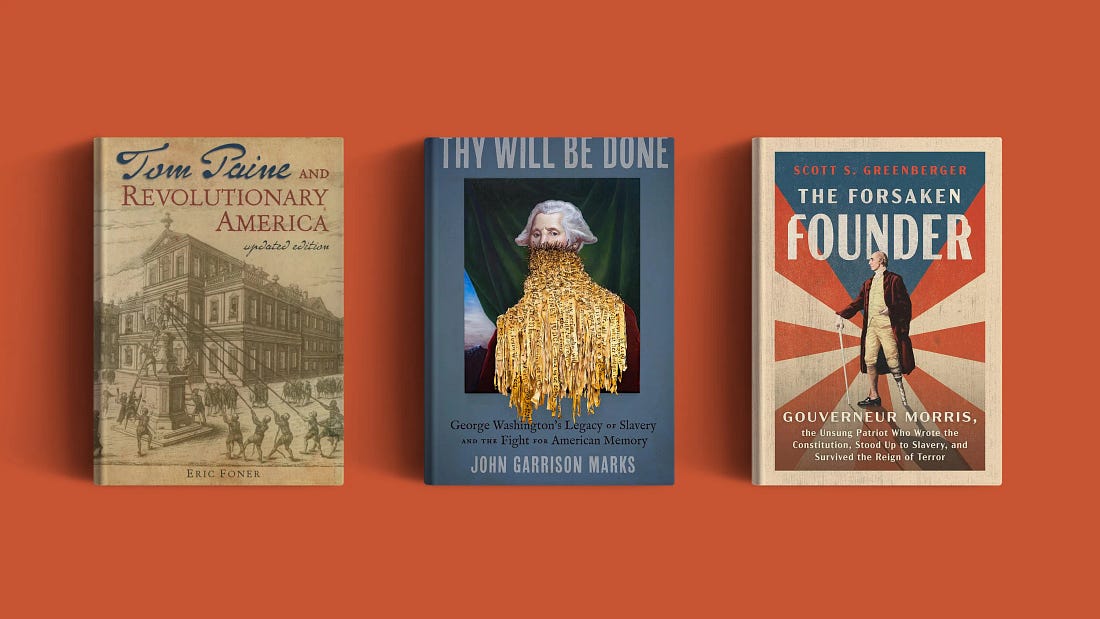 |
Three Books on History
Scott S. Greenberger, The Forsaken Founder: Gouverneur Morris, the Unsung Patriot Who Wrote the Constitution, Stood Up to Slavery, and Survived the Reign of Terror (37 Ink, 2026)
“We the people of the United States, in order to form a more perfect union.” Americans recognize these words as the preamble to the United States Constitution, but most have no clue who wrote them. Writer Scott Greenberger wants to remedy this lack of historical acknowledge by introducing us to the preamble’s author: Gouverneur Morris.
As the title of Greenberger’s book indicates, he suggests a few reasons Morris has been largely forgotten. His tastes and style were too aristocratic for a country of common farmers; he did not believe the masses could be trusted to make wise decisions for the country; his well-documented sexual escapades made him unpalatable to the Puritan sensibilities of many Americans; and he supported the secession of the New England colonies following the War of 1812.