The World Bank returns to Bangkok, France’s school protests and a Japanese double-sided coat.
|
Friday 9/10/26
|

|
|
London
Paris
Zürich
Milan
Bangkok
Tokyo
Toronto
|
|
|
|

Good morning from Midori House. For more news and views, tune in to Monocle Radio. Here’s what’s coming up in today’s Monocle Minute:
THE OPINION: Are sunny skies ahead for Bangkok?
AFFAIRS: School protests ignite across France
DAILY TREAT: Double up your look in an Auralee coat
IN PRINT: Why replace when you can repair?
THE LIST: Stories that you might have missed
|
|
The Thai capital might be shrouded by stormy skies – but its economy could become a bright spot
By James Chambers
|

|
Lock up your datasets – Bangkok is playing host to one of the world’s largest gatherings of economists, central bankers and finance ministers. The International Monetary Fund (IMF) and World Bank’s annual meeting, which leaves Washington every three years, will begin in the Thai capital on Monday for the first time since 1991.
Government officials here are calling this high-level conflab at the Queen Sirikit National Convention Center the “Olympics of Global Finance”. It’s a sexed-up title for more than 10,000 people in grey suits nattering about interest rates, inflation and sovereign debt – but these global policymakers have genuine influence and the authorities are keen to impress.
Bangkok’s power lines have been pruned, workers have been given a day off to ease Friday traffic and even the giant LED billboards are on message. A shortage of baggage handlers at the main international airport, which caused luggage to pile up, cost the CEO of Thai Airways his job. In preparation for the event, prime minister Anutin Charnvirakul and his cabinet just need to pray for sunshine after the city’s recent floods.
| |
|
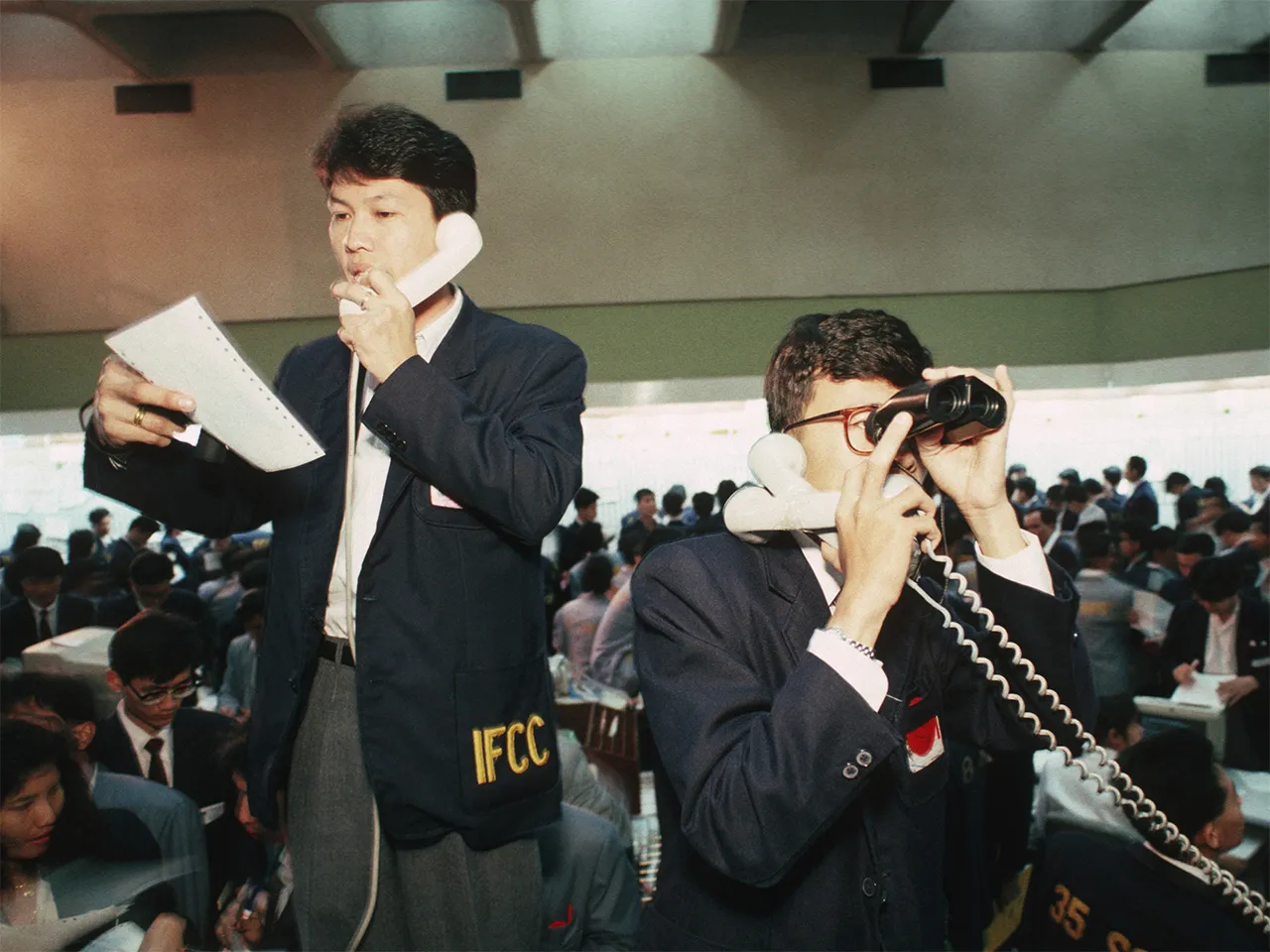
Looking ahead: The Thai Stock Exchange in 1989
|
|
On the bright side, next week’s contingency plans will be more robust, with four scenarios mapped out in case of flooding at the Queen Sirikit National Convention Center. If the water level reaches 50cm, the show will go on but instead of being picked up from their hotel lobby in an electric-powered BMW, the VIP delegates will get to the venue via the BTS Skytrain and underground metro. Honestly, it would do them good: the elevated Skytrain is easily the best way to see Bangkok and is one of the key markers of the city’s transformation since the IMF and World Bank’s last visit in the early 1990s.
These annual meetings are global in scope but they’re also an opportunity to take a closer look at the host country’s economy. The World Bank’s latest report, released last month, paints an impressive picture of Thailand’s development over the past 35 years “from an agrarian, lower middle-income country into one of the region’s most dynamic economies”. You can’t argue with that – but making it into the World Bank’s top income bracket would require going to the root of Thailand’s current upper-middle-income malaise.
At the current rate of growth (a sluggish 2.2 per cent), it will take Thailand another 30 years to become a high-income country. Achieving this milestone by 2037 – the government’s stated goal – will require a radical overhaul of the economy and some big ideas that go beyond building data centres and applying to join Brics and the OECD. Annual economic growth would need to average five per cent over the next 11 years – and I don’t think that I’ve met anyone in Thailand who believes that is possible. The last time the country saw a recovery with those types of numbers was in 2012, after the previous year’s devastating floods, which really did deserve global news coverage and biblical headlines. Perhaps history will repeat itself.
One of Thailand’s main structural problems is also one of its biggest successes. Bangkok is a top-20 global city but its rise has come at the expense of other cities and provinces. The World Bank says that Thailand has “one of the world’s most extreme cases of urban concentration in its largest city”. It suggests the development of second- and third-tier cities, which would be a very sensible remedy, with plenty of good candidates. Chiang Mai, for example, could transform from a sleepy backwater into a creative capital. Meanwhile, Khon Kaen in the northeast has the universities and farmland to become the home of agritech. The private sector and tourism agencies are doing their bit to promote these areas but there’s little urgency or buy-in from the central government.
Bangkok is only one of two administrative areas in the country with a directly elected governor – the other provincial leaders are appointed civil servants. The reformist People’s Party campaigned for decentralisation during the most recent general election in February. It swept the board in the capital, while the heartlands, which arguably stood to benefit the most in the long term, handed power to the conservative status quo. Bangkok might have changed beyond recognition since the 1990s but Thai politics, come rain or shine, remains the same.
James Chambers is Monocle’s Asia editor. For more opinion, analysis and insight, subscribe to Monocle today.
|
|
AFFAIRS: FRANCE
‘I can’t take it anymore’: School blockades spark national crisis as French students continue to protest
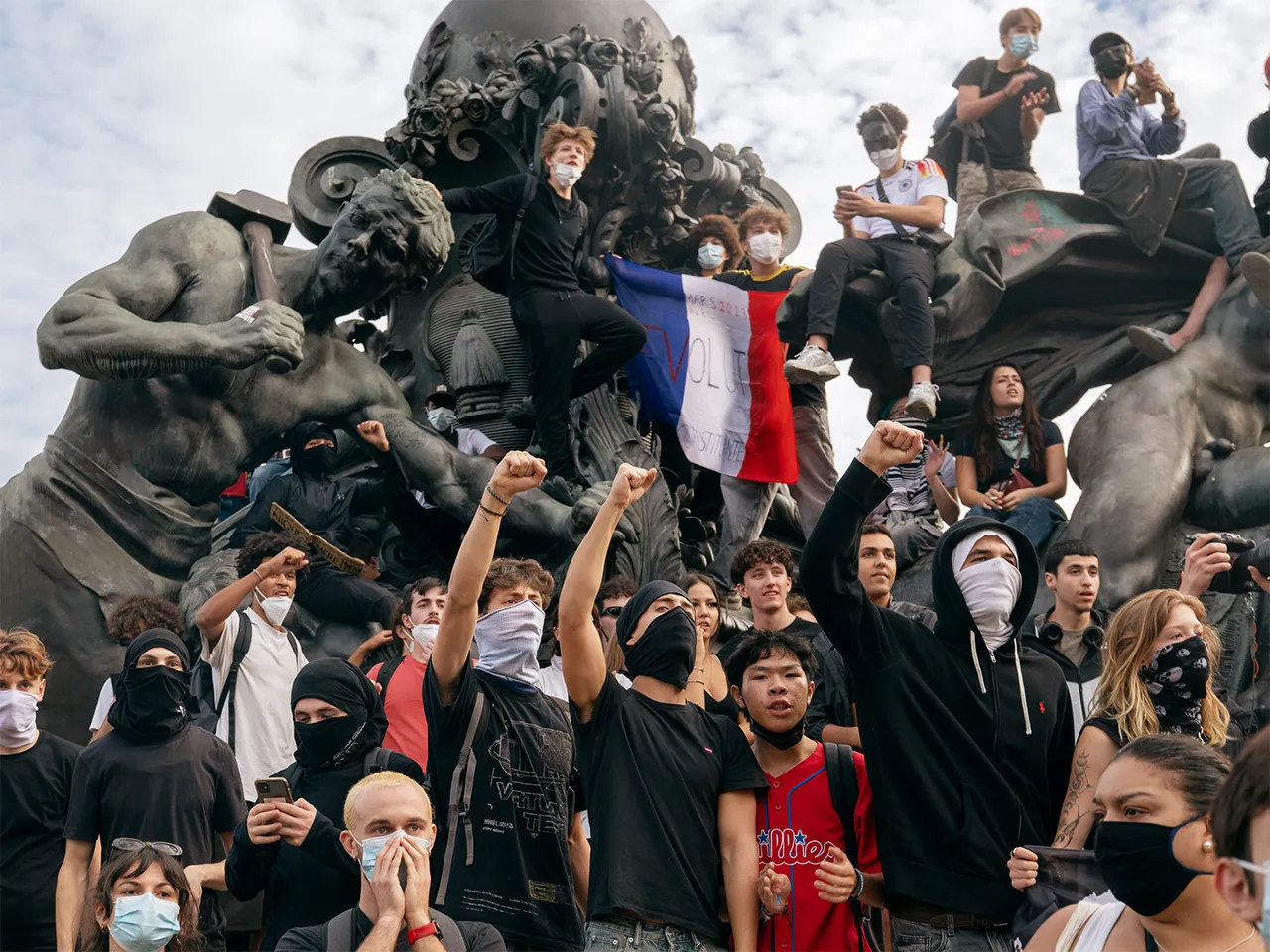
This year’s European protest-fest is headlined yet again by a repeat booking: instead of poring over philosophical texts, French teenagers are opting for a practical course in barricade construction (writes Antoine Goullin). What started as piecemeal protests east of Paris turned nationwide in early October. On Tuesday roughly one in four of the country’s secondary schools were blocked, while more than 260,000 students, teachers, parents and trade unions took part in demonstrations across France.
| |
|
Chock-a-block: Crowds of protestors in Place de la Nation
|
|
“I’m here because I can’t take it anymore,” said Daniela, 15, sitting by her school’s blockade. “We have one nurse for 2,000 students, no maths teacher, no toilet paper and classrooms that reach 40C in the summer.” Throughout the day teens built picket lines, sang the national anthem and faced off with riot police.
Schools around the country have rallied around a list of urgent demands: more teachers to fill staffing gaps, investment in crumbling schools and reform of the university admissions platform. France’s presidential race was shaping up around affordability, security and healthcare. Now a mass movement over public education has caught Emmanuel Macron’s appointed government on the back foot.
France’s youth is making the education crisis impossible to ignore. But can the protests lead to tangible change? Click here to read the full article.
|
|
• • • • • DAILY TREAT • • • • •
Vary your wardrobe with Auralee’s two-sided coat
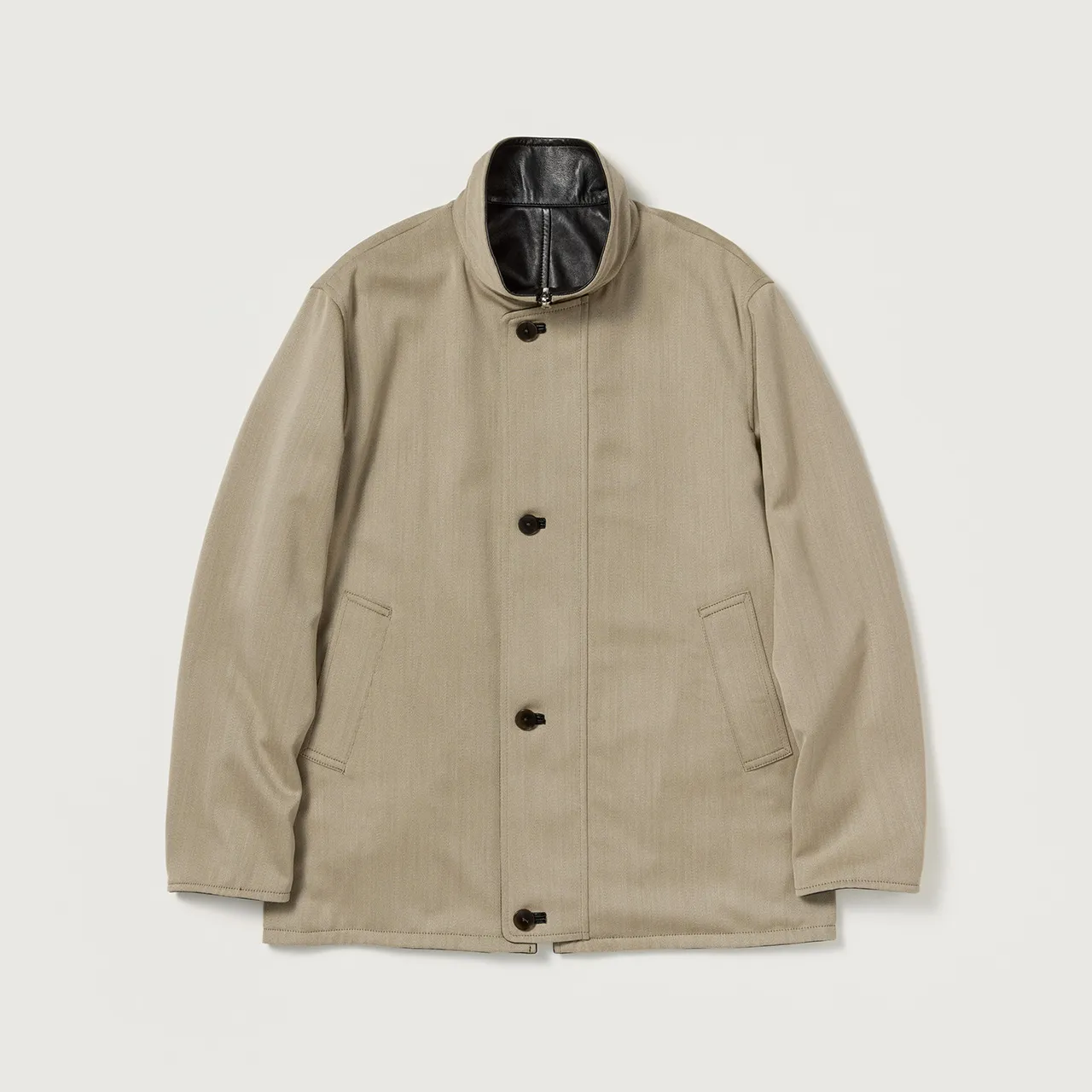
Running gear by District Vision or Satisfy might be the best kit while you’re on a run – but what if you’re on the run? If a leather jacket is too conspicuous, Tokyo’s Auralee has a reversible coat that enables you to switch up your look fast.
But it also suits a stand-up citizen wanting to turn heads, with its two-sided, stand-up collar. One side boasts a smooth Pakistani sheep leather, while the other comes in either a khaki or brown chambray for a more elegant, draped finish. For something a little more traditional, opt for a blue tweed blouson jacket or the brand’s ultrafine, wool twill trench coat with detachable lining.
auralee.jp
|
|
IN print: Hamburg
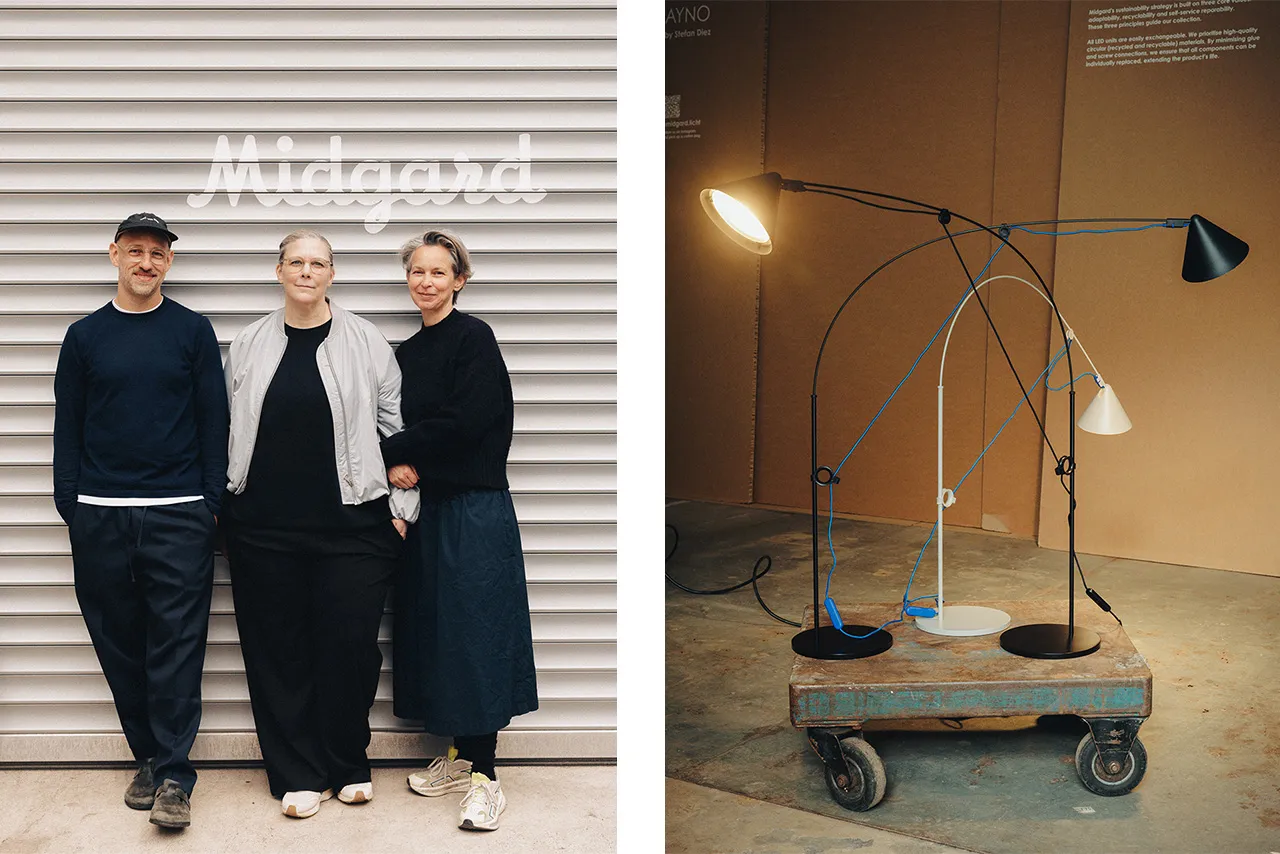
Heritage brand Midgard designs entirely repairable light fixtures
How does a 107-year-old company ensure that it keeps evolving (asks Florian Siebeck)? For David Einsiedler, the CEO of storied German lighting manufacturer Midgard, it’s about asking the right questions at the right time. “This is the oldest start-up in the world,” he says, as he walks Monocle through the company’s workshop in Hamburg, where technicians are hard at work assembling lamps.
|
It’s an outlook that reflects the ambition of Midgard’s founder, Curt Fischer. In 1919 the engineer had a practical problem in his mechanical workshop. Industrialisation had extended the working day into the evening, which meant that overhead lighting was crucial but it would cast awkward shadows across the workbenches. So Fischer designed a wall-mounted, jointed lamp with a movable head that could be repositioned as needed. What began as a workshop tool soon entered offices and Bauhaus interiors. By the 1950s, the company had expanded the idea into a spring-balanced lamp with adjustable arms and a swivelling shade, setting a new benchmark for the modern desk light.
To read the piece in full, click here or pick up a copy of the new ‘Monocle: The Entrepreneurs’.
|
|
the LIST: FROM monocle.com
Stories that you might have missed
Not been on monocle.com recently? Here are three stories from our recent Education Special that may shed some insights on how Europe can get its schools and universities back on track.
|
|
| | |